 Mineral Matrix: An AI Journey into Earth’s Treasures
The Evolution of Mining Tools Through History
Discover how mining tools have transformed from ancient hand tools to modern high-tech machinery.
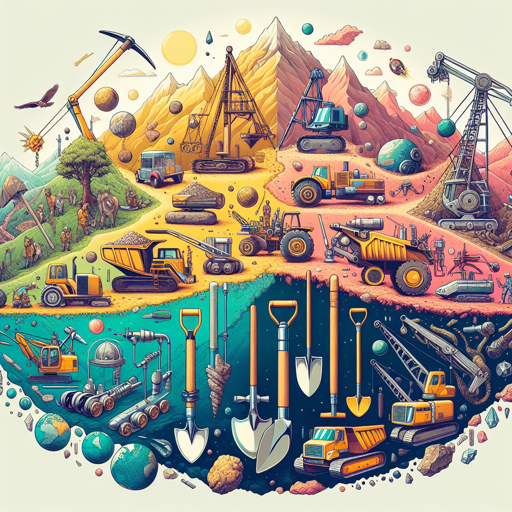
Introduction
From the earliest days of civilization, the quest for valuable minerals and gemstones has driven humanity to dig deeper into the earth. The history of mining is not just a tale of discovery and ambition—it’s also a story of innovation. The evolution of mining tools, from simple stone implements to the vast, computer-controlled machinery of today, mirrors our progress as a species and our unending curiosity about the Earth’s hidden treasures.
In this article, we’ll journey through time to explore how mining equipment has changed from past to present. Whether you’re a geology enthusiast, educator, student, or simply fascinated by earth sciences, understanding this evolution offers valuable insights into the dynamic relationship between technology and the natural world.
The Dawn of Mining: Ancient Tools and Techniques
Long before the Industrial Revolution, early humans recognized the value of minerals and gemstones. Their methods were primitive by today’s standards but ingenious for their time.
Stone Age Beginnings
Mining can be traced back over 40,000 years. During the Paleolithic period, our ancestors used basic stone hammers and antler picks to extract flint and obsidian for tools and weapons. Evidence of flint mining has been found in sites such as Grimes Graves in England and Spiennes in Belgium.
Key Characteristics:
- Materials: Stone, bone, wood, antler
- Techniques: Direct hammering, scraping, fire-setting (heating rock with fire and dousing with water to crack it)
- Products: Flint blades, arrowheads, obsidian ornaments
The Bronze and Iron Ages: Metal Enters the Scene
As metallurgy advanced, so did mining tools. Copper, bronze, and later iron replaced stone as the primary material for picks, chisels, and hammers. This transition allowed miners to dig deeper and extract harder ores.
Innovations:
- Bronze Tools: Harder and more durable than stone
- Iron Picks: Enabled excavation of tougher rock
- Water Management: Early use of wooden buckets and drainage systems
Quote:
“Mining is as old as civilization itself. Each tool tells a story of human ingenuity and determination.”
— Dr. Emily Foster, Economic Geology Historian
Medieval Mining: Organization and Expansion
During the Middle Ages, mining became more organized and systematic. With increasing demand for metals like silver and tin in Europe, new methods were developed.
Hand Tools Refined
Picks, shovels, hammers, and wedges made from iron were common. Windlasses (manual winches) helped raise ore buckets from deeper shafts.
Early Mechanization
By the 12th century, water wheels powered bellows for ventilation and pumps for drainage in larger mines—a significant leap from purely manual labor.
Table: Key Comparisons — Ancient vs Medieval Mining Tools
| Era | Tool Material | Main Tools | Depth Capability | Mechanization |
|---|---|---|---|---|
| Stone Age | Stone/Bone | Hammerstones, Picks | Shallow | None |
| Bronze/Iron | Bronze/Iron | Chisels, Picks, Hammers | Moderate | Limited (manual) |
| Medieval | Iron | Picks, Shovels, Wedges | Deeper | Water wheels (limited) |
Industrial Revolution: The Age of Steam and Steel
The 18th and 19th centuries marked a pivotal era for mining. With the advent of steam power and mechanization, mining operations expanded rapidly and penetrated deeper into the earth than ever before.
Explosives Change the Game
The introduction of black powder (gunpowder) in the 17th century revolutionized rock breaking. By the mid-1800s, dynamite (invented by Alfred Nobel) enabled miners to blast through even the hardest rock.
Steam-Powered Machinery
Steam engines powered hoists, pumps, and drills. Mechanical stamp mills crushed ore efficiently.
Notable Innovations:
- Steam Drills: Replaced manual drilling
- Mechanical Hoists: Transported ore/laborers
- Ventilation Fans: Improved mine safety
The 20th Century: Electrification and Diesel Power
The 20th century saw unprecedented advancements in mining technology.
Electric Drills and Lighting
Electricity replaced steam as the driving force in many mines. Electric drills increased productivity while electric lighting improved safety underground.
Diesel-Powered Equipment
Diesel engines powered locomotives, haul trucks, and loaders—ushering in the era of large-scale surface mining.
Major Developments:
- Continuous Miners: Machines that cut and gather material simultaneously
- Longwall Mining Machines: Increased coal production
- Mobile Equipment: Haul trucks with capacities exceeding 300 tons
Modern Mining Tools: Automation and Digital Transformation
Today’s mining industry is defined by its reliance on advanced machinery and digital technologies.
Robotics and Remote Operation
Robotics have minimized human exposure to hazardous conditions. Remotely controlled drills and loaders operate in extreme environments—such as deep underground or underwater mines.
Precision with Drones and AI
Drones provide aerial surveys of mine sites for planning and monitoring. Artificial intelligence optimizes drilling paths, predicts equipment failures, and enhances ore recovery.
Sustainable Innovations
Modern tools focus on minimizing environmental impact:
- Electric vehicles reduce emissions.
- Water recycling systems preserve resources.
- Real-time data optimizes resource management.
Table: Milestones in Mining Tool Evolution
| Period | Key Tool/Technology | Impact |
|---|---|---|
| Prehistoric | Stone Hammer | Enabled basic extraction |
| Bronze Age | Metal Pick | Allowed deeper/harder material extraction |
| Medieval | Water Wheel Pump | Supported deeper mines |
| Industrial | Steam Drill/Dynamite | Rapid expansion & productivity |
| 20th Century | Electric/Continuous Miner | Large-scale mechanized mining |
| Modern | Autonomous Haul Truck | Safety & efficiency in harsh environments |
Challenges and Opportunities Ahead
While technology continues to transform mining tools, new challenges emerge:
- Resource Depletion: As easily accessible ores dwindle, deeper and more complex deposits require ever more sophisticated equipment.
- Environmental Concerns: Sustainable practices demand tools that minimize ecological footprints.
- Workforce Skills: Automation calls for new skill sets among workers—blending geology with data science and engineering.
External Reference
For a deeper dive into the technological evolution of mining equipment over time, visit the National Mining Association’s Mining History resources.
Conclusion
From humble stone picks to AI-powered excavators, the evolution of mining tools reflects humanity’s enduring drive to explore beneath the Earth’s surface. Each innovation has enabled us to reach new depths—literally and figuratively—while shaping economies, societies, and scientific understanding.
As we look toward the future, mining tools will continue to evolve in response to new challenges. By embracing both technological advancements and sustainable practices, we can ensure that mineral extraction remains safe, efficient, and respectful of our planet’s resources.
Whether you’re studying geology or simply marveling at human ingenuity, the story of mining tools is a testament to our ability to adapt—and our relentless pursuit of discovery.