 Mineral Matrix: An AI Journey into Earth’s Treasures
Mineral Collecting Ethics for Responsible Hobbyists
Discover best practices for sustainable, ethical mineral and gemstone collecting.
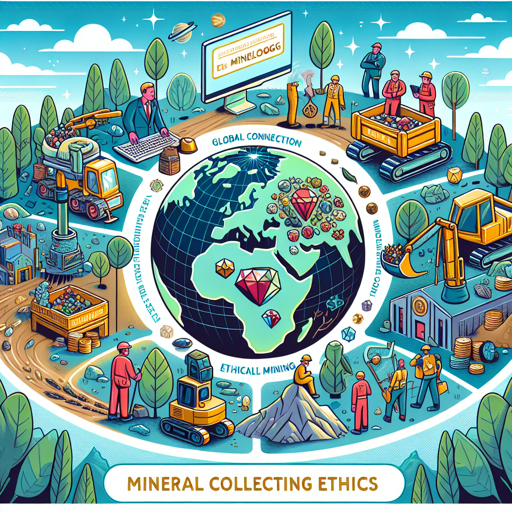
Introduction
The allure of mineral collecting is timeless. Whether you’re a seasoned geologist with a passion for rare crystals or a curious newcomer enchanted by the sparkle of gemstones, the world of minerals holds endless fascination. Yet, as interest in mineral collecting grows, so does the need to address its environmental and ethical implications.
How do we ensure that our pursuit does not harm delicate ecosystems, violate legal boundaries, or exploit vulnerable communities? What does it mean to be a responsible mineral collector in the 21st century?
This article explores the ethics of mineral collecting—unpacking best practices, legal considerations, and the importance of sustainability. Whether you’re an educator guiding students, a hobbyist exploring new sites, or simply an earth science enthusiast, this guide will help you embark on your mineralogical adventures with conscience and care.
The Importance of Ethics in Mineral Collecting
Mineral collecting is not merely a hobby; it is a direct interaction with Earth’s geological heritage. With this privilege comes responsibility. Ethical mineral collecting ensures that:
- Natural sites are preserved for future generations.
- Local communities are respected and supported.
- Scientific research is not hindered by irresponsible extraction.
- Biodiversity and ecological balance are maintained.
As Dr. Jane Goodall famously said:
“What you do makes a difference, and you have to decide what kind of difference you want to make.”
In the context of mineral collecting, our choices ripple across environments and communities—sometimes in ways we might not immediately see.
Best Practices for Responsible Mineral Collecting
1. Know the Laws and Regulations
Before picking up your hammer and chisel, always research the legal status of the collecting site. Laws governing mineral collection can vary widely:
| Region/Country | Public Lands | Private Lands | Protected Sites | Permit Needed? |
|---|---|---|---|---|
| United States | Varies by state & federal agency | Permission required | Strictly prohibited | Often required |
| Canada | Provincial rules apply | Landowner permission | National/provincial parks off-limits | Sometimes |
| Australia | States have strict regulations | Owner consent essential | Heritage sites protected | Usually |
| United Kingdom | Mostly private lands | Owner permission needed | SSSIs & nature reserves protected | Sometimes |
Always check local authorities or geological societies for up-to-date regulations.
2. Practice Sustainable Extraction
Responsible collectors follow the principle: Take only what you need, leave the rest undisturbed.
- Limit your collection: Avoid over-harvesting from a single site.
- Choose specimens mindfully: Leave damaged or common pieces; target only unique or scientifically significant finds.
- Backfill holes and restore sites: After digging, fill any holes and return stones or vegetation to their original place.
- Leave no trace: Pack out all trash and equipment.
3. Respect Private and Indigenous Lands
Many mineral-rich areas are found on private property or traditional lands belonging to Indigenous peoples.
- Always seek explicit permission before entering or collecting on these lands.
- Acknowledge and respect cultural values—some minerals or sites may hold spiritual significance.
- Engage with local communities to understand their perspectives and practices.
4. Support Scientific Knowledge
Minerals are not just beautiful—they’re valuable scientific records of Earth’s history.
- Report significant finds to local museums or universities.
- Do not disturb unique geological formations that may be of research interest.
- Participate in citizen science projects to contribute your observations to the broader scientific community.
5. Avoid Commercial Exploitation
While selling minerals is a part of the hobby, over-commercialization can lead to unethical practices:
- Avoid buying from questionable sources—ensure minerals are ethically sourced.
- Support dealers with transparent supply chains who give back to local communities.
- Be wary of rare or endangered minerals—their trade may be restricted or illegal.
Key Ethical Considerations in Mineral Collecting
Let’s compare some common scenarios faced by collectors:
| Scenario | Ethical Practice | Unethical Practice |
|---|---|---|
| Collecting in national parks | Respect boundaries; no collecting allowed | Sneaking specimens out |
| Buying minerals online | Research source; choose ethical dealers | Purchasing from unknown/unregulated sellers |
| Group field trips | Follow group leader’s guidelines | Over-harvesting for personal gain |
| Sharing finds | Donate significant pieces to museums/schools | Hoard rare specimens for private profit |
The Role of Clubs, Societies, and Education
Ethical collecting is often reinforced through community:
- Join local mineral clubs or geological societies—they provide guidance on ethics, permissions, and site preservation.
- Participate in workshops and educational programs focused on sustainable collecting.
- Mentor new collectors, instilling values of stewardship and respect from the start.
Educators and leaders play a vital role by modeling ethical behavior and emphasizing responsible field practices.
Spotlight: Ethics in Gemstone Mining
Gemstones add another layer of complexity to mineral ethics due to their high value and global demand.
Key issues include:
- Child labor and unsafe working conditions in unregulated mines.
- Environmental destruction from large-scale or artisanal mining.
- Conflict minerals, which finance violence in certain regions.
To support ethical gemstone sourcing:
- Look for certifications (e.g., Fairmined, Kimberley Process for diamonds).
- Ask dealers about mine origins and labor practices.
- Prefer stones from regions with robust environmental and social regulations.
Environmental Impact: A Closer Look
Irresponsible mineral collecting can cause:
- Soil erosion
- Habitat destruction
- Water pollution
- Loss of biodiversity
Table: Comparing Environmental Impact Levels
| Collecting Activity | Environmental Risk Level | Mitigation Strategies |
|---|---|---|
| Surface collecting (no digging) | Low | Minimal disturbance |
| Small hand digging | Moderate | Backfill holes, restore site |
| Mechanized/removal mining | High | Avoid—leave to professionals |
Technology’s Role in Ethical Collecting
Modern tools can help collectors act responsibly:
- Use GPS apps to avoid restricted areas.
- Digital field guides reduce reliance on physical samples.
- Social media fosters knowledge-sharing on best practices.
External Resources
For more detailed guidelines, visit the Mineralogical Society of America’s Code of Ethics.
Conclusion
Mineral collecting is more than a quest for beautiful stones—it’s an opportunity to connect with Earth’s deep history, inspire curiosity, and contribute to scientific knowledge. By embracing ethical principles, collectors help safeguard treasures for future generations and ensure their hobby remains sustainable and respected.
Whether you’re cracking open geodes or admiring gemstones under a loupe, remember that every action leaves an imprint—not just on rocks, but on landscapes, communities, and the legacy of geology itself.
Happy—and ethical—collecting!