 Mineral Matrix: An AI Journey into Earth’s Treasures
Meteorites and Minerals Beyond Earth
Discover what meteorites reveal about minerals across our solar system
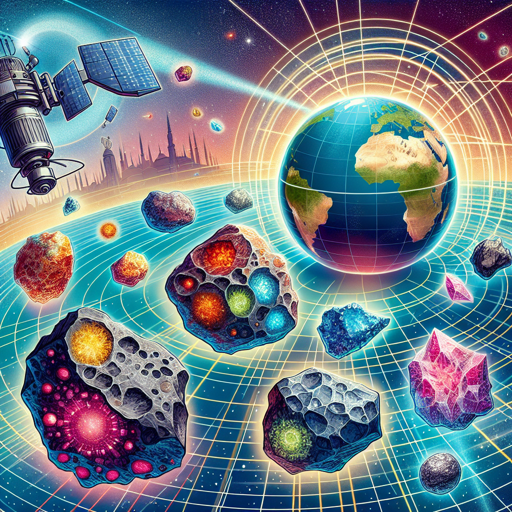
Meteorites and Minerals Beyond Earth
Introduction
Imagine holding a rock in your hand that is older than the Earth itself—a fragment of the cosmos that has journeyed millions of kilometers to reach our planet. Meteorites, those mysterious visitors from space, offer a rare window into the distant past and distant places in our solar system and even beyond. For geology enthusiasts, educators, students, and curious readers, these extraterrestrial rocks are more than just curiosities; they are time capsules containing secrets about the formation of planets, the origins of our solar system, and the diversity of minerals that exist beyond Earth.
In this article, we embark on an interstellar journey to explore what meteorites teach us about minerals beyond our planet. We’ll delve into the fascinating types of meteorites, uncover minerals found nowhere else but in space rocks, discuss how these discoveries reshape our understanding of mineralogy, and highlight what these revelations mean for scientists, educators, and collectors alike.
The Cosmic Messengers: What Are Meteorites?
Meteorites are fragments of rock or metal that have survived their fiery passage through Earth’s atmosphere to land on the surface. Their origins are as diverse as their compositions—some are remnants from asteroids, others are pieces of the Moon or Mars ejected by cosmic impacts. Meteorites are classified into three main categories:
- Stony Meteorites (Chondrites and Achondrites): Composed mostly of silicate minerals, chondrites contain tiny spherical chondrules while achondrites do not.
- Iron Meteorites: Made primarily of metallic iron-nickel alloys.
- Stony-Iron Meteorites: A blend of silicate minerals and metallic iron-nickel.
These categories provide clues not just about their compositions but also about where they came from and the processes that shaped them.
Extraterrestrial Minerals: Diversity Beyond Earth
Meteorites have introduced mineralogists to a world of minerals that are either extremely rare or entirely unknown on Earth. Over 300 new minerals have been first identified in meteorites! Some notable examples include:
1. Cohenite
- Composition: Iron carbide (Fe₃C)
- Found in: Iron meteorites
- Significance: Rare on Earth; forms under highly reduced conditions not found on our planet’s surface.
2. Schreibersite
- Composition: Iron-nickel phosphide ((Fe,Ni)₃P)
- Found in: Both iron and stony-iron meteorites
- Significance: May have delivered phosphorus to early Earth—an essential element for life.
3. Oldhamite
- Composition: Calcium sulfide (CaS)
- Found in: Enstatite chondrites
- Significance: Extremely rare on Earth; prevalent in certain types of meteorites.
4. Haxonite
- Composition: Iron-nickel carbide ((Fe,Ni)₂₃C₆)
- Found in: Iron meteorites
- Significance: Reveals high-pressure mineral-forming conditions in parent bodies.
5. Qingsongite
- Composition: Cubic boron nitride (BN)
- Found in: Ureilite meteorites
- Significance: The rarest form of boron nitride; previously known only as a synthetic material.
Table: Unique Extraterrestrial Minerals vs Terrestrial Counterparts
| Mineral Name | Found in Meteorites | Found on Earth | Typical Parent Body | Significance |
|---|---|---|---|---|
| Schreibersite | Yes | Rare | Iron & Stony-Iron | Delivers phosphorus for prebiotic chemistry |
| Oldhamite | Yes | Very Rare | Enstatite Chondrites | Indicates reducing conditions |
| Qingsongite | Yes | Ultra Rare | Ureilite Meteorites | Previously synthetic-only on Earth |
| Cohenite | Yes | Rare | Iron Meteorites | Forms under low oxygen conditions |
| Troilite | Yes | Rare | Many Chondrites | Common in lunar and Martian meteorites |
| Haxonite | Yes | No | Iron Meteorites | Formed under high pressure not replicable on Earth |
What Can We Learn? Insights from Space Rocks
Meteorites act as natural probes, providing information about environments and processes beyond what we can experience on Earth. Here’s what they reveal:
1. The Building Blocks of Planets
Chondritic meteorites contain chondrules—tiny spherules that are some of the first solids to form in the solar nebula around 4.6 billion years ago. Studying their composition helps scientists understand the early conditions and processes that led to planet formation.
2. Under Extreme Conditions
Many meteorite minerals form under extreme pressures, temperatures, or chemical conditions not commonly found on Earth. For example, diamond is found in some ureilite meteorites, created by shocks from massive impacts in space.
3. Clues to Water and Organic Molecules
Some carbonaceous chondrites contain water-bearing minerals and even organic compounds like amino acids. These findings support theories that meteorites could have delivered water—and perhaps even the ingredients for life—to the early Earth.
4. The Diversity of Planetary Geology
Meteorites from Mars and the Moon have helped us directly study planetary surfaces without leaving Earth. By comparing these samples with terrestrial rocks, geologists can piecemeal reconstruct the evolution of other planetary bodies.
“Meteorites are like cosmic postcards—a message from somewhere else in our solar system or beyond, telling us about processes and places we could never visit.”
— Dr. Meenakshi Wadhwa, planetary scientist
Meteorites in the Classroom and Laboratory
For educators and students, meteorites are tangible connections to space science and geology. Handling real fragments or viewing thin sections under a microscope can spark curiosity and foster hands-on learning about planetary processes. Universities and museums often maintain meteorite collections for study and outreach, making these cosmic messengers accessible to new generations.
Laboratory analysis using tools like electron microprobes, X-ray diffraction, or mass spectrometry allows scientists to characterize meteoritic minerals at atomic scales—revealing new mineral species and unlocking clues about their formation environments.
The Hunt for Extraterrestrial Gems
While most people think of gemstones as beautiful crystals found within Earth’s crust, some meteorites contain dazzling minerals that rival terrestrial gems:
- Pallasite Meteorites: These stony-iron meteorites feature stunning olivine (peridot) crystals embedded within a metallic matrix.
- Moldavite: A unique green tektite glass formed by a meteorite impact in central Europe.
- Libyan Desert Glass: A mysterious yellow silica glass believed to be formed by meteoritic airbursts over the Sahara.
Collectors highly prize these rare extraterrestrial gems for their beauty and their connection to cosmic events.
Table: Famous Meteorite Finds & Their Key Minerals
| Meteorite Name | Location Found | Main Mineral Highlights | Estimated Age (billion years) |
|---|---|---|---|
| Allende | Mexico | Chondrules, CAIs | 4.56 |
| Murchison | Australia | Amino acids, water-bearing | 4.6 |
| Hoba | Namibia | Iron-nickel (Metallic) | 0.08 |
| Fukang | China | Olivine (Peridot) | 4.5 |
| Zagami | Nigeria | Pyroxene (Martian origin) | 1.3 |
Rewriting Mineralogy: New Discoveries from Space
The discovery of new minerals in meteorites continues to reshape our understanding of mineralogy:
- Nearly all iron carbides and phosphides known on Earth were first found in meteorites.
- High-pressure polymorphs such as ringwoodite (a high-pressure form of olivine) provide clues about impact processes on their parent bodies.
- The identification of extraterrestrial diamonds and even nanodiamonds points to violent collision events billions of years ago.
The International Mineralogical Association continues to approve new mineral species from meteoritic sources almost every year.
For an up-to-date list of approved minerals discovered in meteorites, refer to the The Meteoritical Bulletin Database.
Challenges: Studying Space Rocks
Working with meteorites presents unique hurdles:
- Rarity: Most meteorites are small; large specimens are exceptional finds.
- Contamination: Terrestrial weathering can alter original minerals soon after landing.
- Preservation: Scientific value is maximized when samples are collected quickly from fall sites—Antarctica is an excellent hunting ground because its icy environment preserves freshly fallen meteorites.
- Classification & Authentication: Distinguishing true meteorites from terrestrial rocks or man-made materials requires careful analysis.
Why It Matters: From Science to Inspiration
Studying extraterrestrial minerals is more than an academic exercise—it has broad implications:
- Provides direct evidence for planetary formation theories.
- Offers clues about where (and how) life’s building blocks formed.
- Inspires new materials science research based on unique structures found only in space rocks.
- Connects humanity with the wider cosmos through hands-on specimens found right here on Earth.
Conclusion
Meteorites are more than celestial curiosities—they’re messengers from afar, carrying within them the chronicles of cosmic history and the blueprints of worlds beyond our own. Through their study, we uncover a dazzling diversity of minerals formed under alien conditions and gain insights into processes that shaped not just our own planet but countless others across the universe.
For geology enthusiasts, educators, students, and anyone captivated by the wonders of Earth science, meteorites offer a tangible connection to the mysteries of space—a reminder that our planet is part of a much larger cosmic story still being written by rocks that fall from the sky.
Further Reading
For a comprehensive resource on meteorite classification and mineralogy, visit NASA’s Astromaterials Research & Exploration Science Meteorite Website.