 Mineral Matrix: An AI Journey into Earth’s Treasures
A Day in the Life of a Geologist
Discover what geologists do daily, from fieldwork to lab analysis, and how they unravel Earth's secrets.
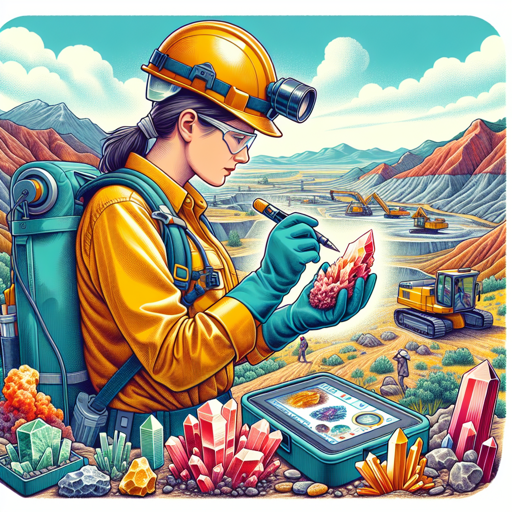
Introduction
From the rugged peaks of mountain ranges to the depths of underground mines, geologists are the detectives of the natural world. Their daily work is a blend of adventure, science, and discovery, revealing the hidden stories of Earth’s past and shaping our understanding of its future. Whether you are a geology enthusiast, a student considering a career in earth sciences, or simply fascinated by minerals and gemstones, this article invites you to step into the boots of a professional geologist for a day. Experience firsthand the challenges, triumphs, and routine realities that define this essential and ever-evolving profession.
The Morning Ritual: Preparation and Planning
The day for a geologist often begins before sunrise, especially if fieldwork is on the agenda. Preparation is key—no two days are exactly alike, but careful planning ensures safety and productivity.
1. Reviewing the Day’s Objectives
A geologist may start by reviewing maps, satellite imagery, or GIS data to pinpoint areas of interest. These could be mineral-rich outcrops, fossil beds, or potential drilling sites.
Checklist Example:
- Review geological maps and recent survey data.
- Check weather forecasts (critical for outdoor work).
- Prepare sampling equipment (rock hammers, GPS units, compasses).
- Confirm transportation and access permissions.
2. Packing Essential Tools
Field geologists rely on an array of specialized tools:
- Rock hammer: For breaking and examining samples.
- Hand lens: To inspect mineral grains and fossils closely.
- Field notebook: For recording observations and sketches.
- Compass clinometer: Measures rock orientation.
- Sampling bags: To collect rock, soil, or mineral specimens.
- Personal protective equipment (PPE): Helmets, boots, gloves, and sometimes gas detectors.
3. Safety Briefing
Safety comes first. Before heading out, geologists review potential hazards such as unstable terrain, wildlife encounters, or extreme weather. Communication devices like satellite phones are checked to ensure connectivity in remote areas.
Into the Field: Exploration and Discovery
Fieldwork is the heart of geology—a blend of scientific rigor and outdoor adventure that attracts many to this profession.
1. Traversing Terrain
Geologists may hike for hours through forests, deserts, mountains, or along riverbeds. Navigating challenging landscapes is part of the job—and often one of its most rewarding aspects.
“Geology gives us the only clue to the story of the Earth’s past.”
— Arthur Holmes, pioneering British geologist
2. Making Observations
Careful observation is crucial. Geologists document:
- Rock types and their relationships (stratigraphy)
- Evidence of folding, faulting, or other structural features
- Visible minerals or fossils
- Signs of weathering and erosion
Field notes are meticulously recorded—these details may be vital for later interpretation or publication.
3. Sampling and Analysis
Collecting representative samples is a cornerstone of field geology. Each specimen is labeled with location coordinates and contextual notes. Modern geologists often use portable instruments for rapid analysis:
- X-ray fluorescence (XRF) analyzers: Determine elemental composition on-site.
- Magnetic susceptibility meters: Help distinguish rock types.
4. Working with Technology
GPS units and tablets loaded with mapping software streamline data collection. Drones provide aerial imagery for inaccessible regions. In some specialties—like exploration geology—remote sensing technology detects mineral anomalies from afar.
Back to Base: Laboratory Work and Data Synthesis
After a demanding day outdoors, much of a geologist’s work moves to the laboratory or office.
1. Sample Preparation
Collected rocks are cleaned, cataloged, and sometimes cut into thin sections for microscopic examination. Soil or water samples may be analyzed for chemical content or pollutants.
2. Laboratory Analysis
Geochemists use sophisticated equipment like:
- Scanning Electron Microscopes (SEM): Reveal textures at micro-scale.
- Mass spectrometers: Identify trace elements or isotopic ratios.
Petrologists examine mineral assemblages under polarizing microscopes to infer formation conditions.
3. Data Integration
All data—field notes, photographs, lab results—are integrated using Geographic Information Systems (GIS) or modeling software. This synthesis helps build geological maps or 3D models of subsurface features.
4. Reporting and Communication
Professional geologists must communicate their findings clearly:
- Writing detailed reports for mining companies or environmental agencies
- Presenting results at scientific conferences
- Publishing papers in peer-reviewed journals
- Educating students or engaging with the public through outreach
The Many Faces of Geology: Specializations and Career Paths
Geology is a diverse science with many specialties:
| Specialization | Typical Activities | Work Environment | Example Employers |
|---|---|---|---|
| Mineralogist | Analyzing mineral samples; lab research | Laboratories, universities | Mining companies, museums |
| Exploration Geologist | Locating new mineral resources | Field sites worldwide | Mining & energy companies |
| Environmental Geologist | Assessing soil/water pollution, remediation | Field & office | Consulting firms, government |
| Hydrogeologist | Studying groundwater flow & quality | Field & lab | Water utilities, research orgs |
| Petrologist | Classifying rocks; reconstructing geologic history | Lab & academic settings | Universities |
| Seismologist | Monitoring earthquakes; hazard assessment | Field stations & offices | Government agencies |
Each path offers unique challenges and opportunities—from gold mines in Australia to glacier studies in Antarctica.
The Geologist’s Toolkit: Essential Skills and Qualities
Beyond technical knowledge, successful geologists share certain traits:
- Curiosity: A drive to ask “why” and “how” about Earth processes.
- Physical stamina: Endurance for long hikes and rugged conditions.
- Attention to detail: Critical for accurate observations and analyses.
- Problem-solving ability: Finding solutions in complex environments.
- Communication skills: Explaining findings to diverse audiences.
A Glimpse Inside: An Example Day in Mineral Exploration
Let’s follow Dr. Elena Rivera—a mineral exploration geologist—through a typical day in the field:
6:00 AM: Wake up in a remote field camp; check emails for updates from headquarters.
7:00 AM: Breakfast with the team; review daily objectives and safety protocols.
8:00 AM: Load trucks with equipment; head out to mapped target area.
9:00 AM – 1:00 PM: Traverse ridges; collect rock samples at intervals; record GPS locations; note visible mineralization.
1:00 PM: Lunch break under the shade of an outcrop; share observations with colleagues.
2:00 PM – 5:00 PM: Continue mapping; use portable XRF on select samples; photograph key exposures.
6:00 PM: Return to camp; clean samples; upload GPS data; enter notes into digital database.
7:30 PM: Team dinner; informal discussion of preliminary findings; plan for next day’s traverse.
9:00 PM: Review new satellite imagery on laptop; update tomorrow’s field plan based on today’s results.
This blend of physical activity, analytical thinking, teamwork, and technology is typical for many geologists—each day brings new discoveries.
Challenges Geologists Face
While geology offers adventure and intellectual rewards, it also comes with unique challenges:
- Unpredictable weather: Sudden storms can halt fieldwork.
- Remote locations: Weeks spent away from family or urban comforts.
- Physical risks: Landslides, animal encounters, or extreme temperatures.
- Data uncertainty: Incomplete exposures or ambiguous evidence complicate interpretations.
- Environmental responsibility: Balancing resource extraction with ecosystem protection.
Good planning and adaptability are crucial attributes for overcoming these hurdles.
The Impact of Geologists on Society
Geologists’ work underpins many aspects of modern life:
- Supplying raw materials for industry (metals, oil, gemstones)
- Ensuring safe drinking water through hydrogeology
- Reducing natural disaster risks via seismic hazard studies
- Guiding land-use decisions and environmental restoration
- Advancing our scientific understanding of Earth’s evolution
As stewards of Earth’s resources and history, geologists play a central role in sustainable development.
Resources for Aspiring Geologists
If you’re inspired by geology’s blend of adventure and discovery:
- Join local geology clubs or societies
- Visit natural history museums or gemstone shows
- Enroll in online courses (e.g., American Geosciences Institute)
- Volunteer on field projects or at university labs
- Read classic geology books like “Annals of the Former World” by John McPhee
Conclusion
A day in the life of a geologist is as varied as the landscapes they study—from early-morning hikes over ancient rocks to late-night data analysis. Their work unravels Earth’s greatest mysteries while supporting society’s needs for resources and environmental stewardship. Whether mapping distant mountain ranges or examining gemstones under a microscope, geologists combine curiosity with scientific rigor to reveal stories written in stone.
If you’re drawn to exploration, problem-solving, and lifelong learning, geology offers a world of possibilities—quite literally beneath your feet.
For more about careers in geology and recent discoveries in earth sciences, visit Geological Society.