 Mineral Matrix: An AI Journey into Earth’s Treasures
The Future of Mining Technology and Sustainability
Exploring innovations and sustainability trends shaping tomorrow's mining industry.
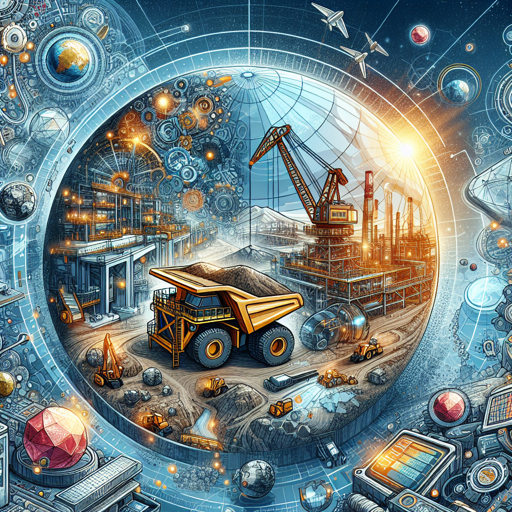
The Future of the Mining Industry: Technology and Sustainability at the Forefront
Mining has been the lifeblood of civilization since ancient times, fueling technological advancement, infrastructure, and economic growth. But as society faces unprecedented environmental and social challenges, the question arises: What does the future hold for the mining industry? Today, we stand at the threshold of a new era—one defined by groundbreaking technology and an urgent commitment to sustainability.
In this comprehensive article, we’ll explore emerging trends shaping the future of mining, from automation and digitalization to green practices and community engagement. Whether you’re a geology enthusiast, educator, student, or just curious about earth sciences, join us as we dig deep into the innovations transforming how we extract the planet’s most vital resources.
Table of Contents
- The Mining Industry Today: Challenges and Opportunities
- Technological Innovations Reshaping Mining
- Sustainability: The New Core of Mining
- Social Responsibility and Community Engagement
- Critical Minerals and the Green Energy Revolution
- Comparing Traditional vs. Future Mining
- Conclusion: A Sustainable Path Forward
The Mining Industry Today: Challenges and Opportunities
Mining is at a crossroads. On one hand, demand for minerals—especially those vital for renewable energy, electric vehicles, and digital technology—has soared. On the other hand, the industry faces mounting scrutiny over its environmental impact, labor practices, and social license to operate.
Key Challenges:
- Resource Depletion: Many high-grade ores are becoming scarcer, requiring deeper and more complex mining.
- Environmental Concerns: Waste management, water usage, and biodiversity loss are top issues.
- Energy Consumption: Traditional mining processes are energy-intensive and carbon-heavy.
- Regulatory Pressure: Stricter environmental regulations are being enforced globally.
- Community Relations: Protests and opposition from local communities can halt or delay projects.
Yet, these challenges are also opportunities for innovation.
Technological Innovations Reshaping Mining
The Fourth Industrial Revolution is sweeping through mining. Technologies once considered futuristic are rapidly becoming industry standards.
1. Automation and Robotics
Automated drilling rigs, driverless haul trucks, and robotic loaders are transforming mine sites worldwide. Automation improves safety by removing workers from hazardous environments and boosts efficiency by allowing 24/7 operations.
Benefits:
- Reduced human error
- Lower labor costs
- Enhanced precision
2. Digitalization and Smart Mines
Digital twins—virtual replicas of mines—allow operators to simulate scenarios, optimize production, and predict equipment failures before they occur. Combined with sensors, drones, and IoT devices, digitalization gives real-time insights into everything from ore grades to machinery health.
3. Artificial Intelligence (AI) & Machine Learning
AI-powered analytics help geologists identify promising exploration targets faster and more accurately by processing massive datasets from satellite imagery, geochemical surveys, and drilling logs.
4. Renewable Energy Integration
Solar panels, wind turbines, and battery storage are replacing diesel generators at remote sites. Not only does this reduce carbon footprints, but it also cuts operational costs in the long run.
5. Waterless Mining Technologies
Novel ore-processing methods reduce or eliminate water usage—a crucial innovation in arid regions or areas facing water scarcity.
“Mining is no longer just about extracting minerals; it’s about extracting data.”
— Dr. Samantha Hughes, Mining Technology Expert
Sustainability: The New Core of Mining
Sustainability is now central to mining strategy. Investors, regulators, and consumers alike demand responsible sourcing of minerals—leading to profound changes in how mines are planned, operated, and closed.
Environmental Stewardship
Waste Reduction & Circular Economy
Innovative waste management processes are turning mining waste into byproducts—such as using tailings for construction materials or extracting residual metals from mine dumps.
Land Rehabilitation
Modern mines are required to have closure plans that restore landscapes after mining ends—sometimes even creating new habitats or recreational areas.
Emissions Reduction
Electrification of machinery and adoption of low-carbon fuels help reduce mines’ greenhouse gas emissions.
Responsible Sourcing & Traceability
Blockchain technology is being used to track minerals from mine to market. This ensures ethical sourcing and helps combat issues like conflict minerals or illegal mining.
Table: Sustainability Initiatives in Modern Mining
| Initiative | Description | Impact |
|---|---|---|
| Renewable Energy | Solar/wind power for operations | Lowers carbon emissions |
| Waterless Processing | Ore extraction with minimal water use | Conserves water resources |
| Circular Economy | Reprocessing waste into usable materials | Reduces landfill/tailings |
| Biodiversity Offsetting | Creating habitats post-mining | Supports local ecosystems |
| Blockchain Traceability | Digital tracking of mineral provenance | Ensures ethical sources |
Social Responsibility and Community Engagement
Mining companies increasingly recognize that their social license to operate is as important as regulatory permits. Building trust with local communities is essential for long-term success.
Key Strategies:
- Stakeholder Dialogues: Engaging communities in decision-making from exploration through closure.
- Local Employment & Training: Creating jobs and building skills among local populations.
- Supporting Community Projects: Investing in infrastructure, education, and healthcare.
Case Study: Community Partnerships
In Canada’s Yukon Territory, several mining companies have forged partnerships with First Nations communities—sharing profits and decision-making power. This model not only secures social license but also ensures benefits are distributed equitably.
Critical Minerals and the Green Energy Revolution
The transition to a low-carbon economy hinges on reliable supplies of “critical minerals” such as lithium, cobalt, nickel, rare earth elements (REEs), copper, and graphite. These elements are indispensable for batteries, wind turbines, solar panels, and electronic devices.
Supply Chain Resilience
Global demand for critical minerals is rising rapidly—and so is geopolitical competition for these resources. Diversifying supply sources and developing recycling methods are key priorities for governments and companies alike.
Mining for the Future
Exploring deep-sea mineral deposits or asteroid mining may one day supplement terrestrial sources—but these frontiers raise new scientific, ethical, and environmental questions.
Comparing Traditional vs. Future Mining
Below is a table highlighting key differences between conventional practices and emerging future-focused approaches:
| Aspect | Traditional Mining | Future Mining |
|---|---|---|
| Energy Source | Fossil fuels | Renewables (solar/wind), electrification |
| Labor | Manual-intensive | Automated/robotic systems |
| Environmental Impact | High emissions, large land disturbance | Low-emission, minimal footprint |
| Waste Management | Tailings disposal | Waste valorization/circular economy |
| Community Role | Limited engagement | Active partnership and benefit-sharing |
| Technology Level | Mechanical/analog | Digital, AI-driven, IoT-enabled |
| Resource Tracking | Paper-based | Blockchain traceability |
External Reference
For further reading on sustainable mining practices and technological trends shaping the industry’s future, visit the International Council on Mining & Metals (ICMM).
Conclusion: A Sustainable Path Forward
The mining industry stands on the verge of a profound transformation. Technology is making operations safer, smarter, and more efficient than ever before. Meanwhile, sustainability is no longer merely a buzzword—it is an imperative that shapes every facet of modern mining.
For geology enthusiasts, educators, students, and earth science lovers alike, these changes herald an exciting future filled with new discoveries and possibilities. From ethical mineral sourcing to breathtaking innovations in exploration technology—the story of mining is evolving rapidly.
As we look ahead, one thing is clear: The future of mining will be defined by those who embrace change—balancing humanity’s need for resources with our responsibility to protect the planet for generations to come.
What do you think about the future of mining? Share your thoughts below or join our community for more in-depth discussions!