 Mineral Matrix: An AI Journey into Earth’s Treasures
How Volcanoes Forge the Worlds Most Unique Minerals
Discover how volcanic activity shapes minerals, gems, and Earths geology.
Introduction
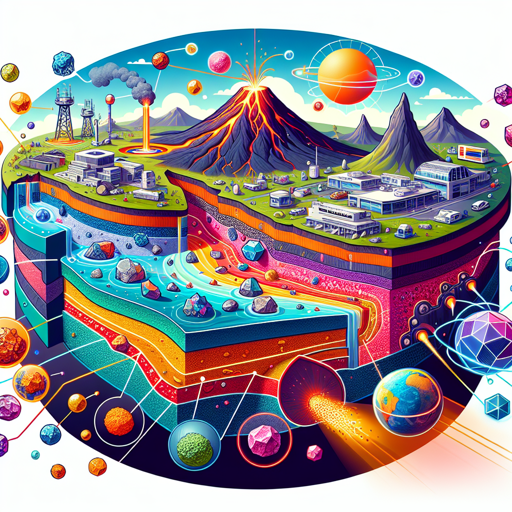
Volcanoes are among Earth’s most dramatic and powerful natural phenomena. Their fiery eruptions capture our imagination, but beneath the surface, these geological giants play a far more significant role than just reshaping landscapes. Volcanoes are master architects in the world of minerals, forging dazzling gemstones, rare ores, and foundational rocks that underpin our planet’s structure. For geology enthusiasts, educators, students, and anyone fascinated by the mysteries beneath our feet, understanding how volcanoes create minerals opens a window into the dynamic processes that shape our world.
In this article, we embark on a journey to explore the intimate relationship between volcanic activity and mineral formation. We’ll uncover the science behind mineral genesis in volcanic environments, examine iconic gemstones born from volcanic heat and pressure, and reveal why these processes are crucial for both natural wonders and industrial resources.
The Dynamic Earth: Volcanoes as Mineral Laboratories
The Volcanic Engine
Volcanoes are surface expressions of Earth’s internal heat engine. Deep within the planet, temperatures soar to thousands of degrees Celsius. Here, rocks melt to form magma—a molten cocktail rich in chemical elements. When tectonic forces drive this magma toward the surface, it powers volcanic eruptions that not only build mountains but also create the perfect laboratory for mineral formation.
How Magma Creates Minerals
As magma cools—either slowly underground or rapidly during an eruption—different minerals crystallize out at different temperatures and pressures. This process is known as magmatic differentiation. The minerals formed depend on several factors:
- Chemical composition of the magma (e.g., silica-rich vs. iron-rich)
- Cooling rate (slow cooling forms larger crystals)
- Pressure at which crystallization occurs
- Presence of gases and other volatiles
This dynamic environment gives rise to an incredible variety of minerals, from common building blocks like feldspar and olivine to rare treasures like diamonds and peridot.
| Process | Resulting Minerals | Example Locations |
|---|---|---|
| Rapid Lava Cooling | Obsidian (volcanic glass) | Iceland, USA |
| Slow Magma Cooling | Feldspar, Quartz | Mount St. Helens, USA |
| Gas-Rich Eruptions | Sulfur, Native Gold | Indonesia, Italy |
| Hydrothermal Alteration | Zeolites, Opal | Canary Islands, Japan |
From Fire to Crystal: Key Mineral Formation Processes
1. Crystallization from Magma
When magma cools beneath the surface (forming plutonic rocks) or erupts as lava (forming volcanic rocks), minerals crystallize in a predictable order—a sequence described by Bowen’s Reaction Series. For instance:
- Olivine and pyroxene form at high temperatures.
- Amphibole, biotite, and feldspar form as temperatures fall.
- Quartz forms last at relatively low temperatures.
This order determines the mineral composition of igneous rocks like basalt (rich in olivine and pyroxene) or granite (rich in quartz and feldspar).
2. Volcanic Gas Deposition
Hot gases escaping from volcanic vents carry dissolved elements like sulfur, copper, gold, and silver. As these gases cool near the surface or interact with groundwater, they can precipitate spectacular mineral deposits:
- Native sulfur crystals around fumaroles
- Gold and silver in hydrothermal veins
- Copper sulfides in porphyry copper deposits
These processes make volcanoes key sources for many economic minerals.
3. Hydrothermal Activity
After an eruption, hot fluids percolate through cracks and cavities in volcanic rocks. These hydrothermal systems dissolve minerals from deep underground and redeposit them in veins or open spaces as the fluids cool. This leads to the formation of:
- Quartz
- Opal
- Zeolites
- Gemstones such as amethyst and topaz
Hydrothermal mineralization is essential for creating many gemstone deposits worldwide.
4. Contact Metamorphism
When magma intrudes into cooler surrounding rocks (the “country rock”), it heats them up dramatically—a process known as contact metamorphism. This baking alters existing minerals and can lead to the creation of new ones like garnet, spinel, and corundum (the mineral form of ruby and sapphire).
“Volcanoes are nature’s foundries—where elements are melted, mixed, and cast into the minerals that shape our world.”
— Dr. Hazel Thompson, Volcanologist
Volcanic Gems: Jewels Born of Fire
Many of the world’s most cherished gemstones owe their existence to volcanic activity. Let’s explore some iconic examples:
Peridot: The Green Gem from Mantle Depths
Peridot (gem-quality olivine) is one of the few gemstones formed deep within Earth’s mantle and brought to the surface by volcanic eruptions. Volcanic rocks called basalts sometimes contain beautiful green peridot crystals.
- Famous locations: Hawaii (USA), Peridot Mesa (Arizona, USA), China
- Formation: Crystallizes from magma under high temperatures; brought up rapidly by eruptions
Diamond: Nature’s Ultimate High-Pressure Gem
Diamonds form under immense pressure and temperature in Earth’s mantle. They reach the surface via explosive volcanic pipes called kimberlites—unique to certain types of ancient volcanoes.
- Famous locations: South Africa, Russia (Yakutia), Canada
- Formation: Carbon atoms crystallize under high-pressure conditions; transported by deep-source volcanic eruptions
Obsidian: Volcanic Glass with a Cutting Edge
Obsidian is a natural volcanic glass formed when silica-rich lava cools so rapidly that crystals don’t have time to develop.
- Famous locations: Iceland, Yellowstone (USA), Armenia
- Use: Historically used for tools and weapons due to its sharp edges
Opal: Rainwater Meets Volcanic Rock
Opals often form in volcanic rocks when rainwater percolates through silica-rich ash layers, dissolving silica which later precipitates as opal.
- Famous locations: Australia (Lightning Ridge), Ethiopia
- Formation: Silica-rich groundwater fills cavities in volcanic rock; slow precipitation forms opal over millennia
Table: Iconic Volcanic Gemstones
| Gemstone | Source Rock/Process | Notable Locations | Unique Features |
|---|---|---|---|
| Peridot | Basalt flows | Hawaii, Arizona | Olive-green color |
| Diamond | Kimberlite pipes | South Africa, Russia | Extreme hardness |
| Obsidian | Rapidly cooled lava | Iceland, USA | Glassy luster; sharp edges |
| Opal | Silica in volcanic ash | Australia, Ethiopia | Iridescent “play-of-color” |
| Garnet | Contact metamorphism | Italy, USA | Various colors; crystal habit |
Volcanoes and Economic Minerals
Volcanoes are not just creators of beauty—they are also vital for industry. Many economically important metals are concentrated by volcanic processes:
Copper Deposits
Porphyry copper deposits—responsible for a significant portion of global copper production—form when hydrothermal fluids from cooling magma concentrate copper sulfides.
Gold and Silver Veins
Volcanic hydrothermal systems can transport gold and silver dissolved in hot water. As these fluids cool in fractures or open spaces near a volcano’s summit or flanks, they deposit rich veins of precious metals.
Industrial Minerals
Volcanic ash is a key ingredient in cement manufacturing (as pozzolan), while pumice is used as an abrasive and lightweight construction material.
Why Volcanic Minerals Matter to Science—and Society
Geological Clues
Studying minerals formed by volcanoes helps geologists decode Earth’s history. The presence of certain minerals can indicate past volcanic activity—even for long-extinct volcanoes.
Environmental Indicators
Some minerals act as environmental markers. For example, sulfur deposits around active vents can indicate ongoing degassing and potential eruption risk.
Resources for Humanity
From copper wires to diamond jewelry, our daily lives depend on materials created by ancient and modern volcanoes.
Volcanoes Beyond Earth: Extraterrestrial Mineral Formation
Volcanic processes aren’t unique to Earth—they occur on other planets and moons too! For example:
- The moon Io (orbiting Jupiter) has sulfur volcanoes.
- Mars features giant shield volcanoes like Olympus Mons; evidence suggests past volcanic mineral formation.
- Volcanic glass has been detected on the Moon and Mars.
Studying how volcanoes create minerals here helps us interpret planetary geology across the solar system.
Table: Comparison of Mineral Formation Processes
| Formation Process | Location | Example Minerals | Key Characteristics |
|---|---|---|---|
| Magmatic Crystallization | Deep or surface | Olivine, Feldspar | Ordered cooling sequence |
| Gas Deposition | Surface vents | Sulfur, Gold | Direct precipitation from gases |
| Hydrothermal Alteration | Subsurface cracks | Quartz, Opal | Hot fluids transport/redeposit ions |
| Contact Metamorphism | Rock-magma contacts | Garnet, Spinel | Heat-induced mineral changes |
Further Reading & References
For readers eager to dive deeper into volcanic mineralogy and its impact on geology and society:
- USGS Volcano Hazards Program – How Volcanoes Create Mineral Deposits
- Klein, C., & Dutrow, B. (2007). The Manual of Mineral Science (23rd edition). Wiley.
- Mindat.org – Minerals formed by Volcanic Activity
- Hutchison, C.S. (2012). Economic Mineral Deposits. Routledge.
Conclusion
Volcanoes are far more than fiery spectacles—they are nature’s crucibles where new minerals are born. From the jewelry we cherish to the metals powering our modern world, countless treasures owe their origins to volcanic processes deep within Earth’s crust. By studying how volcanoes create minerals, we unlock clues about our planet’s past, present, and even its future prospects—on Earth and beyond.
Whether you’re a seasoned geologist, an educator crafting lessons on earth science, or simply someone marveling at the wonders beneath our feet, remember this: every eruption is a story written in stone—one that shapes landscapes, forms precious gems, and fuels human civilization.
Let curiosity be your compass as you continue exploring the fascinating world of minerals created by volcanoes!