 Mineral Matrix: An AI Journey into Earth’s Treasures
Top Ten Most Valuable Gemstones on Earth
Discover the rarest and most precious gemstones prized worldwide
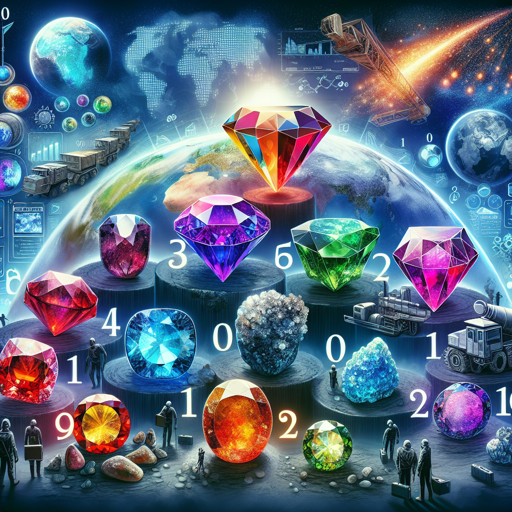
Top Ten Most Valuable Gemstones on Earth
Gemstones have captivated humanity for millennia, not only for their dazzling beauty but also for their rarity, historical significance, and extraordinary value. From ancient civilizations adorning royalty with sparkling treasures to modern collectors vying for ultra-rare finds at auction, the allure of gemstones is timeless and universal.
But what makes a gemstone truly valuable? Is it the depth of its color, the clarity that lets you gaze deep within, or perhaps the rareness of its occurrence? In this article, we count down the world’s ten most valuable gemstones—exploring their unique stories, origins, and what sets them apart from the rest. Whether you’re a geology enthusiast, a student, an educator, or simply mesmerized by earth’s wonders, join us as we delve into the fascinating world of these precious marvels.
The Allure of Value: What Makes a Gemstone Precious?
Before embarking on our countdown, it’s crucial to understand what factors contribute to a gemstone’s value. The famous “Four Cs”—Color, Clarity, Cut, and Carat weight—are essential in the gemological world. However, other elements like rarity, demand, provenance, and historical significance can propel certain stones into astronomical price ranges.
“The rarest things in the world, next to a spirit of discernment, are diamonds and pearls.”
— Jean de La Bruyère
Let’s explore these magnificent minerals that have become the ultimate symbols of beauty and wealth.
Top Ten Countdown: The World’s Most Valuable Gemstones
Below is a table summarizing our countdown of the top ten most valuable gemstones, including their estimated price per carat and a highlight of what makes each stone unique.
| Rank | Gemstone | Price per Carat (USD) | Key Features | Primary Source(s) |
|---|---|---|---|---|
| 1 | Pink Star Diamond | $1,200,000+ | Flawless pink color, record auction price | South Africa |
| 2 | Jadeite | $3,000,000+ (specific cases) | Vivid green color, imperial status | Myanmar (Burma) |
| 3 | Blue Diamond | $3,930,000+ | Intense blue hue, extreme rarity | South Africa |
| 4 | Musgravite | $35,000+ | Ultra-rare, few known specimens | Australia, Greenland |
| 5 | Alexandrite | $70,000+ | Color-changing properties | Russia, Brazil |
| 6 | Red Beryl | $10,000+ | Rare deep red color | Utah (USA) |
| 7 | Black Opal | $15,000+ | Brilliant play-of-color | Lightning Ridge (Australia) |
| 8 | Taaffeite | $35,000+ | Rare lavender-pink hues | Sri Lanka, Tanzania |
| 9 | Grandidierite | $20,000+ | Blue-green color, high transparency | Madagascar |
| 10 | Paraíba Tourmaline | $16,000+ | Neon blue-green hues due to copper | Brazil (Paraíba), Nigeria |
Note: Prices are approximate and can vary widely based on quality and market conditions.
1. Pink Star Diamond
Arguably the most valuable gemstone ever sold at auction, the Pink Star Diamond is a dazzling 59.6-carat pink diamond that achieved a record-breaking $71.2 million at Sotheby’s Hong Kong in 2017. Sourced from South Africa’s renowned diamond mines, its exceptional size and flawless color grade make it a true geological marvel.
Why it’s valuable:
- Largest known internally flawless fancy vivid pink diamond.
- Extreme rarity—less than 0.1% of all diamonds are graded as pink.
- Symbolizes romance and luxury on an unprecedented scale.
Where it’s found:
Primarily in South Africa.
2. Jadeite
The top-quality form of jade—jadeite—commands prices that can surpass even diamonds in certain cases. Imperial Jadeite with its intense emerald-green hue is highly coveted in Chinese culture and can fetch over $3 million per carat for top specimens.
Why it’s valuable:
- Rich cultural significance in Asia.
- Only found in select regions.
- Vivid coloration and translucency.
Where it’s found:
Myanmar (Burma) is the primary source.
3. Blue Diamond
Natural blue diamonds owe their mesmerizing color to trace amounts of boron within their crystal structure. The legendary Hope Diamond and the Blue Moon Diamond are two iconic examples.
Why it’s valuable:
- Striking blue coloration.
- Extremely rare; fewer than 0.1% of mined diamonds are blue.
- Record-setting auction prices.
Where it’s found:
Predominantly in South Africa.
4. Musgravite
Discovered in Australia’s Musgrave Ranges in 1967, musgravite is one of the rarest gemstones on earth. Only a handful of facetable pieces exist worldwide.
Why it’s valuable:
- Extreme rarity.
- Subtle gray-violet hue.
- Coveted by serious collectors.
Where it’s found:
Australia, Greenland.
5. Alexandrite
Named after Russian Tsar Alexander II, alexandrite is famed for its dramatic color change—appearing green by daylight and red under incandescent light.
Why it’s valuable:
- Unique color-changing property.
- Scarce in large sizes.
- Deeply associated with Russian royalty.
Where it’s found:
Originally discovered in Russia’s Ural Mountains; also found in Brazil and Sri Lanka.
6. Red Beryl (Bixbite)
Sometimes dubbed the “red emerald,” red beryl is over 1,000 times rarer than diamonds. Crystals large enough for faceting are extremely uncommon.
Why it’s valuable:
- Rich raspberry-red coloration.
- Extremely limited deposits.
- Only gem-quality finds in Utah (USA).
Where it’s found:
Wah Wah Mountains of Utah.
7. Black Opal
Australia’s national gemstone, black opal, is celebrated for its deep body tone and vibrant play-of-color—a kaleidoscope of neon hues that dance across its surface.
Why it’s valuable:
- Intense color contrast.
- High demand among collectors.
- Only found in a few locations worldwide.
Where it’s found:
Lightning Ridge (Australia) produces most black opals.
8. Taaffeite
Discovered by gemologist Richard Taaffe in 1945 in a box of Sri Lankan spinels—taaffeite stands out for its violet to mauve hues and rarity.
Why it’s valuable:
- Rare combination of colors.
- Initially mistaken for spinel due to similarity.
- Fewer than fifty gem-quality stones known globally.
Where it’s found:
Sri Lanka and Tanzania are principal sources.
9. Grandidierite
First described in Madagascar in 1902 by French mineralogist Alfred Lacroix and named after explorer Alfred Grandidier, grandidierite is prized for its blue-green hues and exceptional transparency.
Why it’s valuable:
- Rare;
- Brilliant bluish-green coloration;
- Gem-quality crystals extremely scarce.
Where it’s found:
Madagascar is almost exclusive source; minor finds elsewhere.
10. Paraíba Tourmaline
Discovered in Brazil’s Paraíba State during the late 1980s, Paraíba tourmaline shook the gem world with its electric neon blue-green colors caused by copper content. Since then, similar stones have been unearthed in Nigeria and Mozambique—but true Brazilian specimens remain the most prized.
Why it’s valuable:
- Unmatched neon coloration.
- Limited supply.
- High demand among designers and collectors.
Where it’s found:
Brazil (Paraíba), Nigeria, Mozambique.
Visual Comparison Table
Here’s an at-a-glance comparison of key features:
| Gemstone | Rarity | Color | Unique Trait | Notable Auction Price |
|---|---|---|---|---|
| Pink Star Diamond | Extreme | Pink | Largest flawless pink | $71.2 million (2017) |
| Jadeite | Very High | Emerald Green | Imperial status | $3M+/carat |
| Blue Diamond | Extreme | Blue | Boron-induced color | $3.93M+/carat |
| Musgravite | Ultra | Gray-violet | Few known stones | $35K+/carat |
| Alexandrite | High | Green/Red | Color change | $70K+/carat |
| Red Beryl | Ultra | Raspberry Red | “Red emerald” rarity | $10K+/carat |
| Black Opal | High | Multi-color/Black | Play-of-color | $15K+/carat |
| Taaffeite | Ultra | Violet/Mauve | Misidentified as spinel | $35K+/carat |
| Grandidierite | Ultra | Blue-Green | Transparency | $20K+/carat |
| Paraíba Tourmaline | High | Neon Blue-Green | Copper gives neon effect | $16K+/carat |
The Science Behind Rarity
While beauty plays a significant role in a gemstone’s desirability, scarcity elevates certain minerals to legendary status. For example:
- Formation Requirements: Some gemstones require incredibly specific geological conditions—a perfect storm of pressure, temperature, and chemical ingredients—to crystallize.
- Limited Deposits: Many top-tier gems originate from a single mine or geographic area; when that source is depleted or becomes inaccessible due to political or environmental reasons, prices can soar.
- Market Demand: Cultural trends or historical artifacts (like imperial jadeite in China or diamonds in Western engagement rings) can dramatically influence value.
For more about gemstone rarity and valuation factors, see GIA’s Guide to Gemstone Value.
A Glimpse into History: Legendary Gems
Throughout history, some gemstones have achieved near-mythical status—not just for their price tag but also for their stories:
The Hope Diamond (Blue Diamond)
Stolen from a statue in India centuries ago and passing through royal hands across Europe before landing at the Smithsonian Institution—a tale of mystery and supposed misfortune surrounds this dazzling blue gem.
The Imperial Jade Seal
Commissioned for Chinese emperors and passed down through dynasties; imperial jadeite has been associated with power and divinity for centuries.
The Pink Star Diamond
Breaking records at auction houses and drawing worldwide attention—the Pink Star remains an icon of modern gem collecting.
Ethical Considerations: Sourcing and Sustainability
As demand for rare gemstones continues to grow, so does concern for ethical sourcing and environmental impact:
- Conflict-Free Sourcing: Some diamonds and colored stones have been linked to conflict zones; reputable jewelers now provide certification for ethically sourced gems.
- Environmental Stewardship: Mining can be destructive if not properly managed. Responsible operations aim to minimize impact through land reclamation and reduced chemical usage.
- Lab-Grown Alternatives: Advances in technology have made it possible to create lab-grown versions of even the rarest gems—offering ethical choices without sacrificing beauty or quality.
Educators and enthusiasts alike should advocate for responsible practices within the gem industry to preserve both our planet and these natural treasures for generations to come.
Why Do We Treasure These Stones?
Psychologically and culturally, gemstones embody far more than monetary value:
- Symbolism: Love (diamond), wisdom (sapphire), hope (opal), power (jade).
- Healing Lore: Many cultures assign spiritual or healing properties to certain stones.
- Aesthetic Appeal: Their ability to refract light into vibrant colors has inspired artists for centuries.
- Investment Potential: Certain stones have dramatically increased in value over time—making them prized assets as well as adornments.
External Resources
For further reading on rare gems and their global significance:
- Gemological Institute of America - Gem Encyclopedia
- International Gem Society - Gemstone Price Guide
- Smithsonian National Museum of Natural History - Gems Gallery
Conclusion
The world of gemstones is as complex as it is captivating. From the record-breaking Pink Star Diamond to the electric brilliance of Paraíba tourmaline or the historical gravitas of imperial jadeite—each stone tells a unique story about our planet’s geological wonders and humanity’s ongoing fascination with beauty and rarity.
Whether you’re studying mineralogy or simply admiring a jewel in a museum display case, these ten gemstones embody the ultimate fusion of natural artistry and cultural reverence. As we continue to explore earth’s hidden treasures, may we do so with appreciation—for both their scientific marvels and enduring legacies.
What gemstone would you add to this list? Share your thoughts below!