 Mineral Matrix: An AI Journey into Earth’s Treasures
Birthstones Their Legends Meanings and Geology
Explore the science and stories behind each month's birthstone and what makes them special.
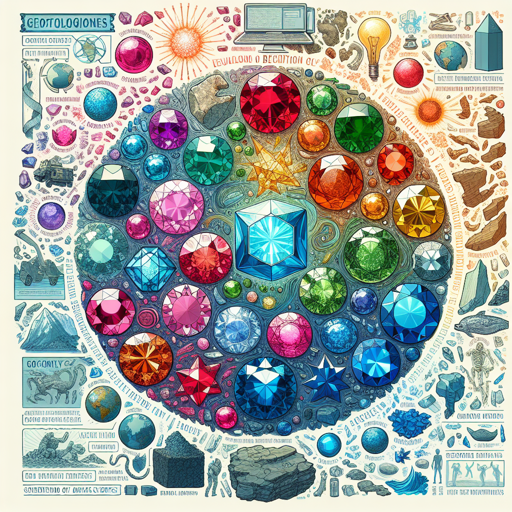
Birthstones and Their Meanings: Legends, Science, and Stories
Birthstones have captivated human imagination for centuries. From ancient civilizations to modern jewelry stores, these sparkling gems are more than just beautiful—they’re steeped in legend, science, and symbolism. But what are birthstones? How did they become associated with each month? And what stories and scientific wonders do they reveal? In this article, we’ll journey through the fascinating world of birthstones, uncover their geological origins, and explore the legends that give them meaning.
Table of Contents
- The Origin of Birthstones
- Birthstones by Month: Meanings and Geology
- Table: Birthstones at a Glance
- The Science Behind the Sparkle
- Choosing and Caring for Your Birthstone
- Conclusion
- References
The Origin of Birthstones
The tradition of birthstones can be traced back to ancient times. Some believe the origin lies in the Breastplate of Aaron described in the Book of Exodus, which was said to be adorned with 12 stones representing the tribes of Israel. Over centuries, these stones became linked to the 12 months of the year and the zodiac signs.
By the 18th century, wearing a gemstone associated with your birth month became a popular custom in Poland and later throughout Europe. Today’s widely recognized list of birthstones was standardized by the American National Retail Jewelers Association (now Jewelers of America) in 1912, though many cultures have their own unique traditions.
Birthstones by Month: Meanings and Geology
Let’s explore each month’s birthstone—its legendary meaning, geological properties, and global significance.
January: Garnet
- Color: Deep red (most common), but can be green, orange, or purple.
- Meaning: Symbolizes protection, friendship, and trust.
- Geology: Garnets are silicate minerals found in metamorphic rocks. Their vibrant color comes from trace metals like iron and manganese.
- Legend: Ancient travelers carried garnets as talismans against harm.
February: Amethyst
- Color: Violet to deep purple.
- Meaning: Stands for peace, clarity, and sobriety.
- Geology: A variety of quartz colored by iron and natural irradiation.
- Legend: Greeks believed it prevented intoxication.
March: Aquamarine
- Color: Light blue to blue-green.
- Meaning: Represents courage and calmness.
- Geology: A type of beryl colored by iron.
- Legend: Sailors regarded it as a charm for safe passage at sea.
April: Diamond
- Color: Colorless (most prized), but also yellow, brown, pink, blue.
- Meaning: Symbolizes eternal love and strength.
- Geology: Pure carbon crystalized under extreme pressure deep in the Earth’s mantle.
- Legend: Ancient Hindus believed diamonds protected against evil.
May: Emerald
- Color: Rich green.
- Meaning: Stands for rebirth, fertility, and wisdom.
- Geology: A green variety of beryl colored by chromium or vanadium.
- Legend: Cleopatra’s favorite gemstone, believed to grant foresight.
June: Pearl or Alexandrite
- Color: Pearls—white or cream; Alexandrite—color-changing green/red.
- Meaning: Purity (pearl), balance (alexandrite).
- Geology: Pearls are organic, formed in mollusks; alexandrite is a rare chrysoberyl mineral.
- Legend: Pearls symbolize innocence; alexandrite is thought to bring luck.
July: Ruby
- Color: Vivid red.
- Meaning: Passion, vitality, courage.
- Geology: A variety of corundum colored by chromium.
- Legend: Rubies were believed to bestow invincibility in battle.
August: Peridot
- Color: Yellow-green to olive-green.
- Meaning: Happiness, good fortune, and peace.
- Geology: Gem-quality olivine formed deep within the Earth’s mantle.
- Legend: Ancient Egyptians called it the “gem of the sun.”
September: Sapphire
- Color: Deep blue (most prized), also pink, yellow, green.
- Meaning: Wisdom, loyalty, nobility.
- Geology: Corundum mineral colored by trace elements like iron and titanium.
- Legend: Worn by royalty for protection from envy.
October: Opal or Tourmaline
- Color: Opal—iridescent; Tourmaline—varies widely (pink is most common).
- Meaning: Hope (opal), creativity (tourmaline).
- Geology: Opals are hydrated silica; tourmalines are boron silicate minerals.
- Legend: Opals were thought to hold lightning; tourmalines are said to inspire artistic expression.
November: Topaz or Citrine
- Color: Topaz—golden yellow (also blue); Citrine—yellow to orange.
- Meaning: Friendship, abundance.
- Geology: Topaz is an aluminum silicate fluoride; citrine is colored quartz.
- Legend: Topaz was believed to dispel enchantments; citrine brings prosperity.
December: Turquoise, Zircon, or Tanzanite
- Color: Turquoise—sky blue; Zircon—blue or clear; Tanzanite—blue-violet.
- Meaning: Turquoise—success; zircon—wisdom; tanzanite—transformation.
- Geology: Turquoise is a hydrous phosphate mineral; zircon is a zirconium silicate; tanzanite is a blue zoisite.
- Legend: Native Americans considered turquoise a sacred stone.
Table: Birthstones at a Glance
| Month | Modern Birthstone(s) | Color(s) | Geological Class | Symbolic Meaning |
|---|---|---|---|---|
| January | Garnet | Red/varied | Silicate | Protection & Friendship |
| February | Amethyst | Purple | Quartz | Peace & Clarity |
| March | Aquamarine | Blue-Green | Beryl | Courage & Calmness |
| April | Diamond | Colorless/Varied | Carbon | Love & Strength |
| May | Emerald | Green | Beryl | Rebirth & Wisdom |
| June | Pearl/Alexandrite | White/Green/Red | Organic/Chrysoberyl | Purity & Balance |
| July | Ruby | Red | Corundum | Passion & Vitality |
| August | Peridot | Yellow-Green | Olivine | Happiness & Peace |
| September | Sapphire | Blue/Varied | Corundum | Wisdom & Loyalty |
| October | Opal/Tourmaline | Iridescent/Pink | Silica/Boron Silicate | Hope & Creativity |
| November | Topaz/Citrine | Yellow/Orange | Silicate/Quartz | Friendship & Abundance |
| December | Turquoise/Zircon/Tanzanite | Blue/Violet | Phosphate/Silicate | Success & Transformation |
The Science Behind the Sparkle
What gives each gemstone its unique color and brilliance? The answer lies deep within their atomic structures—a beautiful intersection of chemistry and physics.
Color in gemstones is often due to trace “impurities” called chromophores. For example:
- Chromium turns corundum red (ruby) or green (emerald).
- Iron gives amethyst its purple hue and aquamarine its cool blue shade.
- Manganese creates the pinks in tourmaline.
Crystal structure plays a crucial role in how light interacts with the stone. Diamonds’ tightly packed carbon atoms make them exceptionally hard and brilliant. Opals get their iridescence from microscopic silica spheres that diffract light.
Formation conditions such as temperature, pressure, and surrounding elements determine which minerals crystallize into precious gems. For example:
“A diamond is a chunk of coal that did well under pressure.”
— Henry Kissinger
This quote underscores how beauty often arises from extreme geological forces over millions—sometimes billions—of years.
Choosing and Caring for Your Birthstone
Selecting Your Birthstone
Many people love wearing their birthstone as jewelry for its personal significance. But you don’t have to stick with your assigned month! Some choose stones based on their favorite color, their metaphysical properties, or cultural meanings.
Gemstone Care Tips
Different gems require different care:
- Hard Stones (diamond, sapphire, ruby): Durable for daily wear; clean with mild soap and water.
- Soft Stones (opal, pearl): Susceptible to scratches and chemicals; store separately and avoid harsh cleaners.
- Porous Stones (turquoise): Can absorb oils; wipe clean with a soft cloth.
Always check with a jeweler for specific care instructions!
The Enduring Allure of Birthstones
Birthstones weave together science, history, culture, and personal meaning in every facet. Whether you’re drawn to their dazzling colors or compelled by centuries-old legends, these gems connect us not only to the Earth’s deep history but also to human stories across generations.
From the fiery brilliance of ruby to the serene glow of pearl, each stone is a testament to nature’s artistry—and our enduring fascination with what lies beneath our feet.
References
For further reading on the science and history of birthstones:
- GIA - Gemological Institute of America: Birthstones
- Mineralogical Society of America: Mineralogy Database
- Jewelers of America: The History of Birthstones
Explore more articles on minerals, mining, gemstones, and earth science at Galena.es!