 Mineral Matrix: An AI Journey into Earth’s Treasures
Nature’s Crystal Caves The Science of Geode Formation
Unveiling the secrets of how stunning geodes form and fill with crystals inside the earth.
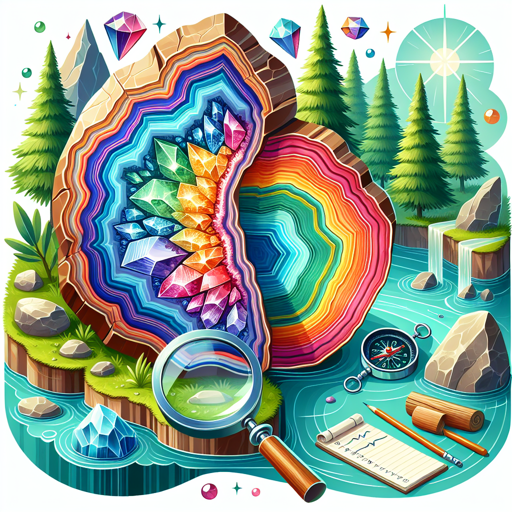
Introduction
Few natural wonders capture the imagination quite like geodes. These ordinary-looking rocks, when split open, reveal dazzling arrays of crystals—amethyst, quartz, calcite, and more—lining their hollow interiors. For centuries, geodes have enchanted collectors, educators, and anyone fascinated by the secrets hidden beneath our feet. But how do these spectacular crystal-filled “caves” form inside solid rock? What geological forces and chemical processes create such beauty from seeming barrenness?
This article takes you on a journey into the heart of geodes. We’ll explore the science behind their formation, the environments that nurture them, the minerals they contain, and why they continue to fascinate both geologists and gem lovers. Whether you’re a student, educator, or lifelong enthusiast of earth sciences, prepare to uncover the hidden story behind one of nature’s most dazzling phenomena.
What Is a Geode? Demystifying Nature’s Crystal Treasure Chest
At first glance, a geode seems unremarkable—just another round or oval rock among millions. But the magic happens inside. Crack one open, and you might find a miniature cave lined with crystals that have grown undisturbed for millions of years.
Definition:
A geode is a hollow, roughly spherical or oblong rock formation with an internal cavity lined by mineral crystals or layers. The word comes from the Greek geodes, meaning “earthlike.”
- Size: Geodes range from a few centimeters to over a meter in diameter.
- Outer shell: Usually composed of sedimentary rock (limestone, shale) or volcanic material.
- Inner lining: Crystals of quartz, amethyst, calcite, or rarer minerals.
Geodes differ from nodules, which are solid mineral lumps without an internal cavity.
The Birthplace of Geodes: Where Earth Works Its Magic
Geodes are found on every continent but are especially abundant in regions with specific geological histories. Their formation is intimately tied to the environments of sedimentary deposits and volcanic landscapes.
Sedimentary Geodes
Most classic geodes originate in sedimentary rocks—ancient lake beds, river deposits, or limestones. Here’s how:
-
Formation of a Cavity:
Organic material (such as a buried tree root, shell, or bone) decays within sediment layers, leaving behind a void. Alternatively, gas bubbles trapped in soft sediments may create spherical hollows. -
Silica-Rich Water Infiltration:
Over time, groundwater rich in dissolved minerals—especially silica—seeps into these cavities. -
Crystal Precipitation:
As water chemistry changes (perhaps due to evaporation or chemical reactions), minerals begin to crystallize on the walls of the cavity.
Volcanic Geodes
In volcanic regions, geodes form through a different but related process:
-
Gas Bubbles in Lava:
As lava cools rapidly, gases trapped inside can leave behind hollow pockets called vesicles. -
Mineralizing Fluids:
After volcanic activity ceases, groundwater percolates through the cooled lava, depositing dissolved minerals inside these vesicles. -
Crystal Growth:
Over thousands or millions of years, crystals grow inward from the walls of these voids.
The Science of Crystal Growth Inside Geodes
How do crystals grow so perfectly inside these stone chambers? It’s a dance of chemistry, temperature, pressure, and time.
Key Stages in Geode Formation
| Stage | Description | Result |
|---|---|---|
| Cavity Formation | Creation of a hollow within rock via decay or gas bubble | Space for mineral-laden water to enter |
| Mineral Saturation | Water infiltrates cavity carrying dissolved minerals | Solution becomes supersaturated |
| Nucleation | Minerals begin to crystallize on cavity walls (nucleation sites) | Tiny crystal “seeds” form |
| Crystal Growth | Over time, minerals continue to deposit onto growing crystals | Well-formed crystal structures emerge |
| Sealing & Preservation | Geode becomes sealed; further mineral growth may halt | Geode awaits discovery |
Why are geode crystals so well-formed?
Inside a sealed cavity with stable conditions and slow mineral deposition, crystals have space and time to grow undisturbed.
Common Minerals Found in Geodes
While quartz is most common (including its purple variety, amethyst), other minerals can line geode interiors:
| Mineral | Appearance | Notable Locations |
|---|---|---|
| Quartz | Clear/white/purple (amethyst) | Brazil, Uruguay, USA |
| Calcite | White/yellow/orange | Mexico, USA |
| Celestite | Blue/gray | Madagascar, Ohio (USA) |
| Agate | Banded patterns | Brazil, Morocco |
| Sphalerite | Brown/black | Spain, USA |
Environmental Factors Influencing Geode Formation
Not every cavity becomes a geode. Several factors must align for that magical crystal garden to develop:
- Mineral-rich groundwater: Essential for supplying building blocks for crystals.
- Stable temperature and pressure: Allows slow and even crystal growth.
- Time: Geodes typically take millions of years to form.
- Sealed environment: Prevents contamination or collapse of the cavity.
“In every walk with nature one receives far more than he seeks.”
— John Muir
A Closer Look: The Chemistry Behind Geode Crystallization
Geode formation is a prime example of precipitation from solution. Let’s break down the chemistry:
-
Mineral-Laden Water:
Water percolating through rock dissolves silica (SiO₂), calcium carbonate (CaCO₃), iron oxides, and other minerals. -
Supersaturation:
As water enters a cavity and conditions change (cooling or evaporation), it becomes “supersaturated”—meaning it holds more dissolved minerals than it can keep in solution. -
Crystallization:
Excess minerals precipitate out of solution onto nucleation sites (often imperfections or dust on the cavity wall). -
Growth Patterns:
- Quartz tends to form long prismatic crystals.
- Calcite often grows as dog-tooth or rhombohedral shapes.
- Amethyst gets its purple hue from trace amounts of iron and irradiation over time.
Geode Hotspots: Where Are They Found?
Some famous geode locations include:
| Region | Notable Features |
|---|---|
| Southern Brazil & Uruguay | Home to massive amethyst geodes |
| Keokuk Region (Iowa/Illinois/Missouri) | Known for quartz-lined geodes |
| Chihuahua (Mexico) | Calcite and agate geodes |
| Morocco | Vibrant agate geodes |
| Madagascar | Celestite “sky blue” geodes |
Collectors often seek out these regions for their diversity and beauty.
From Earth to Display: Extracting and Splitting Geodes
Finding a geode is only half the adventure—the real thrill comes when it’s opened!
- Extraction: Geodes are carefully dug up using hand tools to avoid damage.
-
Splitting Methods:
- Sawing: For large or valuable geodes; produces a clean cut.
- Hammer & Chisel: Traditional method; reveals natural crystal formations.
- Hydraulic Splitters: Used for massive specimens.
The moment when a geode splits open—revealing glittering crystals unseen since their formation—is unforgettable.
Why Are Some Geodes So Colorful?
The color of geode crystals depends on trace elements present during their growth:
- Amethyst (purple): Iron impurities + natural irradiation
- Citrine (yellow): Iron oxidized at higher temperatures
- Agate bands: Layered silica colloids with mineral impurities
- Celestite (blue): Strontium sulfate
Nature’s chemistry lab is both subtle and spectacular!
Geodes in Education and Popular Culture
Geodes aren’t just pretty rocks—they’re powerful teaching tools:
- Earth science education: Demonstrate crystallization, mineralogy, and geology concepts.
- Museum displays: Awe-inspiring specimens spark curiosity in children and adults alike.
- Metaphysical uses: Some believe geodes hold spiritual energy or healing properties.
- Jewelry & decor: Polished slices showcase natural beauty in homes worldwide.
Quick Comparison: Geodes vs. Nodules vs. Thunder Eggs
Here’s how they stack up:
| Feature | Geode | Nodule | Thunder Egg |
|---|---|---|---|
| Interior | Hollow with crystals | Solid mineral; no cavity | Solid; may have agate/opal core |
| Formation | Precipitation in cavities | Replacement of organic matter | Lava flow; agate bands inside |
| Outer Shell | Sedimentary/volcanic rock | Similar to host rock | Rhyolitic volcanic rock |
| Notable Crystals | Quartz/amethyst/calcite | Chert/jasper/pyrite | Agate/opal |
Fascinating Facts About Geodes
- The world’s largest amethyst geode (“The Empress of Uruguay”) is over 3 meters tall!
- Some geodes contain rare minerals—like barite roses or sphalerite—that are highly prized by collectors.
- Not all geodes are round; some are egg-shaped or even flattened.
Further Exploration
If you’re inspired to learn more about geodes and their formation, check out this resource from the Smithsonian National Museum of Natural History:
Geodes: Nature’s Hidden Surprises
Conclusion
Geodes remind us that extraordinary beauty can lie hidden within the most unassuming places. Each one is a geological time capsule—a record of ancient waters, shifting landscapes, and patient mineral growth over eons. Whether you’re cracking open your first backyard find or marveling at museum specimens from around the world, understanding how these crystal-filled wonders form deepens our appreciation for Earth’s creativity.
They are tangible proof that even in darkness and silence, nature works wonders—transforming emptiness into brilliant treasure. So next time you encounter an ordinary-looking stone…imagine what secrets it might conceal!
Explore more articles on minerals, mining discoveries, and earth science wonders at our blog.