 Mineral Matrix: An AI Journey into Earth’s Treasures
Top Resources for Geology Teachers in 2024
Essential materials, guides, and tools to empower geology education in classrooms and beyond.
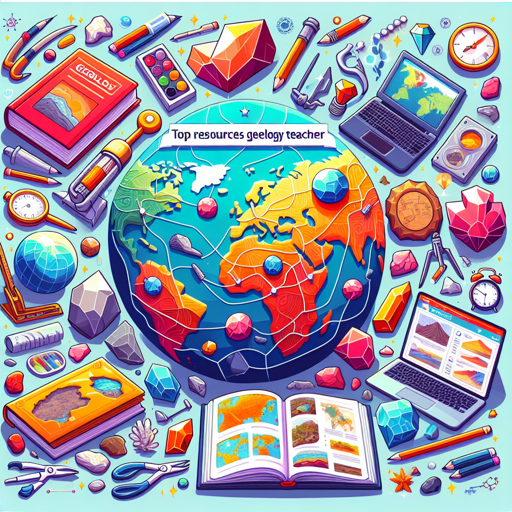
Top Resources for Geology Teachers in 2024
Introduction
Geology is more than just the study of rocks—it’s the story of Earth itself, told through minerals, fossils, tectonic shifts, and the processes that shape our planet. For teachers passionate about inspiring the next generation of earth scientists, having access to engaging, accurate, and up-to-date resources is crucial.
Whether you’re an experienced educator, a student teacher, or anyone guiding others into the world of geology, finding the right materials can be a daunting task. With the rapid growth of digital platforms and the evolution of teaching methods, where should you begin?
In this article, we’ll explore the top resources for geology teachers—ranging from comprehensive textbooks and interactive digital tools to hands-on kits and professional development communities. Our aim is to empower you with the best materials and ideas to make geology come alive for your students.
Why Quality Resources Matter in Geology Education
Geology education is unique in its blend of theoretical concepts and hands-on experiences. The right resources:
- Spark curiosity about Earth’s processes.
- Facilitate active learning through fieldwork and lab experiments.
- Support differentiated instruction for diverse learners.
- Ensure scientific accuracy and alignment with curriculum standards.
“The best teachers are those who show you where to look but don’t tell you what to see.”
— Alexandra K. Trenfor
Top Textbooks and Reference Guides
A solid foundation in geology begins with reliable textbooks and reference materials. Here are some of the most highly recommended:
| Resource Title | Level | Key Features | Link |
|---|---|---|---|
| Earth: An Introduction to Physical Geology (Tarbuck & Lutgens) | High school & college | Comprehensive, updated illustrations | Details |
| AGI/NAGT Laboratory Manual in Physical Geology | High school & college | Hands-on labs, real data sets | Details |
| Smithsonian Handbooks: Rocks & Minerals | Middle school & up | Visual identification guide | Details |
| The Geology Book (John D. Morris) | Middle school | Engaging explanations, faith-based perspective | Details |
| Roadside Geology Series | All levels | Local geology explained for field trips | Details |
These books serve as both instructional texts and handy references for classroom or field use.
Interactive Digital Tools & Simulations
Modern geology classrooms benefit enormously from digital resources that visualize complex processes and foster interactive learning.
1. EarthViewer (Howard Hughes Medical Institute)
A dynamic app that lets students explore Earth’s history, continental drift, climate changes, and more—all on an interactive timeline.
- Platform: Web, iOS
- Use: Demonstrate plate tectonics, mass extinctions, atmospheric evolution
- Link: EarthViewer
2. PhET Interactive Simulations (University of Colorado Boulder)
While PhET is famous for physics, their earth science simulations (like plate tectonics and greenhouse effect) are invaluable.
- Platform: Web-based
- Use: Model tectonic plates, erosion, and other geological phenomena
- Link: PhET Earth Science Sims
3. Virtual Microscope for Earth Sciences
An online tool offering high-resolution images of rocks, minerals, and thin sections—ideal when access to real microscopes is limited.
- Platform: Web-based
- Use: Mineral identification, microscopy skills
- Link: Virtual Microscope
4. Google Earth
Essential for exploring real-world geology—allows virtual field trips to famous geological sites worldwide.
- Platform: Web, Desktop, Mobile
- Use: Visualize topography, fault lines, volcanoes
- Link: Google Earth Education
Hands-On Kits and Classroom Materials
Nothing beats the tactile experience of handling real rocks and minerals. Here are some of the best kits and teaching tools:
| Kit Name | Contents | Best For | Supplier Link |
|---|---|---|---|
| National Geographic Rock & Mineral Kit | 200+ specimens, magnifying glass, guidebook | Introductory mineralogy | Details |
| Geoscience Lab Kits | Soil samples, testing kits, field tools | Structured labs & experiments | Carolina |
| Mohs Hardness Testing Kit | Mohs scale minerals, streak plates | Mineral identification lessons | Home Science Tools |
| Fossil Collection Sets | Real fossils from different eras | Paleontology units | Ward’s Science |
| Geological Field Notebooks | Waterproof paper, mapping grids | Field trip documentation | Rite in the Rain |
These kits can transform abstract concepts into tangible experiences.
Online Lesson Plans & Curriculum Guides
Quality lesson plans save time and ensure alignment with standards. Here are some standout resources:
1. US Geological Survey (USGS) Education Resources
Complete lesson plans on earthquakes, volcanoes, plate tectonics, mineral resources, and more. Includes printable maps and activities.
2. Earth Science Week Toolkits (American Geosciences Institute)
Annual toolkits packed with posters, calendars, classroom activities, and multimedia content tailored to current earth science themes.
3. TeachEngineering
A searchable database of standards-aligned STEM lessons—including many hands-on geology modules.
4. PBS LearningMedia – Earth Science Collection
Free videos, interactives, and lesson plans covering everything from rock cycles to mineral resources.
Professional Organizations & Teacher Communities
Staying connected with peers is vital for sharing ideas and keeping up with best practices.
| Organization | Description | Membership Benefits | Website |
|---|---|---|---|
| National Association of Geoscience Teachers (NAGT) | National network for K–16 geoscience educators | Journals, workshops, field trips | NAGT |
| Geological Society of America (GSA) | Leading society for geologists worldwide | Grants for teachers, conferences | GSA Education |
| American Geosciences Institute (AGI) | Umbrella organization with extensive outreach | Resource libraries, news updates | AGI Education |
| Facebook Groups & Reddit Communities | Online forums for resource sharing | Lesson exchanges, troubleshooting | Reddit r/geology |
Engagement with such organizations can provide professional growth opportunities, field trip grants, and access to exclusive teaching materials.
Visual Comparison Table: Resource Types at a Glance
| Resource Type | Example(s) | Best Use Case | Pros | Cons |
|---|---|---|---|---|
| Textbooks | Tarbuck & Lutgens; AGI Lab Manual | In-depth study; curriculum foundation | Comprehensive; peer-reviewed | Can be costly; updates required |
| Digital Tools | EarthViewer; PhET; Google Earth | Visualizing complex processes | Interactive; updated content | Tech access needed |
| Hands-On Kits | NatGeo Mineral Kit; Mohs Hardness Kit | Experiential learning | Engaging; tactile learning | Consumable; replenishment needed |
| Lesson Plan Hubs | USGS Education; PBS LearningMedia | Time-saving curriculum design | Standards-aligned; free options | Varying depth/complexity |
| Professional Orgs | NAGT; GSA; AGI | Networking; PD; grants | Community support; exclusive resources | Membership fees |
Tips for Effective Geology Teaching
- Blend Theory with Practice: Combine textbook learning with labs and fieldwork to cater to varied learning styles.
- Leverage Technology: Use simulations and apps to bring abstract geological processes to life.
- Encourage Inquiry: Foster curiosity by posing open-ended questions and facilitating student-led investigations.
- Connect to Local Geology: Use local rock formations or minerals as teaching examples to make lessons relatable.
- Stay Current: Regularly update materials in line with new discoveries and technological advancements.
- Engage with Community: Participate in forums or professional organizations to exchange ideas and access new resources.
External Reference
For further reading on best practices in geoscience education, visit the National Association of Geoscience Teachers Best Practices Portal.
Conclusion
Geology is a gateway to understanding our planet’s past, present, and future. Equipping yourself with quality resources not only enhances your teaching but also ignites a passion for earth sciences in your students—a spark that can lead to future discoveries and stewardship of our planet.
From modern digital platforms and classic textbooks to hands-on kits and supportive communities, the resources outlined above represent the best in contemporary geology education. By integrating these tools into your classroom or outreach program, you empower learners to explore the ever-evolving world beneath their feet.
Happy teaching—and may your students’ curiosity be as boundless as Earth’s wonders!