 Mineral Matrix: An AI Journey into Earth’s Treasures
The Journey of a Diamond From Earth to Ring
Discover how diamonds form, are mined, and transformed into stunning jewelry.
Introduction
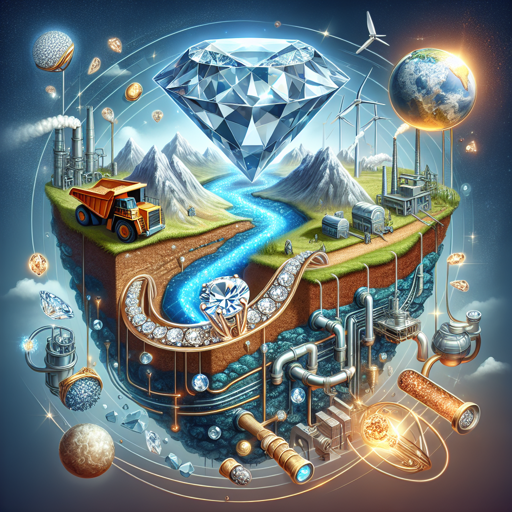
Diamonds have fascinated humankind for centuries. Their unmatched brilliance, exceptional hardness, and storied origins have made them symbols of wealth, romance, and endurance. But behind each sparkling ring lies a tale of geological wonder and human ingenuity—a journey spanning billions of years and thousands of kilometers. In this article, we’ll embark on the remarkable journey of a diamond, tracing its path from deep within the Earth to the iconic glitter on a jeweler’s display.
Whether you’re a geology enthusiast, an educator seeking classroom inspiration, or simply captivated by the mysteries of Earth’s treasures, join us as we uncover how nature’s masterpiece becomes a cherished gem.
The Birth of a Diamond: Deep Within the Earth
The Perfect Storm: Formation Conditions
Diamonds are born deep beneath the Earth’s surface—between 140 and 190 kilometers below—within the planet’s mantle. Here, under intense pressure (about 45–60 kilobars) and searing temperatures (900–1,300°C), carbon atoms bond in a crystal lattice to form diamonds.
Key facts about diamond formation:
| Factor | Diamond Formation | Other Carbon Forms (e.g., Graphite) |
|---|---|---|
| Depth | 140–190 km | <20 km |
| Pressure | 45–60 kilobars | <10 kilobars |
| Temperature | 900–1,300°C | <700°C |
| Structure | Cubic | Hexagonal |
Diamonds and graphite are both pure carbon, but their atomic arrangements make all the difference.
The Role of Kimberlite Pipes
Diamonds might remain hidden forever if not for a dramatic geological event. Volcanic eruptions, occurring millions to billions of years after their formation, bring diamonds closer to the surface. These eruptions create vertical structures called kimberlite pipes—the main source of mined diamonds today.
Fun Fact: Not all kimberlite pipes contain diamonds; only about 1 in 200 is economically viable.
From Earth to Surface: Mining for Diamonds
Types of Diamond Deposits
Diamonds reach the Earth’s surface in two primary ways:
-
Primary Deposits:
- Found in kimberlite or lamproite pipes.
- Require deep mining or open-pit methods.
-
Secondary (Alluvial) Deposits:
- Transported by rivers and erosion.
- Collected in riverbeds, beaches, or deltas.
Mining Methods
| Method | Description | Typical Location | Environmental Impact |
|---|---|---|---|
| Open-pit | Large surface excavation | Primary deposits | High |
| Underground | Tunnels and shafts to reach deep deposits | Primary deposits | Moderate |
| Alluvial | Sifting sediments in water bodies | Secondary deposits | Lower |
| Marine | Extracting from ocean floors | Offshore | High |
Mining is both technologically complex and environmentally challenging. Responsible mining practices are vital to minimize landscape disruption and ecological damage.
Famous Diamond Mines
- Jwaneng (Botswana): World’s richest by value.
- Orapa (Botswana): Largest by area.
- Mir (Russia): Iconic open-pit mine.
- Cullinan (South Africa): Source of the world’s largest gem-quality diamond.
Sorting and Valuation: From Rough to Remarkable
Sorting the Rough Stones
Once extracted, rough diamonds undergo sorting based on their size, shape, color, and clarity. Only about 20% are suitable for gemstones; the rest serve industrial purposes.
Sorting Criteria Table:
| Criterion | Description |
|---|---|
| Shape | Octahedral, dodecahedral, irregular |
| Size | From millimeters to several carats |
| Color | From colorless to fancy colors |
| Clarity | Presence of inclusions or blemishes |
Valuation
Diamonds are valued according to the famous Four Cs:
- Carat: Weight of the diamond.
- Cut: Quality of the facets and proportions.
- Color: Absence or presence of hue.
- Clarity: Internal or external flaws.
For detailed grading standards, see the Gemological Institute of America’s guide.
The Art and Science of Cutting
Planning the Cut
Each rough diamond is unique. Expert cutters study the stone—sometimes with advanced 3D mapping—to maximize yield and minimize flaws.
Cutting Styles
- Round Brilliant: Maximizes fire and brilliance; most popular.
- Princess, Emerald, Marquise: Fancy shapes with unique aesthetics.
- Step Cuts: Show off clarity but less sparkle.
Precision is crucial; a well-executed cut can increase value exponentially.
“Diamonds are nothing more than chunks of coal that stuck to their jobs.”
— Malcolm Forbes
Polishing
Polishing reveals the diamond’s inner fire. Each facet is carefully shaped on a spinning wheel using diamond dust—the only substance hard enough to polish another diamond.
Certification and Ethics: Ensuring a Responsible Journey
Grading Laboratories
Leading gemological labs like GIA or IGI provide certification, verifying authenticity and quality. These certificates travel with the gem through dealers and retailers.
Ethical Sourcing
The diamond industry has faced criticism over conflict or “blood diamonds.” Today, international frameworks like the Kimberley Process Certification Scheme aim to prevent conflict diamonds from entering the market.
From Jeweler to Owner: The Final Steps
Setting the Stone
Designers and goldsmiths set polished diamonds into rings or other jewelry. Style trends range from classic solitaires to avant-garde masterpieces.
Retail Experience
Retailers educate buyers on quality factors and certification. Increasingly, consumers demand transparency regarding sourcing and sustainability.
A Diamond’s Journey at a Glance
| Stage | Key Process | Timeframe |
|---|---|---|
| Formation | Crystallization | 1–3 billion years ago |
| Transport | Kimberlite eruption | Millions of years ago |
| Mining | Extraction | Present day |
| Sorting & Valuing | Grading | Weeks–months |
| Cutting | Shaping & polishing | Weeks |
| Setting | Jewelry design | Days–weeks |
| Purchase | Retail | Moment of acquisition |
Conclusion
From their fiery birth deep in the Earth to their dazzling display under jeweler’s lights, diamonds encapsulate geological marvels and human artistry. Their journey is one of transformation—both natural and crafted—culminating in symbols that celebrate love, endurance, and beauty.
As geology enthusiasts and earth science lovers, we can appreciate both the science behind these stones and the ethical practices that ensure their legacy endures responsibly. Whether you admire them for their brilliance or their billion-year history, every diamond tells a story as remarkable as our planet itself.
For more on gemstone journeys and earth’s treasures, stay tuned to our blog—and keep exploring!
External Reference: For more in-depth information on diamond formation and mining methods, visit U.S. Geological Survey: Diamonds—Geology, Mining, and Markets.