 Mineral Matrix: An AI Journey into Earth’s Treasures
Minerals in Your Kitchen Everyday Geology Unveiled
Discover the hidden minerals in your kitchen and their geological journeys from earth to table.
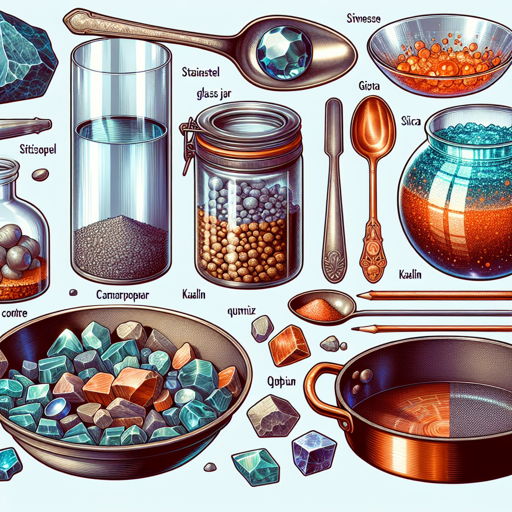
Minerals in Your Kitchen: Everyday Geology Unveiled
Introduction
Imagine preparing your morning breakfast—pouring water into a kettle, spreading salt on your eggs, or slicing fruit with a stainless steel knife. Have you ever paused to consider that each of these routine actions involves minerals mined from deep within the Earth? The kitchen, often seen as a hub of culinary activity, is also a showcase of geology at work. From the granite countertops to the salt on your table, minerals play an essential and often invisible role in our daily lives.
This article will guide you through a fascinating journey, revealing the mineral origins of common kitchen items. Whether you’re a geology enthusiast, educator, student, or simply a curious reader, you’ll discover that your kitchen is a mini-museum of Earth’s geological wonders—each item telling a story millions of years in the making.
The Ubiquity of Minerals in Modern Kitchens
Minerals are the building blocks of our planet, forming rocks, ores, and ultimately the resources we use every day. In kitchens worldwide, these minerals appear not just in their raw form but also as components of manufactured goods, utensils, appliances, and even food additives.
“The kitchen is where geology meets everyday life—each utensil and ingredient is a testament to Earth’s incredible diversity and history.”
— Dr. Emily Carter, Geologist and Science Communicator
Let’s open the drawers and cupboards to examine the mineralogical secrets hiding in plain sight.
Section 1: Kitchen Countertops—A Geological Showcase
Granite: An Igneous Classic
Most modern kitchens are crowned with countertops made from granite, a coarse-grained igneous rock. Granite is composed mainly of three minerals:
- Quartz (silicon dioxide)
- Feldspar (potassium or sodium aluminum silicates)
- Mica (biotite or muscovite)
Each contributes to the characteristic speckled appearance of granite. Quartz adds hardness and a glassy luster, feldspar imparts color (ranging from pink to white), and mica provides shimmering flakes.
Marble and Other Stones
Some kitchens feature marble countertops or tiles. Marble is a metamorphic rock composed almost entirely of calcite (calcium carbonate), formed from limestone subjected to heat and pressure over millions of years.
Synthetic Surfaces
Engineered stone surfaces often combine natural quartz with resins. Even these surfaces are rich in minerals, primarily quartz, but may contain pigments derived from other mineral sources.
Section 2: Cookware and Utensils—From Ore to Table
Stainless Steel Pans and Cutlery
Look around your kitchen: knives, forks, spoons, pans—many are crafted from stainless steel. This durable alloy gets its properties from several key minerals:
| Element | Mineral Source | Function in Steel |
|---|---|---|
| Iron | Hematite, Magnetite | Main component |
| Chromium | Chromite | Corrosion resistance |
| Nickel | Pentlandite | Toughness |
| Manganese | Pyrolusite | Strength |
Each mineral undergoes extraction, refinement, and alloying before becoming your favorite cooking tool.
Aluminum Foil and Pots
Lightweight pans and foil are made from aluminum, sourced from bauxite ore (composed mainly of the mineral gibbsite). Aluminum processing is energy-intensive but results in versatile cookware.
Copper Bottoms
Some high-end pans feature copper bases for excellent heat conductivity. Copper comes from ores like chalcopyrite and malachite, refined through smelting.
Non-Stick Coatings
Modern pans often have non-stick coatings made from polytetrafluoroethylene (PTFE), branded as Teflon. PTFE is not a mineral but is produced using fluorspar (fluorite), which provides fluoride ions necessary for its manufacture.
Section 3: Table Salt—The World’s Oldest Mineral Seasoning
Arguably the most ancient mineral on your table is salt—chemically known as sodium chloride (NaCl).
- Halite is the natural mineral form of salt.
- Salt mines around the world extract halite, sometimes forming spectacular underground crystal chambers.
- Sea salt is produced by evaporating seawater, but the end product remains the same: crystalline sodium chloride.
Salt is vital for human health, food preservation, and flavor enhancement. Its geological journey from evaporated ancient seas or underground deposits to your table is a remarkable testament to Earth’s cycles.
Section 4: Glassware—The Magic of Silica
Your drinking glasses, window panes, and mixing bowls are made from glass—a material dating back thousands of years. Glass is primarily crafted from:
- Quartz sand (silicon dioxide)
- Additional minerals such as feldspar, limestone (calcium carbonate), and soda ash (sodium carbonate) are added to modify properties like melting point and durability.
By melting these minerals at high temperatures and cooling them rapidly, manufacturers produce transparent glass with diverse applications in your kitchen.
Section 5: Ceramics—Earth’s Elements in Every Cup
Plates, mugs, mixing bowls, and tiles are commonly made from ceramics—products of fired clay minerals. The main ingredients include:
- Kaolinite: A soft clay mineral used in porcelain.
- Feldspar: Acts as a flux to lower the melting temperature.
- Quartz: Adds strength and durability.
Decorative glazes often contain minerals like rutile (titanium dioxide) for white or blue colors and copper carbonate for green hues.
Section 6: Food Additives—Minerals You Eat
Beyond utensils and surfaces, minerals appear as essential nutrients in our food:
| Food Item | Mineral & Source | Purpose |
|---|---|---|
| Table Salt | Halite (NaCl) | Flavor & electrolyte balance |
| Baking Powder | Nahcolite (sodium bicarbonate) | Leavening agent |
| Fortified Flour | Gypsum (calcium sulfate) | Added calcium |
| Canned Vegetables | Tin (Cassiterite) lining | Corrosion protection |
| Breakfast Cereals | Ferrous sulfate | Iron fortification |
| Dairy Products | Calcite (CaCO₃) | Calcium supplement |
These minerals are carefully processed to meet food safety standards.
Section 7: Appliances—High-Tech Geology
Your refrigerator, microwave, blender, and coffee maker contain a variety of metals and minerals:
- Copper wires from chalcopyrite for electricity conduction.
- Rare earth elements (like neodymium from bastnäsite) in magnets.
- Gold and silver traces in circuit boards.
- Aluminum casing from bauxite-derived gibbsite.
- Plastic components often use mineral fillers like talc or calcium carbonate for stability.
Section 8: Cleaning Products—Minerals for Sparkle
Many kitchen cleaning products harness the power of minerals:
- Pumice: A volcanic glass used in abrasive cleaners.
- Zeolites: Microporous aluminosilicates used as water softeners in detergents.
- Bentonite clay: Used in some soaps for its absorbent properties.
- Silica gel: Found in desiccant packets to keep spices dry.
Table: Minerals in Common Kitchen Items
| Kitchen Item | Key Minerals Present | Geological Source |
|---|---|---|
| Countertop (Granite) | Quartz, Feldspar, Mica | Igneous rock |
| Salt | Halite | Evaporite deposit |
| Frying Pan | Hematite (iron), Chromite | Iron & chromium ores |
| Glass Cup | Quartz (silica), Feldspar | Sand & feldspar deposits |
| Ceramic Plate | Kaolinite, Feldspar | Clay & pegmatite |
| Aluminum Foil | Gibbsite (bauxite) | Lateritic bauxite deposit |
| Refrigerator Circuit | Chalcopyrite (copper), Bastnäsite | Sulfide & rare earth ores |
| Cleaning Powder | Pumice | Volcanic rock |
Section 9: The Geological Journey—From Earth to Kitchen
Understanding how minerals end up in your kitchen involves tracing their paths:
- Exploration: Geologists locate mineral deposits using mapping and sampling techniques.
- Mining: Minerals are extracted via surface or underground mining.
- Processing: Ores are crushed, refined, and chemically treated to extract pure minerals or metals.
- Manufacturing: Refined materials are used to make everything from utensils to appliances.
- Distribution: Finished products arrive at stores—and eventually your home.
This journey connects local geology with global trade networks. For example:
- Stainless steel may contain iron mined in Australia, chromium from South Africa, and nickel from Canada.
- Salt can come from deep mines beneath Michigan or ancient seas evaporated near Sicily.
- Quartz for glass may be sourced from high-purity sand deposits in the United States or Egypt.
Section 10: Bringing Geology into the Classroom—or Your Next Meal
For educators and enthusiasts alike, your kitchen offers hands-on opportunities to explore earth science concepts:
- Rock & Mineral Identification: Examine countertop patterns under a magnifying glass.
- Chemical Reactions: Observe how baking soda (nahcolite) reacts with vinegar.
- Nutrition Science: Discuss why minerals like calcium or iron are vital for health.
- Sustainability: Consider environmental impacts of mining vs. recycling metals like aluminum.
By connecting everyday experiences with geological science, you make learning both relevant and memorable.
External Reference
For more on the role of minerals in everyday life, explore Minerals Education Coalition – Minerals In Your Life.
Conclusion
Next time you cook dinner or pour yourself a glass of water, take a moment to appreciate the geological wonders embedded in every part of your kitchen. Each mineral has traveled a remarkable journey from deep within Earth’s crust to the heart of your home. By recognizing these hidden connections, we not only gain a deeper appreciation for our planet’s resources but also understand our responsibility to use them wisely.
Your kitchen is more than just a place for meals—it’s a showcase of Earth’s incredible diversity and an invitation to explore the fascinating world of minerals just beneath the surface of daily life. So go ahead—open that cupboard or drawer, pick up an object, and ask: What stories does this mineral tell?