 Mineral Matrix: An AI Journey into Earth’s Treasures
Minerals in Ancient Civilizations Art Trade and Power
Discover how minerals shaped ancient art, architecture, and global trade
Introduction
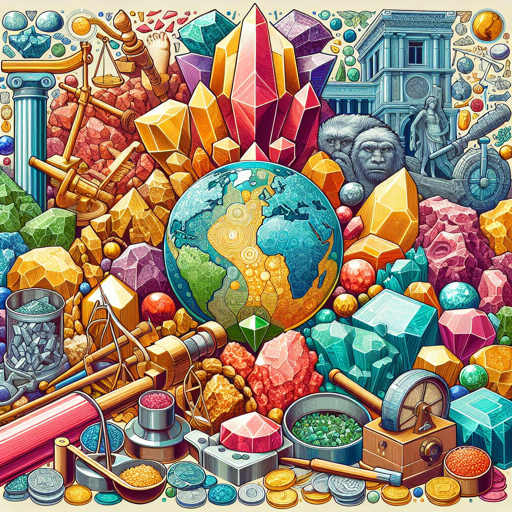
From the first shimmering flake of gold found in a riverbed to the grand marble columns of the Parthenon, minerals have always played a pivotal role in shaping human civilization. Their unique properties—beauty, durability, rarity, and utility—made them objects of desire, symbols of power, and cornerstones of early economies. For geology enthusiasts, educators, and anyone curious about the foundations of our world, exploring the historical uses of minerals opens a window into the ingenuity and aspirations of ancient peoples.
In this article, we embark on a journey through time to examine how minerals were mined, traded, crafted into art, and used in construction across various ancient civilizations. We’ll explore the stories behind glittering gemstones, essential building stones, and metals that fueled both peaceful trade and epic wars. Whether you’re captivated by the sparkle of lapis lazuli in a pharaoh’s mask or the enduring strength of Roman concrete, you’ll find that minerals are more than earth’s treasures—they are threads woven through the fabric of human history.
Minerals as the Foundation of Early Societies
Human fascination with minerals began long before written history. Early humans collected colorful stones and shells for decoration and tools. As societies advanced, so did their ability to extract and work with a wider variety of minerals. These resources became essential for:
- Toolmaking: Flint, obsidian, and quartzite for axes, knives, and arrowheads.
- Art & Adornment: Turquoise, jade, carnelian, lapis lazuli, and gold for jewelry and religious artifacts.
- Construction: Limestone, sandstone, granite, and marble for monuments and buildings.
- Trade: Copper, tin, iron ore, salt, and precious stones as commodities fueling ancient economies.
Let’s delve into how some of the world’s most influential ancient civilizations harnessed minerals to shape their cultures and legacies.
Egypt: Land of Gold and Lapis Lazuli
Few civilizations are as closely associated with mineral wealth as ancient Egypt. Its deserts brimmed with gold deposits, which became symbols of divine power and eternal life.
Gold: The Flesh of Gods
Egyptians called gold “the flesh of the gods.” Mined from Nubia and eastern deserts as early as 2600 BCE, gold adorned everything from royal jewelry to sacred statues.
Key uses:
- Burial masks (e.g., King Tutankhamun)
- Amulets and jewelry
- Coffins and funerary objects
- Architectural inlays
Lapis Lazuli: The Stone from Afar
Lapis lazuli was not native to Egypt but imported from Afghanistan over vast trade routes. Its deep blue hue symbolized royalty and the heavens.
Notable applications:
- Inlays for pharaohs’ masks
- Scarabs and pendants
- Paint pigment (ultramarine)
Other Egyptian Minerals
| Mineral | Use | Source/Region |
|---|---|---|
| Turquoise | Jewelry & amulets | Sinai Peninsula |
| Carnelian | Beads & seals | Nile Valley |
| Alabaster | Statues & vessels | Luxor region |
| Natron (Soda) | Mummification & glass | Natron Valley |
Mesopotamia: The Cradle of Stone and Metalwork
Mesopotamian civilizations such as Sumerians, Babylonians, and Assyrians developed advanced techniques for working with minerals. They are credited with some of the earliest uses of metals for both practical tools and dazzling art.
Copper & Bronze: Tools for Progress
The region’s copper deposits enabled the rise of bronze technology (alloying copper with tin), revolutionizing agriculture, warfare, and construction.
Applications:
- Weapons and armor
- Tools (plows, sickles)
- Decorative vessels
Gemstones in Art and Ritual
Mesopotamians prized carnelian, agate, lapis lazuli, and chalcedony for cylinder seals—intricately carved stones used to sign documents and protect property.
Bitumen: Ancient Adhesive & Waterproofing Agent
Bitumen (natural asphalt) was used to waterproof boats, bind bricks in ziggurats (temple towers), and even as a component in embalming practices.
Greece & Rome: Mastery in Marble and Metals
The Greeks and Romans elevated mineral use to new heights in architecture, sculpture, coinage, and daily life.
Marble: Symbol of Perfection
Greek artists transformed white marble from Paros and Naxos into statues like Venus de Milo. Romans sourced colored marbles from across their empire for opulent interiors.
Key Structures:
- Parthenon (Athens): Pentelic marble
- Pantheon (Rome): Multicolored marbles
Iron & Lead: Infrastructure Revolution
Romans pioneered large-scale mining of iron ore for tools and weapons. Lead was widely used for pipes (plumbing), roofing, coins, and pigments (though it came at a cost to public health).
Glass & Pigments
Romans improved glassmaking techniques using sand (quartz) mixed with natron. They also extracted mineral pigments like cinnabar (mercury sulfide) for vibrant frescoes.
The Americas: Jade, Turquoise, and Obsidian
Across Mesoamerica and the Andes, indigenous civilizations harnessed an impressive array of mineral resources for both art and engineering marvels.
Obsidian: The Razor Stone
Formed from volcanic glass, obsidian was prized by Olmecs, Maya, Aztecs, and Inca for its razor-sharp edges—vital for tools and weapons.
Jade & Turquoise: Sacred Stones
Jade symbolized life and immortality for Maya and Olmec elites. Turquoise was central to Aztec mosaics and ceremonial masks.
| Civilization | Key Minerals | Notable Uses |
|---|---|---|
| Olmec/Maya | Jadeite | Ritual masks & jewelry |
| Aztec | Turquoise | Shields & ceremonial art |
| Inca | Gold & Silver | Religious artifacts |
| Andean Cultures | Spondylus shell (mineralized) | Trade & currency |
China: Jade’s Eternal Luster
China’s reverence for jade dates back over 7,000 years. Considered the “Stone of Heaven,” it was thought to embody purity and moral virtue.
Uses:
- Burial suits for Han dynasty royals
- Ritual vessels
- Decorative plaques worn by scholars
The Chinese also pioneered porcelain production using kaolin clay—a mineral innovation that would change the world’s ceramics forever.
India: Diamonds and Spices of Trade
India is the world’s oldest known source of diamonds. Alluvial diamonds from Golconda fueled both local adornment and global trade.
Mineral highlights:
- Diamonds: Ornaments of royalty; exported along Silk Road
- Corundum (ruby & sapphire): Gems featured in temple decorations
- Salt: Essential for preservation; taxed by empires
Ancient Trade Routes: Highways of Minerals
Minerals were among the most valuable commodities traded between ancient cultures. Demand for rare stones led to long-distance expeditions:
- Silk Road: Carried jade from China westward; lapis lazuli eastward from Afghanistan.
- Incense Route: Linked Arabian frankincense mines with Mediterranean markets.
- Trans-Saharan trade: Gold from West Africa flowed north; salt moved south.
“The history of every country begins in the heart of a man or a woman who loved minerals enough to dig.”
—Adapted from Willa Cather
Table: Key Minerals Used by Ancient Civilizations
| Civilization | Key Minerals | Main Uses |
|---|---|---|
| Egypt | Gold, lapis lazuli | Jewelry, burial goods, art |
| Mesopotamia | Copper, carnelian | Tools, seals, ornaments |
| Greece/Rome | Marble, iron, lead | Architecture, sculpture, infrastructure |
| China | Jade | Rituals, art |
| Mesoamerica | Obsidian, jade | Tools, ceremonial objects |
| India | Diamonds | Jewelry, trade |
Lasting Legacy: Minerals’ Enduring Impact on Civilization
The story of minerals in ancient civilizations is more than one of extraction—it’s about transformation. Minerals shaped not only material culture but also spiritual beliefs, social hierarchies, technological progress, and world trade. Their legacy persists today:
- Many famed architectural wonders—Egyptian pyramids, Greek temples, Roman aqueducts—stand because of ingenious use of stone.
- The tradition of gemstone adornment owes its beginnings to ancient fascination with color and rarity.
- Modern mining methods trace their roots to innovations by early miners laboring underground with fire-setting or simple tools.
- Cross-cultural exchange of minerals helped connect distant peoples long before globalization.
For geology enthusiasts and earth science lovers alike, understanding these mineral stories enriches our appreciation for both the Earth beneath our feet and the civilizations that rose upon it.
Further Reading & References
To explore more about ancient uses of minerals:
- Minerals in Ancient Civilizations – Mineralogical Society
- Smithsonian National Museum of Natural History – Gems & Minerals
- The British Museum – Ancient Mining
Conclusion
Minerals are much more than geological curiosities; they are silent witnesses to humanity’s greatest achievements. From the golden tombs of Egypt to the marble marvels of Rome—and every gemstone traded along dusty caravan routes—the story of ancient civilizations is inseparable from their mastery of Earth’s treasures. As we continue to explore our planet’s mineral wealth today, we walk in the footsteps of those early artisans and traders who saw not just rocks but opportunity—and shaped our world in glittering stone.
Whether you’re a student delving into mineralogy or simply captivated by the legacy etched in gems and monoliths around us, may you continue to marvel at the fascinating world where geology meets history.