 Mineral Matrix: An AI Journey into Earth’s Treasures
Minerals Powering Modern Technology
Discover how essential minerals drive the devices and systems shaping our digital world.
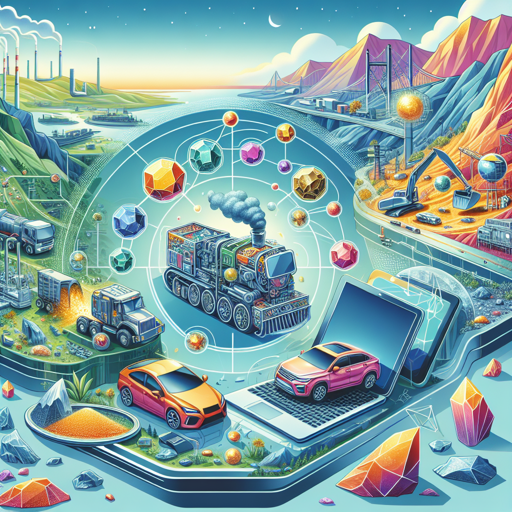
Minerals in Modern Technology: The Hidden Engine Behind Our Digital World
Introduction
From the smartphone in your pocket to the electric car gliding down the street, minerals are the unsung heroes powering our modern lives. While we marvel at technological advances, few of us stop to consider the earthly origins of these innovations. Minerals extracted from deep within the planet are the foundational building blocks of our most essential technologies. For geology enthusiasts, educators, and anyone fascinated by earth sciences, understanding the role of minerals in technology reveals a profound connection between Earth’s natural wealth and human ingenuity.
This article delves into the fascinating world of minerals in modern technology, exploring how rare and common elements alike are vital to everyday gadgets, renewable energy, and even space exploration. We’ll examine which minerals are most crucial, how they’re sourced, and why their availability shapes the future of innovation.
The Mineral Backbone of Everyday Devices
Smartphones: A Microcosm of Global Geology
Your smartphone is a pocket-sized marvel—and a showcase of geology’s relevance to daily life. Over 60 different minerals are used in manufacturing a typical smartphone. These include:
- Silicon (Si): The semiconductor at the heart of microchips.
- Lithium (Li): Powers rechargeable batteries.
- Cobalt (Co) and Nickel (Ni): Enhance battery performance.
- Tantalum (Ta), Tungsten (W), and Tin (Sn): Used in capacitors and circuitry.
- Rare Earth Elements: Neodymium (Nd), Dysprosium (Dy), and others make tiny but powerful magnets for speakers and vibration alerts.
- Gold (Au) and Copper (Cu): Reliable conductors for circuitry.
Smartphones exemplify a global supply chain—minerals mined on nearly every continent make their way into your hand.
“Virtually every piece of consumer electronics—from laptops to LED lights—depends on a complex web of mineral resources.”
— U.S. Geological Survey
Electric Vehicles and Batteries
The transition to sustainable energy is accelerating demand for certain minerals. Electric vehicles (EVs), for instance, rely heavily on:
- Lithium: The cornerstone of lithium-ion batteries.
- Cobalt: Provides stability and longevity in battery cathodes.
- Nickel: Improves battery energy density.
- Graphite: Essential for battery anodes.
Electric motors also require strong permanent magnets made from rare earth metals like neodymium and dysprosium.
Renewable Energy Technologies
Wind turbines, solar panels, and energy storage systems are fundamentally mineral technologies:
- Silicon: The primary material for photovoltaic cells.
- Tellurium, Cadmium, and Indium: Used in thin-film solar panels.
- Copper: Vital for wiring and electrical transmission.
- Rare Earth Elements: Key to powerful wind turbine magnets.
Medical Technology
Minerals are crucial beyond electronics:
- Platinum, Titanium, and Tantalum: Used in medical implants due to their biocompatibility.
- Silver: Antimicrobial properties make it useful in wound dressings.
Table 1: Minerals Critical to Modern Technologies
| Technology Area | Key Minerals Used | Primary Functions |
|---|---|---|
| Smartphones | Silicon, lithium, cobalt, tantalum, gold, copper | Semiconductors, batteries, circuitry |
| Electric Vehicles | Lithium, cobalt, nickel, neodymium | Battery cells, magnets, motor components |
| Renewable Energy | Silicon, tellurium, cadmium, copper | Solar cells, wiring, wind turbine components |
| Medical Devices | Platinum, titanium, silver | Implants, antimicrobial surfaces |
| Computers/Servers | Silicon, gold, tin, rare earths | CPUs/GPUs, soldering, data storage |
Rare Earth Elements: Small Quantities, Giant Impact
Rare earth elements (REEs)—a group of 17 chemically similar elements—are indispensable in high-tech applications. Their unique magnetic, luminescent, and chemical properties make them ideal for:
- Permanent magnets (neodymium)
- Display screens (europium and yttrium)
- Polishing powders (cerium)
- Catalytic converters (lanthanum)
Despite the name, REEs are relatively abundant in Earth’s crust but rarely found in concentrated deposits. This makes their extraction complex and sometimes environmentally challenging.
Supply Chains and Sustainability Challenges
Sourcing Minerals: A Global Endeavor
The minerals powering modern technology are sourced from around the world:
- Cobalt: Over 70% comes from the Democratic Republic of Congo.
- Lithium: Major producers include Australia, Chile, China, and Argentina.
- Rare Earths: China dominates production and processing.
- Tin and Tantalum: Central Africa is a major source.
This global interdependence creates both economic opportunities and vulnerabilities. Disruptions—whether from political instability or trade disputes—can ripple through entire industries.
Ethical and Environmental Concerns
Mining has significant social and environmental impacts:
- Habitat destruction
- Water pollution
- Human rights concerns (especially with “conflict minerals”)
Companies are increasingly investing in responsible sourcing initiatives. Certification programs such as the Responsible Minerals Initiative aim to trace mineral origins and promote ethical practices.
Recycling and Urban Mining
As mineral demand grows, recycling becomes ever more important. “Urban mining” refers to extracting valuable minerals from electronic waste. For example:
- One tonne of discarded smartphones contains more gold than a tonne of gold ore.
- Copper recovery from old wiring reduces the need for new mining.
Recycling not only conserves resources but also mitigates environmental impact.
The Future of Mineral Use in Technology
Substitution and Innovation
Researchers are developing new materials to reduce reliance on scarce or problematic minerals. For instance:
- Battery chemistries that use less or no cobalt
- Substitutes for rare earths in magnets
- Graphene as a potential alternative for some electronic applications
However, the unique properties of many minerals mean that true replacements often prove elusive.
Space Mining: The Next Frontier?
Asteroids rich in platinum-group metals or water could one day supplement Earth’s mineral supply. While technically challenging and currently speculative, space mining is under serious consideration by both governments and private companies.
Visualizing Mineral Use in Key Technologies
Below is a comparative table highlighting how different minerals are used across several cutting-edge technologies:
| Mineral | Smartphones | EVs & Batteries | Solar Panels | Wind Turbines | Medical Devices |
|---|---|---|---|---|---|
| Lithium | ✓ | ✓ | |||
| Cobalt | ✓ | ✓ | |||
| Neodymium | ✓ | ✓ | ✓ | ||
| Silicon | ✓ | ✓ | |||
| Copper | ✓ | ✓ | ✓ | ✓ | |
| Gold | ✓ | ||||
| Silver | ✓ | ||||
| Platinum | ✓ |
Quote
“Minerals are not just commodities—they are the building blocks of civilization itself.”
— National Mining Association
Learn More
For further reading on critical minerals in modern technology, visit the U.S. Geological Survey’s Critical Minerals Portal.
Conclusion
Minerals are the invisible lifeblood powering our technological society. From smartphones to solar panels, electric cars to medical devices, Earth’s mineral resources underpin every aspect of modern life. Their journey—from ancient geological processes to high-tech manufacturing floors—is a testament to humanity’s ingenuity but also a reminder of our dependence on the planet’s finite resources.
As demand grows and supply chains face new challenges, responsible stewardship of mineral resources becomes ever more critical. By understanding the essential role minerals play in technology—and supporting sustainable practices—we can ensure that innovation continues to thrive without compromising the health of our planet or its people.
Whether you’re a geology enthusiast tracing the origins of your favorite device or an educator inspiring future earth scientists, the story of minerals in modern technology is one worth exploring—and sharing.