 Mineral Matrix: An AI Journey into Earth’s Treasures
From Ore to Metal The Extraction Journey
Discover how raw mineral ores are transformed into valuable metals through modern extraction and refining.
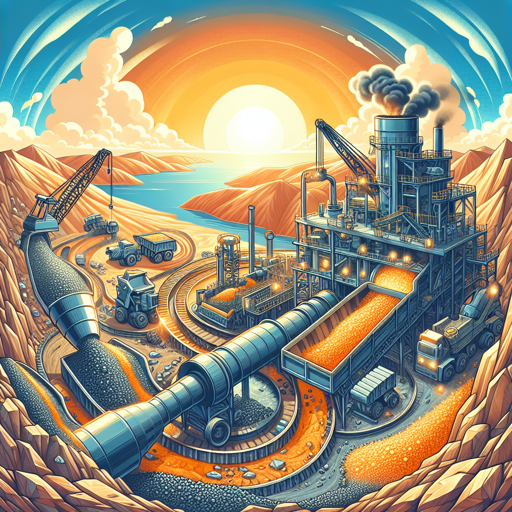
From Ore to Metal: The Extraction Journey
Introduction
Have you ever marveled at the gleaming steel of a skyscraper or the intricate copper wiring powering your devices? Behind these everyday marvels lies an incredible journey—one that begins deep within the Earth as unassuming rocks and minerals. The transformation from ore to metal is a captivating story of geology, innovation, and human ingenuity. Whether you’re a geology enthusiast, educator, student, or simply captivated by Earth’s natural wonders, understanding this journey reveals the hidden world beneath our feet and the processes that shape our modern lives.
In this article, we will unravel how raw ores are transformed into useful metals. We’ll explore the science and technology behind mineral extraction, the history of metallurgy, and the environmental challenges shaping the future of mining. Join us as we dig into the fascinating journey of turning stone into substance!
The Birthplace: Understanding Ores
Before metals can be shaped into tools or technology, they exist as ores—naturally occurring rocks containing valuable minerals. Ores are more than just rocks; they are Earth’s treasure chests, formed over millions of years by geological processes such as volcanic activity, sedimentation, and metamorphism.
What is an Ore?
An ore is a rock or sediment that contains sufficient minerals with important elements—usually metals—that can be economically extracted. Not all minerals are ores; only those concentrated enough for profitable extraction are classified as such.
Common Examples:
| Metal | Common Ore Mineral | Chemical Formula | Appearance | Key Uses |
|---|---|---|---|---|
| Iron | Hematite | Fe₂O₃ | Reddish-brown | Steel production |
| Copper | Chalcopyrite | CuFeS₂ | Brass-yellow | Electrical wiring |
| Aluminum | Bauxite | Al(OH)₃ + AlO(OH) | Reddish-brown, earthy | Packaging, transportation |
| Lead | Galena | PbS | Lead-grey cubes | Batteries, radiation shielding |
| Zinc | Sphalerite | ZnS | Brown to black | Galvanization, alloys |
| Gold | Native gold | Au | Yellow metallic | Jewelry, electronics |
The Extraction Journey: Step-by-Step
The journey from ore to metal can be broadly categorized into four main stages:
- Mining: Extracting the ore from the Earth.
- Crushing & Grinding: Reducing the ore to smaller pieces.
- Concentration: Separating valuable minerals from waste.
- Smelting & Refining: Converting minerals into pure metals.
Let’s dig deeper into each stage.
1. Mining: Getting the Ore Out
Mining is the first step in the journey—removing ore from its geological setting. There are two primary types of mining:
Surface Mining
- Open-pit mining: Large holes are dug into the ground to reach ore deposits near the surface.
- Strip mining: Layers of soil and rock are stripped away to access horizontal ore bodies.
Underground Mining
- Room and pillar: Rooms of ore are mined with pillars left for support.
- Cut and fill: Ore is removed in horizontal slices, and empty spaces are filled as mining progresses.
Mining methods depend on the type of ore body, depth, geology, and economic factors.
“Mining is as much about understanding geology as it is about technology.”
— Dr. Jane Evans, Mining Geologist
2. Crushing & Grinding: Reducing Size
Once extracted, ores are rarely in a form suitable for metal production. They are broken down through:
- Crushing: Large chunks are reduced to smaller pieces using jaw crushers and grinders.
- Grinding: The crushed ore is further ground to a fine powder, increasing surface area for chemical reactions.
This process liberates valuable minerals from surrounding waste rock—a critical step before further separation.
3. Concentration: Separating Value from Waste
Raw ore contains both useful minerals and unwanted rock (gangue). Concentration enhances the metal content through physical or chemical processes:
Methods of Concentration
| Method | Principle | Example Ores |
|---|---|---|
| Gravity Separation | Density differences | Gold, tin |
| Froth Flotation | Surface chemistry | Copper, zinc |
| Magnetic Separation | Magnetic properties | Iron (magnetite) |
| Leaching | Selective dissolution | Copper (oxide ores) |
Froth flotation, for instance, uses chemicals to make target minerals hydrophobic (water-repellent) so they attach to air bubbles and float to the surface.
4. Smelting & Refining: From Mineral to Metal
With concentrated ore in hand, it’s time for the dramatic transformation: extracting pure metal through heat and chemistry.
Smelting
Smelting uses high temperatures to chemically reduce metal compounds to their metallic state:
- Iron smelting: Hematite (Fe₂O₃) is reduced with carbon (coke) in a blast furnace to produce molten iron.
- Copper smelting: Sulfide ores are roasted and then smelted, separating copper from sulfur and iron.
Refining
Impurities are removed to produce high-purity metals:
- Electrolytic refining: Metals like copper are purified by passing an electric current through a solution containing the metal ions.
- Zone refining: Used for ultra-high purity in electronics (silicon).
Metallurgy Through the Ages: A Brief History
The art of extracting metals from ores—metallurgy—dates back thousands of years:
- Copper Age (ca. 5000 BCE): Early civilizations discovered native copper and learned to shape it with heat.
- Bronze Age (ca. 3300 BCE): Alloying copper with tin revolutionized tools and weapons.
- Iron Age (ca. 1200 BCE): Iron smelting enabled stronger tools and structures.
- Industrial Revolution (18th–19th centuries): Advancements in mining and metallurgy powered modern industry.
Ancient techniques laid the foundation for today’s complex processes that deliver metals essential for modern society.
Environmental Challenges and Innovations
Metal extraction has significant environmental impacts, including habitat destruction, pollution, and greenhouse gas emissions. As demand for metals grows—especially for green technologies—industry must innovate.
Current Challenges:
- Land degradation: Mining alters landscapes and ecosystems.
- Water pollution: Chemicals used in processing can contaminate water sources.
- Air emissions: Smelting releases sulfur dioxide and other pollutants.
Innovations:
- Recycling: Recovering metals from scrap reduces mining needs.
- Bioleaching: Using bacteria to extract metals with less environmental impact.
- Green chemistry: Developing less toxic reagents for mineral processing.
- Tailings management: Improved containment and reuse of mine waste.
“Sustainable metallurgy will define the next chapter of civilization.”
— Prof. Michael T. Jones, Environmental Metallurgist
Key Metals: Extraction at a Glance
Here’s a comparative look at how some important metals are extracted:
| Metal | Main Ore | Extraction Method | Notable Points |
|---|---|---|---|
| Iron | Hematite | Blast furnace smelting | Largest tonnage globally |
| Copper | Chalcopyrite | Froth flotation + smelting + electrorefining | High electrical conductivity |
| Aluminum | Bauxite | Bayer process + Hall-Héroult electrolysis | Energy-intensive |
| Gold | Native gold/ore | Gravity separation + cyanidation | Often recovered from low-grade ore |
| Uranium | Uraninite | Leaching + solvent extraction | Used in nuclear energy |
The Future: Green Metals and Circular Economy
As we move towards a low-carbon economy—driven by renewable energy and electric vehicles—the demand for metals like lithium, cobalt, nickel, and rare earths is surging. The challenge is to meet this demand responsibly.
Circular economy principles—where metals are recycled and reused—are becoming central to sustainable resource management. Urban mining (recovering metals from electronic waste) is already gaining traction.
International organizations like the International Council on Mining and Metals (ICMM) promote best practices and innovations for responsible mining.
Conclusion
The journey from ore to metal is a testament to human curiosity and ingenuity—a process rooted in geology yet transformed by science and technology. From ancient copper beads to smart devices powered by rare metals, our civilization is shaped by our ability to unlock Earth’s hidden treasures.
As we face new environmental challenges and technological frontiers, understanding this extraction journey empowers us—as enthusiasts, educators, and citizens—to make informed choices about resource use and stewardship.
So next time you hold a piece of metal—be it a coin, tool, or gadget—remember the epic voyage it undertook from deep within the Earth to your hands!
For further reading on responsible mining practices, visit the International Council on Mining and Metals.