 Mineral Matrix: An AI Journey into Earth’s Treasures
Giant Crystals Unearthed Marvels of the Mineral World
Discover the world's largest natural crystals and the science behind their awe-inspiring formation.
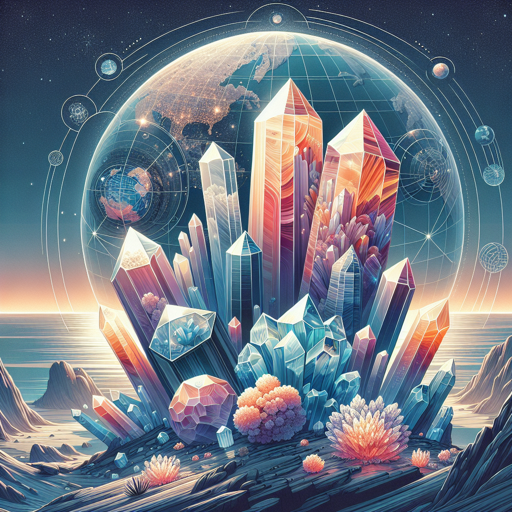
Giant Crystals Unearthed: Marvels of the Mineral World
Crystals have captured human fascination for millennia. Their mesmerizing shapes, radiant colors, and intriguing origins spark wonder in everyone from seasoned mineralogists to casual rock collectors. But beyond the delicate facets of gemstones or the compact forms in museum displays, nature sometimes creates crystal formations on a scale that defies imagination. In this article, we journey into the heart of the Earth and across continents to marvel at the largest crystals ever discovered—natural wonders that challenge our understanding of geological processes and showcase the sheer power and patience of our planet.
Introduction: Nature’s Monumental Masterpieces
Imagine stepping into a cavern where translucent pillars of gypsum tower above you like ancient trees, or finding a single beryl crystal so massive it could fill a living room. These are not fantasies from science fiction, but real discoveries—testaments to Earth’s ability to craft extraordinary structures over millions of years.
Giant crystals are more than geological curiosities; they are records of unique conditions deep within the Earth’s crust. Their size tells stories about stability, chemistry, temperature, and time—stories that continue to intrigue geologists and inspire awe in all who witness them.
The Science Behind Giant Crystal Growth
Before delving into the most colossal crystals ever found, it’s essential to understand how such giant crystals can form. Most crystals we encounter are small, sometimes microscopic. So what allows certain crystals to grow to monumental sizes?
Key Factors in Giant Crystal Formation
- Stable Environment: Crystals need undisturbed space to grow. Caverns or pockets deep underground provide protection from external disturbances.
- Supersaturated Solutions: Crystals grow out of solutions saturated with their component minerals. When these solutions remain undisturbed for long periods, growth can continue indefinitely.
- Slow Cooling: Rapid cooling leads to smaller crystals; slow cooling over thousands or millions of years allows for giant growth.
- Consistent Chemistry: The right chemical ingredients must be available consistently throughout the growth period.
“In mineralogy, patience is a virtue not only for the scientist but for nature itself.” — Dr. Eloise Ramirez, Geologist
Spotlight on Record-Breaking Crystals
Let’s explore some of the largest natural crystals ever discovered around the globe. Each discovery is a story of geological fortune and human wonder.
1. The Giant Gypsum Crystals of Naica Mine (Mexico)
Perhaps the most famous example is the astonishing “Cave of the Crystals” (Cueva de los Cristales) beneath the Naica Mine in Chihuahua, Mexico.
- Crystal Type: Selenite (gypsum)
- Largest Specimen: Up to 12 meters (39 feet) long, 4 meters (13 feet) in diameter
- Weight: Estimated at 55 tons
- Discovery: 2000
The underground cave houses some of the most massive crystals ever found. Formed under unique conditions with a stable temperature (~58°C/136°F) and mineral-rich water, these selenite beams grew undisturbed for hundreds of thousands of years.

2. The Beryl Colossus: Malakialina, Madagascar
Beryl is a mineral family that includes emerald and aquamarine. In 1995, miners in Madagascar unearthed a beryl crystal of staggering proportions.
- Crystal Type: Beryl
- Dimensions: 18 meters (59 feet) long, 3.5 meters (11.5 feet) wide
- Weight: 380,000 kg (418 US tons)
- Clarity: Opaque (not gem-quality)
This giant is not only the largest beryl crystal but also among the biggest single crystals ever found in any mineral group.
3. Quartz Giants: Arkansas, USA & Brazil
Quartz is one of Earth’s most abundant minerals, but it rarely forms as massive single crystals.
The Arkansas Quartz Crystal
- Location: Arkansas, USA
- Dimensions: Over 2 meters (6.5 feet) long
- Weight: Several thousand kilograms
- Notable Site: Jeffrey Quarry
The Brazilian Quartz Megacrystal
- Location: Minas Gerais, Brazil
- Dimensions: Over 6 meters (20 feet) long
- Weight: Estimated 40 tons (incomplete specimen)
These quartz behemoths are prized by collectors and often displayed in museums worldwide.
4. Feldspar Record Holder: Ural Mountains, Russia
Microcline feldspar is another mineral known for its large crystal habit.
- Location: Ural Mountains, Russia
- Dimensions: 50 x 36 x 14 feet (15 x 11 x 4.3 meters)
- Weight: Estimated 1,000 tons
This microcline crystal is considered one of the largest single mineral crystals ever recorded.
5. Calcite Titan: Iceland Spar from China
Calcite often forms beautiful rhombohedral crystals. The largest known specimen was found in China.
- Dimensions: Over 7 meters (23 feet) across
- Weight: Estimated at over 250 tons
Table: Largest Natural Crystals — At a Glance
| Mineral | Location | Dimensions | Approximate Weight | Year Discovered | Notable Features |
|---|---|---|---|---|---|
| Selenite | Naica Mine, Mexico | 12 m x 4 m | 55 tons | 2000 | Cave environment, translucent |
| Beryl | Malakialina, Madagascar | 18 m x 3.5 m | 380,000 kg | 1995 | Largest single beryl |
| Quartz | Minas Gerais, Brazil |
|
~40 tons | — | Museum quality |
| Microcline | Ural Mountains, Russia | 15 m x 11 m x 4.3 m | ~1,000 tons | — | Largest single feldspar |
| Calcite | China |
|
|
— | Exceptional size |
How Do These Giants Compare?
What sets these giants apart from typical crystals? Most mineral specimens collected by hobbyists are measured in centimeters or millimeters—these titans surpass them by orders of magnitude! Their formation requires not only geological time but also a rare combination of environmental factors:
- Space to Grow: Many crystals form in tight pockets; these had vast cavities.
- Chemical Abundance: Continuous supply of minerals for growth.
- Thermal Stability: Fluctuations can interrupt or halt crystal development.
- Geological Patience: Some giants formed over half a million years.
Tales from the Depths: Exploring Giant Crystal Caverns
Naica’s Cave of the Crystals
Descending into Naica’s “Cave of the Crystals” is like entering another world—one where transparency and light create a surreal landscape. Because of intense heat and humidity (often exceeding human survival limits), scientific exploration requires special suits and strict time limits.
These selenite giants offer clues about ancient hydrothermal systems and may even harbor ancient microbial life trapped inside fluid inclusions within the crystals’ structure—a tantalizing frontier for geomicrobiology.
Madagascar’s Beryl Wonder
The Malagasy beryl was so large it had to be measured in place—the logistics of extraction would be monumental! While not gem-quality, its sheer scale gives geologists invaluable data about pegmatite formation and beryl growth rates under optimal conditions.
The Role of Giant Crystals in Science and Culture
Giant crystals aren’t just geological oddities—they play several vital roles:
Scientific Insights
- Study of Geochemical Processes: Large crystals record changes in their environment over time through inclusions and trace elements.
- Model Systems: Help refine our models for crystal growth rates and conditions.
- Paleoclimate Clues: Fluid inclusions can trap ancient water or atmospheric gases.
Cultural Impact
Since antiquity, massive crystals have inspired myths and legends—from tales of magical healing powers to being revered as gifts from the gods.
Preserving Crystal Giants: Challenges and Ethics
Many giant crystals remain deep underground; those extracted face risks from weathering, vandalism, or commercial exploitation. Preservation efforts balance scientific study with ethical considerations:
- In Situ Conservation: Leaving giants where they formed preserves context and prevents damage.
- Museum Displays: Carefully extracted specimens can educate and inspire when exhibited responsibly.
- Legal Protection: Some countries designate unique geological sites as protected heritage.
External Reference
For a deeper dive into Naica’s Cave of the Crystals and scientific analysis on giant selenite formation, see this National Geographic feature.
Conclusion: Earth’s Hidden Titans Inspire Wonder
The largest crystals ever discovered are reminders that our planet is both artist and engineer—capable of patiently crafting structures that dwarf anything made by human hands. As we continue to explore caves, mines, and mountainsides around the world, who knows what other titans await discovery beneath our feet?
For geologists, students, educators, and enthusiasts alike, giant crystals are more than objects—they are invitations to curiosity and wonder. They connect us to deep time and Earth’s ongoing story—a narrative written in mineral masterpieces that will endure for ages to come.
Have you ever seen a giant crystal up close? Share your experience or dream destinations in the comments below! For more stories like this, explore our other guides on minerals, mining marvels, and gemstone wonders.