 Mineral Matrix: An AI Journey into Earth’s Treasures
Birthstones The Legends and Meanings Behind Gems
Explore the origins, properties, and symbolism of birthstones across cultures and history.
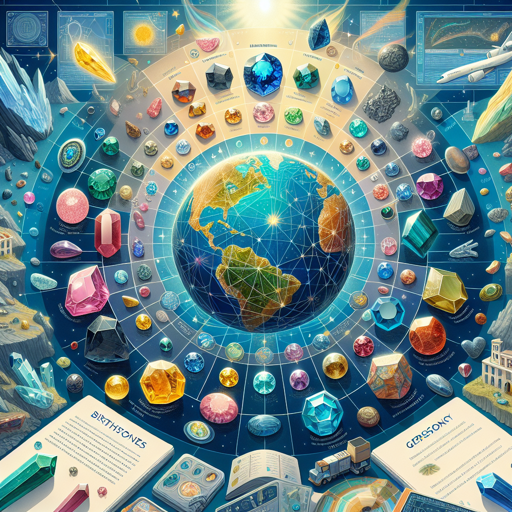
Birthstones and Their Meanings: A Journey Through Time and Stone
Introduction
Throughout history, humans have connected deeply with the earth’s treasures. Among the most cherished of these are birthstones—brilliant gems assigned to each month of the year. These captivating stones are more than just dazzling adornments; they carry centuries of lore, symbolism, and tradition. Whether you’re a geology enthusiast fascinated by mineral origins, an educator seeking to inspire students, or simply someone curious about the gems linked to your birth month, the world of birthstones offers a window into humanity’s enduring relationship with the mineral kingdom.
In this comprehensive guide, we’ll embark on a journey through the legends and meanings behind each birthstone. We’ll explore their geological origins, historical significance, and how their symbolism continues to resonate in modern times.
The Origins of Birthstones
The tradition of assigning gems to months has ancient roots. Many scholars trace the concept back to biblical times. In the Book of Exodus, the High Priest Aaron wore a breastplate adorned with twelve gemstones, each representing one of the tribes of Israel. This sacred arrangement later inspired associations between stones, zodiac signs, and eventually calendar months.
Over centuries, various cultural systems—Hindu, Polish, Russian, and others—crafted their own birthstone lists. However, the modern list commonly used today was standardized by the American National Retail Jewelers Association (now Jewelers of America) in 1912. It has been updated since, reflecting both cultural preferences and the availability of gemstones.
“The purest treasure mortal times afford is spotless reputation; that away, men are but gilded loam or painted clay.”
— William Shakespeare, Richard II
(A reminder that while gems may dazzle, it’s their meaning that truly endures.)
Birthstones by Month: Gemological Wonders and Symbolism
Let’s journey through each month’s birthstone, exploring their geological properties and traditional meanings.
| Month | Birthstone(s) | Color(s) | Hardness (Mohs) | Key Meanings |
|---|---|---|---|---|
| January | Garnet | Deep red | 6.5–7.5 | Protection, friendship |
| February | Amethyst | Purple | 7 | Clarity, calmness |
| March | Aquamarine, Bloodstone | Light blue, green | 7.5–8 | Serenity, courage |
| April | Diamond | Colorless | 10 | Strength, eternal love |
| May | Emerald | Green | 7.5–8 | Rebirth, prosperity |
| June | Pearl, Alexandrite | White/cream, color-changing | 2.5–8.5 | Purity, wisdom |
| July | Ruby | Red | 9 | Passion, vitality |
| August | Peridot, Spinel | Lime green, varied | 6.5–7 | Strength, protection |
| September | Sapphire | Blue (varied) | 9 | Wisdom, loyalty |
| October | Opal, Tourmaline | Multicolor | 5.5–7.5 | Hope, creativity |
| November | Topaz, Citrine | Yellow-orange | 7–8 | Joy, abundance |
| December | Turquoise, Tanzanite, Zircon | Blue-violet | 6–7.5 | Luck, success |
January: Garnet – The Stone of Friendship
Geology:
Garnets are a group of silicate minerals found in metamorphic rocks. Their deep red hue is most common but can also appear in green (tsavorite), orange (spessartine), and more.
Symbolism:
Traditionally regarded as a protective talisman for travelers and a symbol of friendship and trust.
Lore:
Ancient warriors carried garnets into battle believing they would keep them safe from harm.
February: Amethyst – The Stone of Clarity
Geology:
A purple variety of quartz formed in geodes and volcanic rocks.
Symbolism:
Associated with clarity of mind and tranquility. In Greek mythology, amethyst protected against intoxication.
Lore:
Medieval soldiers wore amethyst amulets as protection in battle and to keep a cool head.
March: Aquamarine & Bloodstone – Serenity & Courage
Aquamarine Geology:
A blue variety of beryl; its name means “water of the sea.”
Bloodstone Geology:
A dark green jasper flecked with red iron oxide.
Symbolism:
Aquamarine is linked to calmness and safe journeys over water. Bloodstone symbolizes courage and vitality.
April: Diamond – The Stone of Strength
Geology:
Carbon atoms bonded in a cubic lattice; the hardest known natural material.
Symbolism:
Eternal love and invincibility. Diamonds have been prized as talismans since antiquity.
Lore:
In ancient India, diamonds were said to protect against evil spirits.
May: Emerald – Rebirth and Prosperity
Geology:
A lush green variety of beryl colored by trace amounts of chromium or vanadium.
Symbolism:
Emeralds signify renewal and growth—fitting for spring’s rebirth.
Lore:
Cleopatra’s favorite gem; believed to grant foresight and eloquence.
June: Pearl & Alexandrite – Purity & Magic
Pearl Geology:
Formed organically within mollusks; pearls are composed of nacre (mother-of-pearl).
Alexandrite Geology:
A rare chrysoberyl that changes color from green in daylight to red under incandescent light.
Symbolism:
Pearls symbolize purity and wisdom; alexandrite represents magical change and balance.
July: Ruby – Passion and Courage
Geology:
Red corundum colored by chromium impurities.
Symbolism:
Rubies are emblems of passion and prosperity; said to bestow courage upon their wearer.
Lore:
In Burma (Myanmar), warriors embedded rubies under their skin for protection in battle.
August: Peridot & Spinel – Strength & Renewal
Peridot Geology:
An olive-green gem-quality variety of olivine found in volcanic rocks.
Spinel Geology:
Occurs in a range of colors; historically confused with ruby due to its red variety.
Symbolism:
Peridot is believed to bring strength and repel negativity. Spinel symbolizes revitalization.
September: Sapphire – Wisdom and Loyalty
Geology:
Corundum family; most prized in blue but occurs in many colors (except red).
Symbolism:
Wisdom, loyalty, and nobility. Sapphires have adorned royalty for centuries.
Lore:
Medieval clergy wore blue sapphires to symbolize Heaven.
October: Opal & Tourmaline – Creativity & Hope
Opal Geology:
Hydrated silica spheres create opal’s unique play-of-color.
Tourmaline Geology:
A boron silicate mineral group with a rainbow spectrum of colors.
Symbolism:
Opals inspire creativity; tourmalines are said to boost artistic expression and hope.
November: Topaz & Citrine – Abundance & Joy
Topaz Geology:
Aluminum silicate with fluorine; comes in many colors, most commonly golden yellow or blue (irradiated).
Citrine Geology:
A yellow variety of quartz; often heat-treated amethyst or smoky quartz.
Symbolism:
Topaz brings joy and generosity; citrine is regarded as a stone of abundance.
December: Turquoise, Tanzanite & Zircon – Luck & Wisdom
Turquoise Geology:
Hydrated copper aluminum phosphate famed for its sky-blue color.
Tanzanite Geology:
A blue-violet variety of zoisite found only near Mount Kilimanjaro.
Zircon Geology:
A zirconium silicate mineral; comes in many hues but often blue for December.
Symbolism:
All three are linked to good fortune, wisdom, and success in new ventures.
Birthstones Across Cultures
While the modern list is widely accepted in the West, other cultures have rich traditions regarding birthstones:
- Hindu astrology assigns “Navaratna” (nine gems) based on planetary influences.
- Traditional Tibetan birthstones differ from Western lists.
- Zodiac stones connect gems to astrological signs instead of months.
- Modern trends allow people to select stones based on personal meaning rather than birth month alone.
These variations illustrate how humanity’s fascination with minerals transcends borders and belief systems.
How Are Birthstones Formed? The Mineralogical Marvels
Each birthstone tells a story not only through legend but also through its mineralogical journey:
- Garnet & Peridot form deep within Earth’s mantle and surface during volcanic eruptions.
- Diamond is born under immense pressure over billions of years.
- Pearl, uniquely organic among minerals, is created within living creatures.
- Opal’s play-of-color results from silica spheres packed in an orderly array.
- Sapphire & Ruby, both corundum minerals, gain color from trace impurities—iron for blue sapphires; chromium for rubies.
- Tourmaline’s rainbow hues are due to complex chemical substitutions during crystal growth.
For geology educators and students alike, birthstones offer accessible examples for studying mineral formation processes—from igneous crystallization to biomineralization.
The Science Behind Birthstone Colors
Color is central to a gem’s identity. But what gives each birthstone its hue?
- Chromium produces red (ruby) and green (emerald).
- Iron creates blue (sapphire) or yellow-green (peridot).
- Trace elements like titanium or vanadium cause unique effects (as in alexandrite).
- Structural features—such as opal’s microstructure—generate optical phenomena like iridescence.
Studying these effects bridges mineralogy with chemistry and physics—making birthstones a sparkling gateway into earth sciences!
Birthstone Jewelry: Tradition Meets Modernity
Wearing your birthstone is thought by some to bring good luck or enhance personal strengths. Today’s jewelry market offers classic solitaire rings as well as contemporary designs that combine multiple stones—celebrating families or commemorating milestones.
Educators can use birthstone jewelry to spark classroom discussions on geology or cultural history. Meanwhile, collectors delight in seeking rare or unusual specimens—such as color-change alexandrite or vivid Paraíba tourmalines.
Sustainability and Ethical Sourcing
Modern consumers increasingly seek responsibly sourced gemstones. Mining practices for stones like diamond or tanzanite have come under scrutiny for environmental and ethical concerns. Initiatives such as the Kimberley Process (for diamonds) or Fairmined certification aim to ensure that birthstones can be enjoyed with peace of mind about their origins.
Learn more about ethical gemstone sourcing from Gemological Institute of America (GIA).
Conclusion
Birthstones weave together geology, history, culture, and personal meaning into an enduring tradition that sparkles across generations. Whether you’re entranced by the molecular dance that creates color in gemstones or inspired by legends passed down through centuries, each stone tells a story—of Earth’s processes and humanity’s dreams alike.
As you admire your own birthstone—or consider gifting one—remember that these gems represent not just months on a calendar but our shared fascination with the wonders beneath our feet.
The next time you glance at a garnet ring or sapphire pendant, let it be a reminder: every stone is a time capsule waiting to be discovered anew.
For further reading on gemstone history and science, visit the GIA’s Birthstone Guide.