 Mineral Matrix: An AI Journey into Earth’s Treasures
The Beauty of Fluorescent Minerals Revealed
Discover why some minerals glow under UV light and where to find these natural wonders.
Introduction
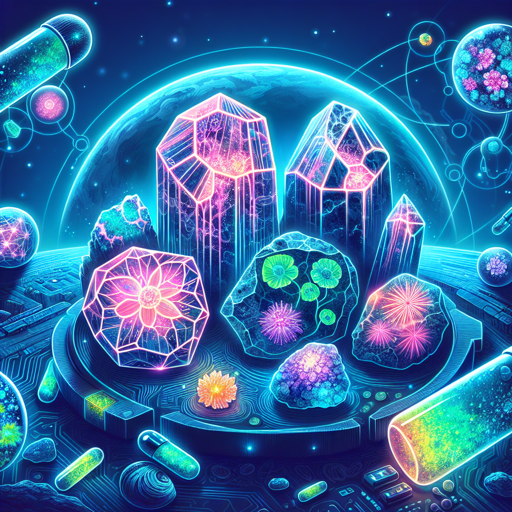
Have you ever been mesmerized by rocks that glow in brilliant colors under ultraviolet (UV) light? This enchanting phenomenon belongs to the world of fluorescent minerals—a captivating subject that merges science, beauty, and adventure. Whether you’re a geology enthusiast, educator, student, or just someone fascinated by the wonders of the Earth, the allure of fluorescent minerals is impossible to ignore.
From museum displays to field expeditions under the stars, fluorescent minerals provide a unique window into the invisible energies of our planet. But what causes certain minerals to glow? Where can you discover them yourself? Join us as we journey into the glowing heart of geology, exploring the science, history, and collecting hotspots of nature’s own neon wonders.
The Science Behind the Glow: Why Minerals Fluoresce
To understand the beauty of fluorescent minerals, we must first explore the science behind their magical glow.
What Is Fluorescence?
Fluorescence is a process where a substance absorbs energy at one wavelength (often ultraviolet) and emits it at a longer wavelength—usually visible light. When you shine a UV lamp on certain minerals in a dark room, they emit vivid colors like reds, greens, blues, and oranges.
“Fluorescence in minerals is not just a curiosity; it’s a window into the atomic structure and impurities of Earth’s geological treasures.”
— Dr. George R. Rossman, Professor of Mineralogy, Caltech
Why Do Only Some Minerals Fluoresce?
Not all minerals glow under UV light. For fluorescence to occur, a mineral must contain specific impurities (called activators) or have structural defects that allow the absorption and re-emission of energy.
Common Activators in Fluorescent Minerals
| Activator Element | Typical Colors Produced | Example Mineral |
|---|---|---|
| Manganese (Mn) | Orange-reds | Calcite (Franklin, NJ) |
| Uranium (U) | Green-yellow | Autunite |
| Lead (Pb) | Blue-white | Scheelite |
| Europium (Eu) | Red or blue | Fluorite |
| Chromium (Cr) | Red | Ruby (Corundum) |
These trace elements are often present only in minute amounts but are crucial for producing fluorescence.
Types of Ultraviolet Light
Fluorescent minerals respond differently to various wavelengths of UV:
- Shortwave UV (SWUV): 100–280 nm; often elicits brighter or different responses.
- Longwave UV (LWUV): 315–400 nm; safer for eyes and skin, but not all minerals respond.
- Midwave UV (MWUV): 280–315 nm; less commonly used but useful for some specimens.
Understanding which UV wavelength to use can greatly enhance your mineral-hunting experience.
A Brief History: The Discovery and Study of Fluorescent Minerals
The phenomenon of fluorescence was first described in the mid-19th century by Sir George Stokes. Early mineralogists noticed that some minerals emitted an unexpected glow when exposed to sunlight or flame. However, it wasn’t until the invention of the electric UV lamp in the 20th century that the study—and collecting—of fluorescent minerals truly flourished.
Fluorescent minerals became popular among collectors and museums because they added a new dimension to otherwise ordinary-looking rocks. Today, institutions like the Sterling Hill Mining Museum in New Jersey feature entire rooms dedicated to these glowing treasures.
Top Fluorescent Minerals: Nature’s Neon Palette
Some minerals are famous for their spectacular fluorescence. Here are a few favorites among collectors:
1. Willemite
- Fluorescence Color: Bright green under SWUV.
- Where Found: Franklin and Sterling Hill, New Jersey, USA.
2. Calcite
- Fluorescence Color: Can be red, pink, orange, blue, or white depending on impurities.
- Where Found: Worldwide; notable specimens from New Jersey (red/orange), Mexico (blue), and China (white).
3. Scheelite
- Fluorescence Color: Blue-white under SWUV.
- Where Found: Tungsten deposits worldwide; classic localities include California and China.
4. Fluorite
- Fluorescence Color: Most commonly blue-violet under LWUV.
- Where Found: England (Blue John), Illinois (USA), China.
5. Autunite
- Fluorescence Color: Yellow-green due to uranium content.
- Where Found: France, Portugal, USA.
Table: Comparison of Notable Fluorescent Minerals
| Mineral | Typical Fluorescence Color(s) | Best UV Type | Notable Localities |
|---|---|---|---|
| Willemite | Bright green | SWUV | Franklin NJ (USA), Namibia |
| Calcite | Red, orange, blue, white | SWUV/LWUV | Franklin NJ (USA), Mexico, China |
| Scheelite | Blue-white | SWUV | California (USA), China |
| Fluorite | Blue-violet | LWUV | Derbyshire (UK), Illinois (USA) |
| Autunite | Yellow-green | SWUV | France, Portugal, USA |
Where to Find Fluorescent Minerals
World-Famous Localities
-
Franklin & Sterling Hill, New Jersey, USA
Renowned as the “Fluorescent Mineral Capital of the World,” these mines have produced over 350 mineral species—more than 90 of which are fluorescent! -
Langban Mine, Sweden
Famous for rare and unusual fluorescent minerals. -
Llallagua Mine, Bolivia
Source of unique fluorescent phosphates. -
Ilimausaq Complex, Greenland
Known for rare earth element-bearing fluorescent minerals like tugtupite. -
Mont Saint-Hilaire, Canada
Home to exotic and rare fluorescent species.
Interactive Museums and Displays
Many museums feature dark rooms with UV lights to showcase their fluorescent mineral collections. Notable institutions include:
- Sterling Hill Mining Museum (New Jersey)
- American Museum of Natural History (New York)
- Smithsonian National Museum of Natural History (Washington D.C.)
How to Collect and View Fluorescent Minerals
What You Need
- Portable UV Lamp: Choose between shortwave or longwave lamps; shortwave lamps reveal more specimens but require more care due to possible eye/skin hazards.
- Safety Glasses: Always use protective eyewear with SWUV.
- Dark Environment: The darker the setting, the more dramatic the glow.
Tips for Collecting
- Research Localities: Not all sites yield fluorescent minerals; focus on known locations.
- Respect Regulations: Many sites are protected or on private land—always obtain permission.
- Document Your Finds: Keep notes on location and rock type for future reference.
Preserving Your Collection
Store specimens away from direct sunlight and excess heat—some may fade with prolonged exposure to light. Label each sample with its mineral name and origin.
The Role of Fluorescence in Science and Industry
While mineral collectors are drawn to fluorescence for its beauty, scientists harness this property for important research:
- Geological Exploration: Scheelite’s blue-white glow helps prospectors locate tungsten ore deposits.
- Gem Identification: UV fluorescence can distinguish diamonds from similar-looking stones or synthetic imitations.
- Forensics & Art Restoration: The same principles are used in crime labs and museums to reveal hidden details invisible under normal lighting.
Fun Facts About Fluorescent Minerals
- The term “fluorescence” derives from “fluorite,” one of the first minerals observed to glow under UV light.
- Some minerals also exhibit phosphorescence, meaning they continue glowing after the UV source is removed.
- Over 500 mineral species are known to fluoresce to some degree!
External Reference
For a comprehensive list of fluorescent minerals and their properties, visit Mindat.org’s Fluorescent Minerals Database.
Conclusion
From the atomic quirks that make them glow to the legendary mines where they’re found, fluorescent minerals offer an endlessly fascinating journey through geology’s most magical phenomena. Whether you’re an educator illuminating earth science lessons or an enthusiast searching for your next glowing specimen under moonlit skies, fluorescent minerals remind us that there’s always more than meets the eye beneath our feet.
So grab your UV lamp and explore—the world of fluorescent minerals awaits with hidden colors ready to dazzle your imagination!
Ready to start your own collection or plan a visit? Share your favorite finds and experiences in the comments below!