 Mineral Matrix: An AI Journey into Earth’s Treasures
Mining Careers for the Next Generation
Explore dynamic and rewarding paths in geology and mining
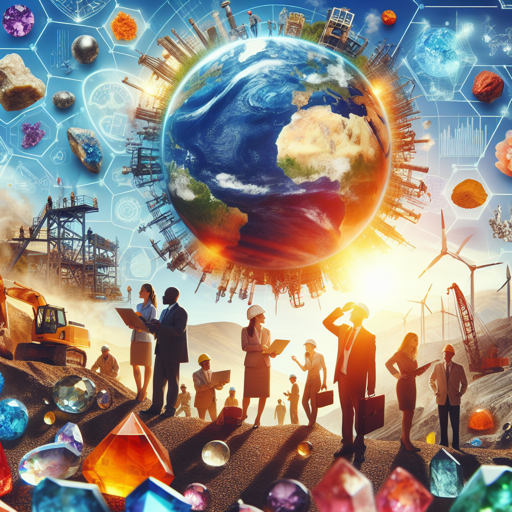
Mining Careers for the Next Generation
Introduction
In the ever-evolving world of minerals, mining, and gemstones, a new generation of geologists, engineers, and earth science enthusiasts is set to shape the future. As technology advances and the global demand for resources grows, the mining and geology industries offer exciting, diverse, and rewarding career paths. From exploring deep underground for rare minerals to leading innovative sustainability initiatives, the possibilities are as vast as the landscapes these professionals study.
Whether you’re a student considering your future, an educator guiding curious minds, or simply passionate about earth sciences, this guide will showcase the dynamic opportunities available in modern mining and geology. Let’s dig into the remarkable careers awaiting the next generation.
Why Mining Matters: A Foundation for Modern Society
Mining and minerals are at the heart of our daily lives. The metals in your smartphone, the materials in your car, and the gemstones in your jewelry all began their journey deep within the Earth. As society advances, so does our reliance on minerals—from lithium powering electric vehicles to rare earth elements essential for renewable energy.
Yet, mining is no longer just about extraction; it’s about innovation, sustainability, and stewardship of our planet. Modern careers in mining blend science, technology, engineering, environmental care, and even community engagement.
“The best geologists are the ones who have seen the most rocks.”
— Herbert Harold Read
Evolving Opportunities: Mining Careers in the 21st Century
The stereotype of mining as a rugged job deep underground is outdated. Today’s mining sector is high-tech, diverse, and deeply interdisciplinary. Let’s explore some of the key career paths emerging in this transformative industry:
1. Geology: Unveiling Earth’s Secrets
Geologists are detectives of the natural world. They study rock formations, search for mineral deposits, and interpret Earth’s history. Specializations within geology include:
- Economic Geology: Locating and analyzing mineral resources.
- Environmental Geology: Assessing and mitigating mining’s environmental impacts.
- Petrology & Mineralogy: Studying rocks and minerals at microscopic levels.
Career Example:
A mineral exploration geologist uses satellite imagery, field mapping, and geophysical data to find new sources of copper for electronics manufacturing.
2. Mining Engineering: Designing Tomorrow’s Mines
Mining engineers design safe, efficient ways to extract valuable resources. Their work includes:
- Planning mines using cutting-edge software.
- Overseeing operations to optimize productivity.
- Implementing automation and robotics for safer workplaces.
Career Example:
An engineer develops a remote-controlled drilling system that reduces human risk in hazardous environments.
3. Environmental Science & Sustainability
Modern mining companies prioritize sustainability. Environmental scientists:
- Monitor water quality near mines.
- Develop plans for land reclamation after mining ends.
- Consult on reducing carbon footprints.
Career Example:
An environmental officer leads a biodiversity project restoring native habitats at a former mining site.
4. Data Science & Technology
Digital transformation is revolutionizing mining. Data scientists:
- Analyze sensor data from equipment and ore bodies.
- Create predictive models for resource estimation.
- Develop AI-driven systems for decision-making.
Career Example:
A data analyst builds machine learning models to predict equipment failures before they happen.
5. Gemology & Mineralogy
Gemologists and mineralogists specialize in identifying, valuing, and studying precious stones and minerals. Their roles span:
- Quality control in gemstone production.
- Research on new mineral discoveries.
- Education and museum curation.
Career Example:
A gemologist authenticates rare sapphires for auction houses and educates customers about ethical sourcing.
6. Health & Safety Management
Protecting workers is a top priority. Health and safety officers:
- Develop protocols to minimize accidents.
- Train staff on emergency procedures.
- Ensure compliance with regulations.
Career Example:
A safety manager implements drone inspections to spot hazards in open-pit mines without endangering personnel.
7. Community Relations & Social Responsibility
Modern mining companies engage with local communities to ensure positive impacts. Professionals in this field:
- Liaise with stakeholders.
- Plan community development projects.
- Address concerns about environmental or social impacts.
Career Example:
A community relations officer organizes educational workshops about mining benefits and environmental protection for local schools.
Key Skills for Future Mining Professionals
The next generation of mining professionals needs a blend of technical knowledge and soft skills:
| Skill Area | Description | Examples of Roles Using This Skill |
|---|---|---|
| Analytical Thinking | Solving complex geological or engineering problems | Geologist, Data Scientist |
| Communication | Explaining findings to diverse audiences | Community Relations Officer, Educator |
| Technical Proficiency | Using software, instruments, or machinery | Mining Engineer, Technician |
| Environmental Awareness | Understanding ecological impacts | Environmental Scientist |
| Adaptability | Embracing new tech and changing regulations | All Roles |
| Teamwork | Collaborating across disciplines | Project Manager, Field Crew |
Education Pathways: From Classroom to Career
The journey into mining careers starts with education. Here’s how aspiring professionals can prepare:
High School
Courses in earth sciences, chemistry, physics, mathematics, computer science, and even geography lay a strong foundation.
University Degrees
Common degrees include:
- Bachelor’s/Master’s in Geology or Earth Sciences
- Mining Engineering
- Environmental Science
- Data Science (with applications in geosciences)
- Gemology & Mineralogy programs
Vocational Training & Internships
Technical colleges offer diplomas in mineral processing or mine operations. Internships with mining companies provide hands-on experience—a crucial step for building practical skills.
Professional Certification
Certifications through recognized bodies (e.g., Society for Mining, Metallurgy & Exploration (SME), Geological Society) enhance credibility and open doors to advanced roles.
“Education is not the filling of a pail, but the lighting of a fire.”
— William Butler Yeats
The Role of Technology: How Digital Tools are Shaping Mining Careers
The digital revolution is redefining every aspect of mining:
- Automation: Drones survey sites; autonomous trucks haul ore; remote sensors monitor equipment health.
- Geographic Information Systems (GIS): Geologists use GIS to map resources with incredible precision.
- Artificial Intelligence: AI predicts ore deposits and optimizes extraction processes.
- Virtual Reality (VR): Used for training workers in safe environments before they enter real mines.
Case Study:
A Canadian mining company uses VR headsets to train new operators on heavy equipment simulators—reducing accidents by 30% in their first year of implementation.
Women & Diversity: Building an Inclusive Industry
Mining has historically been male-dominated, but that’s changing fast. Companies now champion diversity through scholarships, mentorship programs, and inclusive hiring practices.
Why Diversity Matters
- Diverse teams are proven to be more innovative.
- Representation encourages more young people—including women and minorities—to enter geosciences.
- Inclusive workplaces improve safety and job satisfaction.
Inspiring Profile:
Dr. Sarah-Jane Barnes, a renowned Canadian geologist specializing in magmatic ore deposits, has mentored countless students—demonstrating that anyone with passion can make a mark in this field.
Sustainability & Ethics: The Responsible Mining Revolution
Today’s students want meaningful work that makes a difference. The mining industry is responding by focusing on:
- Reducing greenhouse gas emissions.
- Ethical sourcing and supply chain transparency (e.g., conflict-free minerals).
- Community development initiatives alongside resource projects.
For more on ethical mineral sourcing and industry standards, visit Responsible Mining Initiative.
The Global Outlook: Where are the Jobs?
The demand for skilled professionals is global. Here’s a snapshot of where opportunities are growing:
| Region | Key Opportunities | Notable Trends |
|---|---|---|
| North America | Green tech minerals | Lithium projects for EV batteries |
| Australia | Iron ore & gold | Automation in large-scale open-pit mines |
| Africa | Copper & cobalt | Sustainable development partnerships |
| Europe | Rare earth elements | Circular economy & mineral recycling initiatives |
| South America | Copper & lithium | Community engagement & biodiversity commitments |
Frequently Asked Questions (FAQ)
Q: Are there opportunities outside traditional mining?
A: Absolutely! Skills developed in geology and mining transfer to environmental consulting, hazard assessment (earthquakes/volcanoes), government policy, academia, museums, gemology businesses, space exploration (asteroid mining), and more.
Q: How important is sustainability in mining careers today?
A: It’s central. Every major project requires environmental assessments, community consultation, and long-term reclamation planning. Sustainability skills set candidates apart.
Q: What about job security?
A: As demand for renewable energy grows (and with it the need for critical minerals), skilled geologists and engineers remain in high demand worldwide.
Resources & External References
For more information on mining careers:
- Society for Mining, Metallurgy & Exploration (SME)
- International Geoscience Education Organisation
- Responsible Mining Initiative
Conclusion
The world beneath our feet holds untold wonders—and essential resources critical to our shared future. As we embrace new technology, sustainability practices, and inclusive workplaces, mining careers are more dynamic and meaningful than ever before. For those passionate about earth sciences—whether you dream of discovering hidden gems or designing the next generation of green mines—the journey promises challenge, adventure, and lasting impact.
The next generation of geologists, engineers, technicians, data scientists, educators, and advocates will not just shape rocks—they’ll shape the world.
Are you ready to dig deeper?
This article was crafted for geology enthusiasts at all stages—students exploring their options, educators inspiring future scientists, and anyone fascinated by the ever-evolving world beneath our feet.