 Mineral Matrix: An AI Journey into Earth’s Treasures
Birthplace of Diamonds Around the World
Explore the geology and history of iconic diamond regions worldwide
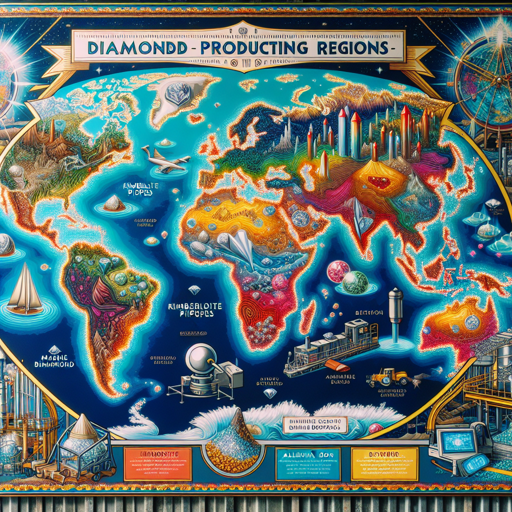
Introduction
Diamonds have captured human imagination for centuries, symbolizing beauty, endurance, and value. But beyond their allure as gemstones, diamonds are geological marvels—crystallized carbon formed under extreme conditions deep within the Earth’s mantle. The story of each diamond begins millions to billions of years ago, in unique geological settings scattered across the globe. In this article, we journey through the most famous diamond-producing regions, exploring their geology, history, and the fascinating processes that create Earth’s hardest natural substance. Whether you are a geology enthusiast, educator, student, or simply fascinated by the natural wonders beneath our feet, this exploration uncovers the true birthplace of diamonds around the world.
The Geology of Diamonds: A Brief Overview
Before delving into the world’s most prominent diamond regions, it’s essential to understand how diamonds form and reach the Earth’s surface.
Diamonds are made of pure carbon atoms arranged in a crystal lattice. They form at depths of 140-200 kilometers (87-124 miles) within the Earth’s mantle under pressures exceeding 45 kilobars and temperatures over 1,000°C. These conditions are found in two main types of host rocks: kimberlite and lamproite pipes—ancient volcanic structures that act as express elevators, rapidly bringing diamonds to the surface.
Over millions of years, erosion can liberate diamonds from these pipes, depositing them in riverbeds and along coastlines as alluvial or placer deposits. The places where these geological processes converge have produced some of the most legendary diamond fields in history.
Africa: The Legendary Diamond Continent
South Africa – The Cradle of Modern Diamond Mining
South Africa is synonymous with diamond history. In 1867, the discovery of a sparkling pebble on the banks of the Orange River set off the world’s first diamond rush. The ensuing frenzy led to the creation of the Kimberley Mine—famously known as “The Big Hole.”
Geological Setting:
South African diamonds are primarily found in kimberlite pipes dating back over 100 million years. The country’s unique geological structure, known as the Kaapvaal craton, provides stable ancient rocks ideal for diamond formation and preservation.
Mining Highlights:
- Kimberley Mine: The site of the original diamond rush; famous for yielding massive stones like the 83.5-carat Star of South Africa.
- Cullinan Mine: Home to the largest gem-quality diamond ever found—the Cullinan Diamond (3,106 carats), now part of the British Crown Jewels.
Botswana – A Modern Giant
Botswana has emerged as the world’s leading diamond producer by value and one of the top by volume.
Geological Setting:
Botswana’s diamonds are mined from kimberlite pipes within the ancient Kalahari craton.
Key Mines:
- Orapa Mine: The largest open-pit diamond mine by area.
- Jwaneng Mine: Known for its exceptional quality stones and high profitability.
Namibia – Diamonds by the Sea
Namibia’s coastline is famous for its marine diamond deposits, where diamonds washed down from inland kimberlite pipes over millions of years settled on Atlantic beaches and offshore seabeds.
Unique Aspects:
- Diamonds here are often older and more perfectly rounded due to natural abrasion.
- Offshore mining technology has been developed to recover these sea-born gems.
The Democratic Republic of Congo (DRC) – Alluvial Riches
The DRC is one of Africa’s largest diamond producers, primarily from alluvial deposits in riverbeds.
Geological Setting:
Alluvial mining dominates, with diamonds transported from ancient volcanic sources by rivers.
Russia: Diamonds from the Frozen North
Russia holds some of the largest diamond reserves on Earth and is a global leader in diamond production.
Yakutia (Sakha Republic) – The Siberian Treasure
Geological Setting:
The Siberian craton contains hundreds of kimberlite pipes. The extreme climate and permafrost make mining challenging yet highly rewarding.
Major Mines:
- Mir Mine: An enormous open-pit mine that produced millions of carats before closing in 2004.
- Udachnaya Pipe: One of Russia’s oldest and richest kimberlite mines.
Quote:
“Diamonds are far more than sparkling gems; they are time capsules from Earth’s deep past.”
— Dr. Karen Smit, Diamond Geologist
Australia: A Rainbow of Diamonds
Australia entered the diamond scene relatively late but quickly made a mark with spectacular finds.
Argyle Mine – Home of Pink Diamonds
Located in Western Australia, Argyle became famous for its unique pink, red, and champagne-colored diamonds.
Geological Setting:
The Argyle pipe is a rare lamproite rather than kimberlite, offering insight into diverse diamond-forming environments.
Notable Facts:
- Once produced over 90% of the world’s pink diamonds.
- Ceased operations in 2020 after nearly four decades but remains a legendary name.
Canada: The New Frontier
Canada’s discovery of diamonds in the 1990s transformed it into a significant producer known for ethical mining practices and high-quality stones.
Northwest Territories – Frozen Riches
Canadian mines such as Ekati, Diavik, and Gahcho Kué are located on ancient cratonic rocks similar to those found in Africa and Russia.
Unique Aspects:
- Stringent environmental standards and advanced technologies.
- Diamond mining has become vital to local indigenous communities and economies.
Brazil & India: The Old World Sources
India – The First Diamond Source
India was the only known source of diamonds until the 18th century. Ancient alluvial deposits along rivers such as the Krishna provided legendary gems like the Koh-i-Noor.
Brazil – A Colonial Bonanza
Brazilian rivers yielded significant alluvial diamonds after Indian sources dwindled. This sparked a boom that supplied Europe until discoveries in Africa shifted the global focus.
Table: Key Diamond-Producing Regions
| Region/Country | Main Geology | Notable Mines/Deposits | Unique Features |
|---|---|---|---|
| South Africa | Kimberlite pipes | Kimberley, Cullinan | Largest gem-quality diamonds |
| Botswana | Kimberlite pipes | Orapa, Jwaneng | World’s top producer by value |
| Russia (Yakutia) | Kimberlite pipes | Mir, Udachnaya | Harsh climate, huge reserves |
| Australia (Argyle) | Lamproite pipe | Argyle | Pink/red diamonds |
| Namibia | Alluvial/marine | Coastal & offshore | Marine mining technology |
| Canada (NWT) | Kimberlite pipes | Ekati, Diavik | Ethical mining focus |
| India | Alluvial | Golconda region | Historical source, legendary gems |
| Brazil | Alluvial | Minas Gerais | Supplied Europe after India |
| DRC | Alluvial | Kasai River Basin | Major alluvial production |
How Geology Shapes Diamond Destinies
The birthplace of a diamond determines not only its location but also its characteristics—size, clarity, color, and rarity. For example:
- Kimberlite vs. Lamproite: Most commercial diamonds come from kimberlite pipes, but lamproite (such as at Argyle) can produce exceptional colors.
- Alluvial Diamonds: These gems are often more rounded due to natural transport and tend to be older.
- Marine Diamonds: Namibia’s beach diamonds are prized for their shape and quality after relentless wave action.
Understanding these geological nuances helps miners target new deposits and gemologists trace a stone’s origins—a critical step in verifying ethical sourcing.
Environmental & Ethical Considerations
The story of diamonds is not just about geology but also about people and the planet. Modern operations face challenges such as:
- Environmental impact: Land disturbance, water usage, and ecosystem disruption.
- Social responsibility: Ensuring fair labor practices and benefitting local communities.
- Traceability: Initiatives like the Kimberley Process Certification Scheme aim to prevent “conflict” or “blood” diamonds from entering markets.
- Innovations: Countries like Canada set benchmarks for responsible mining with transparent supply chains.
For more on ethical sourcing and global diamond trade regulations, see The Kimberley Process.
Conclusion
Diamonds are much more than dazzling stones set in jewelry; they are natural wonders crafted by deep Earth processes over unimaginable timescales. From Africa’s ancient cratons to Canadian tundras and Namibian shores, every major diamond-producing region tells a story written in rocks—of geologic drama, human ambition, and evolving values around sustainability and ethics. As our understanding grows and technology advances, so too does our appreciation for these remarkable minerals that bridge Earth science with human culture.
Whether you admire them for their beauty or study them for their scientific significance, exploring the birthplace of diamonds is a journey through both Earth’s deep past and humankind’s creative present.