 Mineral Matrix: An AI Journey into Earth’s Treasures
Care and Cleaning Tips for Mineral Collections
Preserve your mineral specimens with expert cleaning and storage advice for lasting beauty and scientific value.
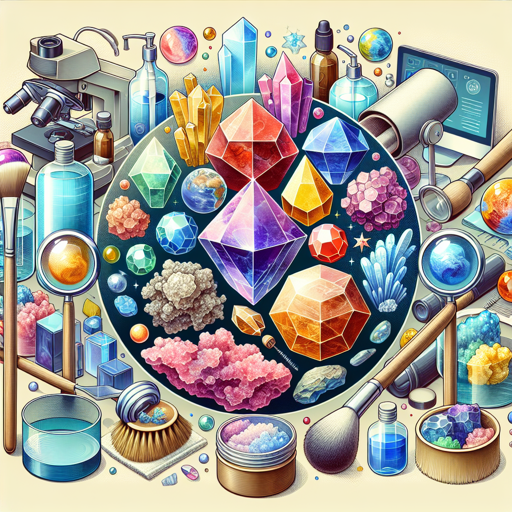
Care and Cleaning Tips for Mineral Collections
Whether you are a seasoned geologist, an educator, or simply an avid collector, preserving the beauty and integrity of mineral specimens is both an art and a science. Minerals are natural wonders—each with unique colors, forms, and delicate structures. However, improper handling or cleaning can quickly diminish their value and scientific significance. In this comprehensive guide, we’ll explore the best practices for mineral care, cleaning techniques, storage solutions, and the essential do’s and don’ts to ensure your collection stands the test of time.
Introduction: Treasures Worth Protecting
Mineral collections are more than just displays of nature’s artistry; they are records of Earth’s deep history and invaluable educational resources. Whether you have a handful of sparkling quartz pieces on your shelf or curate a museum-worthy array of rare specimens, every collector faces the same challenge: how to preserve these treasures for future generations.
“A mineral specimen is not merely a beautiful object; it is a page torn from the history of the Earth.”
— Dr. Wendell E. Wilson, mineralogist and editor
Many minerals are surprisingly fragile, sensitive to light, moisture, temperature fluctuations, and even the oils on our fingers. The right care and cleaning methods can mean the difference between a specimen that dazzles for decades and one that fades or crumbles in a few short years.
Why Proper Care Matters
Scientific Value
Minerals often carry information about geological processes, environmental conditions, and even planetary history. Damage or alteration can erase vital clues.
Aesthetic Preservation
Crystals lose their luster; delicate forms chip or break; vibrant colors fade—these risks can all be minimized with proper care.
Investment Protection
Rare or high-quality specimens can be valuable assets. Maintaining their condition preserves both scientific and monetary worth.
Understanding Mineral Sensitivities
Before diving into cleaning techniques, it’s crucial to recognize that not all minerals are created equal. The Mohs hardness scale offers a starting point for understanding durability, but chemical composition, crystal structure, and secondary features (like coatings or inclusions) also affect how a mineral should be handled.
Common Sensitivities
| Mineral Group | Sensitivity | Special Considerations |
|---|---|---|
| Sulfides (e.g., pyrite, galena) | Prone to tarnishing | Avoid humidity; clean gently |
| Carbonates (e.g., calcite, aragonite) | Acid-soluble | Never clean with acids or vinegar |
| Halides (e.g., halite, fluorite) | Water-soluble | Avoid prolonged water exposure |
| Silicates (e.g., quartz, feldspar) | Generally robust | Watch for cleavage planes |
| Native elements (e.g., copper, silver) | Oxidize/tarnish | Store in dry conditions |
General Guidelines for Mineral Care
1. Handle With Care
- Wear gloves: Cotton or nitrile gloves prevent skin oils from dulling surfaces.
- Support fragile pieces: Always hold specimens from their base or matrix.
- Avoid touching crystal faces: Many minerals are susceptible to fingerprints or abrasion.
2. Environmental Controls
- Stable temperature: Avoid rapid temperature changes that can cause cracks.
- Low humidity: Especially vital for sulfides and halides.
- Indirect light: Prolonged sunlight can fade minerals like amethyst or celestite.
3. Display Considerations
- Secure mounting: Use museum putty or padded stands.
- Dust covers: Glass domes or display cases minimize dust and accidental contact.
- Labeling: Use acid-free paper for specimen labels to avoid chemical reactions.
Cleaning Techniques: Step-by-Step
Cleaning minerals requires patience and careful selection of methods. Here’s a breakdown of techniques from gentlest to more intensive:
1. Dry Brushing
- Tools: Soft-bristled paintbrush or camel hair brush.
- Usage: For removing loose dust.
- Minerals: Safe for all specimens.
2. Air Blowing
- Tools: Compressed air (manual bulbs preferred).
- Usage: Dislodges particles in crevices.
- Caution: Avoid canned air that may contain propellants or moisture.
3. Gentle Washing
- Tools: Distilled water, soft toothbrush.
- Usage: For robust minerals like quartz.
- Procedure: Gently rinse; use a soft brush for stubborn dirt.
- Warning: Never soak water-soluble minerals!
4. Chemical Treatments
a. Detergent Soak
- Usage: For removing organic grime from sturdy minerals.
- Solution: A drop of mild dish soap in distilled water.
- Rinse thoroughly with distilled water after cleaning.
b. Iron Stain Removal
-
Oxalic acid solution can remove iron stains from quartz but requires caution:
- Wear gloves and eye protection.
- Rinse thoroughly after treatment.
- Never use on carbonates or delicate minerals.
c. Acetone or Alcohol
- Usage: Removes sticky residues from robust specimens.
- Warning: Test first on an inconspicuous area; avoid on porous minerals.
Table 1: Cleaning Methods for Popular Minerals
| Mineral | Safe Cleaning Methods | Cleaning to Avoid |
|---|---|---|
| Quartz | Water & mild soap, brushing | Strong acids |
| Pyrite | Dry brush, gentle air blow | Water soaking, humid storage |
| Calcite | Dry brush | Acids, prolonged water contact |
| Halite | Dry brush | Any water-based cleaning |
| Fluorite | Water rinse (brief) | Prolonged soak, acids |
| Malachite | Dry brush | Acids, ammonia |
Specialized Tips for Delicate Specimens
Sulfides (e.g., Pyrite)
Pyrite is notorious for “pyrite disease”—a destructive decay caused by humidity. Store in silica gel-lined cases or with moisture absorbers. Never use water-based cleaning; stick to dry brushing.
Halides (e.g., Halite)
Halite is highly soluble in water. Clean only with a soft brush or compressed air. Store away from humidity at all costs.
Carbonates (e.g., Azurite, Malachite)
These minerals react with acids—even vinegar. Avoid acidic cleaners entirely. Clean with dry methods or at most barely damp (not wet) cloths.
Gemstones with Softness/Fissures (e.g., Turquoise)
Avoid ultrasonic cleaners; stick to dry brushing and minimal handling.
Storage Solutions for Long-Term Preservation
Proper storage is as important as cleaning. Here’s how to create an optimal environment:
Containers
- Acid-free cardboard boxes for general storage.
- Plastic gem jars with foam inserts for small specimens.
- Glass display cases with silica gel packets for humidity control.
Packing Materials
- Use cotton batting, foam padding, or bubble wrap (for transport).
- Avoid direct contact between minerals—use dividers.
Environmental Factors
- Store away from direct sunlight.
- Monitor humidity with hygrometers—ideal is 35–45% RH.
- Use dehumidifiers in damp climates.
Do’s and Don’ts Summary Table
| Do’s | Don’ts |
|---|---|
| Use soft brushes and gloves | Use metal tools or abrasive pads |
| Store in stable environments | Expose to direct sunlight or moisture |
| Label specimens with acid-free paper | Use sticky labels on mineral surfaces |
| Test any cleaner on small area first | Assume all minerals tolerate water/soap |
When to Seek Professional Help
Some minerals are simply too fragile or valuable to risk amateur cleaning. If you encounter:
- Encrusted rare crystals
- Heavily stained but valuable pieces
- Museum-grade specimens with historic coatings
…it’s wise to consult a professional conservator or reach out to your local natural history museum for advice.
Reference Table: Mohs Hardness Scale & Cleaning Guidance
| Hardness Range | Examples | Cleaning Approach |
|---|---|---|
| 1–2 | Talc, Gypsum | Dry brush only |
| 3–4 | Calcite, Fluorite | Brief rinse if robust; avoid soap |
| 5–6 | Apatite, Orthoclase | Mild soap ok; avoid acids |
| 7+ | Quartz, Topaz | Soap & water safe; avoid abrasives |
External Reference
For further reading on mineral care and preservation techniques used by professionals worldwide, visit The Mineralogical Society of America’s Care Guide.
Conclusion: Stewardship of Earth’s Natural Wonders
Caring for mineral specimens is a rewarding responsibility that honors both their intrinsic beauty and scientific significance. With patient handling, thoughtful storage, and appropriate cleaning methods tailored to each mineral’s unique properties, your collection will endure as both an educational tool and a source of joy for years—perhaps even generations—to come.
Remember: when in doubt about cleaning or preserving a specimen, err on the side of caution. The world of minerals is as diverse as it is delicate—by following best practices, you become not just a collector but a guardian of Earth’s ancient treasures.
Happy collecting—and may your minerals always shine!