 Mineral Matrix: An AI Journey into Earth’s Treasures
Mineral Classification A Beginners Guide
Learn the basics of mineral classification and organize your mineral collection like a pro.
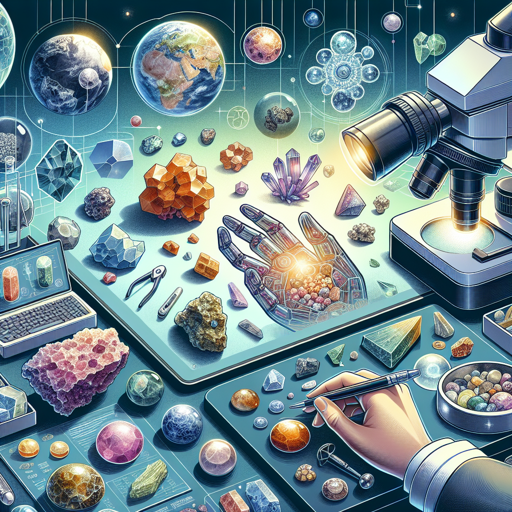
The Basics of Mineral Classification: A Beginner’s Guide to Organizing Your Collection
Minerals have fascinated humankind for centuries, from the earliest talismans to the most cutting-edge technological advances. Their dazzling forms, myriad colors, and unique properties spark curiosity in collectors, educators, and anyone who has ever picked up a shiny rock. But once you start accumulating specimens, the question arises: How do you make sense of your growing mineral collection?
Welcome to the world of mineral classification—the essential foundation for understanding, organizing, and appreciating minerals at every level. Whether you’re a geology enthusiast, educator, student, or simply a lover of Earth’s treasures, this guide will introduce you to the basics of grouping minerals and offer practical tips for curating your own collection.
Why Classify Minerals?
Before we dive into the “how”, let’s discuss the “why”. Classification is more than just an academic exercise—it’s a powerful tool that:
- Helps identify unknown specimens.
- Reveals relationships between different minerals.
- Simplifies storage, documentation, and display.
- Enhances educational value and scientific understanding.
- Connects your hobby to centuries of geological research.
As famed geologist Dana once said:
“To classify is to understand. Minerals reveal their stories when we group them by their nature.”
— James Dwight Dana
What Defines a Mineral?
Before sorting minerals, it’s critical to define what a mineral is:
- Naturally Occurring: Formed by natural processes.
- Inorganic: Not produced by living organisms.
- Solid: Has a definite shape and volume.
- Crystalline Structure: Atoms are arranged in an orderly, repeating pattern.
- Definite Chemical Composition: Each mineral has a specific chemical formula.
For example:
- Quartz: SiO₂ (silicon dioxide)
- Pyrite: FeS₂ (iron sulfide)
- Calcite: CaCO₃ (calcium carbonate)
The Main Systems of Mineral Classification
Throughout history, geologists have developed several systems for classifying minerals. The most widely used today are the Dana System and the Strunz System. Both rely primarily on chemical composition and crystal structure.
1. The Dana System
Developed by James Dwight Dana in the 19th century, this method groups minerals primarily by their chemical composition and then by crystal structure. It’s still widely used, especially in North America.
Major Dana Classes:
| Class | Examples | |————————–|————————| | Native Elements | Gold (Au), Silver (Ag) | | Sulfides & Sulfosalts | Pyrite (FeS₂), Galena (PbS) | | Oxides & Hydroxides | Hematite (Fe₂O₃), Magnetite (Fe₃O₄) | | Halides | Halite (NaCl), Fluorite (CaF₂) | | Carbonates | Calcite (CaCO₃), Dolomite (CaMg(CO₃)₂) | | Sulfates | Gypsum (CaSO₄·2H₂O), Barite (BaSO₄) | | Phosphates | Apatite (Ca₅(PO₄)₃F), Turquoise (CuAl₆(PO₄)₄(OH)₈·4H₂O) | | Silicates | Quartz (SiO₂), Feldspar ((K,Na)AlSi₃O₈) |
2. The Strunz System
Created by German mineralogist Karl Hugo Strunz, this system is standard in Europe and globally recognized by the International Mineralogical Association. It also uses chemical composition as its foundation but is more detailed in its subdivisions.
Major Strunz Classes:
| Class | Examples | |————————–|————————| | Elements | Gold, Diamond | | Sulfides | Pyrite, Sphalerite | | Halides | Halite, Sylvite | | Oxides | Magnetite, Corundum | | Carbonates | Calcite, Malachite | | Sulfates | Gypsum, Celestine | | Phosphates | Apatite, Monazite | | Silicates | Olivine, Topaz | | Organic Compounds | Amber |
3. Silicate Subclasses
Since over 90% of the Earth’s crust is made up of silicate minerals, it’s helpful to know their subdivisions:
| Silicate Subclass | Structure Type | Example |
|---|---|---|
| Nesosilicates | Isolated tetrahedra | Olivine |
| Sorosilicates | Double tetrahedra | Epidote |
| Cyclosilicates | Rings | Beryl |
| Inosilicates | Single/double chains | Pyroxene |
| Phyllosilicates | Sheets | Mica |
| Tectosilicates | Framework | Quartz |
Physical Properties Used in Classification
While chemical composition is key for scientific classification, collectors also group minerals based on visible or testable physical properties:
- Color: Easily observed but can be misleading due to impurities.
- Luster: How a mineral reflects light (metallic vs. non-metallic).
- Streak: Color of powdered mineral.
- Hardness: Resistance to scratching; measured by Mohs Hardness Scale.
- Cleavage and Fracture: How a mineral breaks along planes or irregularly.
- Crystal Form: The external shape due to internal arrangement.
- Density/Specific Gravity: Heaviness relative to water.
- Magnetism: Some minerals attract magnets.
- Reaction to Acid: Carbonates fizz with dilute HCl.
Mohs Hardness Scale
A quick reference for identifying minerals by hardness:
| Mineral | Hardness |
|---|---|
| Talc | 1 |
| Gypsum | 2 |
| Calcite | 3 |
| Fluorite | 4 |
| Apatite | 5 |
| Orthoclase | 6 |
| Quartz | 7 |
| Topaz | 8 |
| Corundum | 9 |
| Diamond | 10 |
Organizing Your Mineral Collection
Now that you understand classification systems and properties, let’s apply this knowledge to organizing your collection.
Step-by-Step Guide:
-
Identify Each Specimen
- Use physical properties (hardness, streak, luster).
- Consult field guides or online databases like Mindat.org.
-
Label Specimens
- Include name, location found, date collected.
- Note chemical formula if possible.
-
Group by Class or Property
- Sort by Dana or Strunz class for scientific accuracy.
- Or sort by color/hardness for visual appeal.
-
Display Thoughtfully
- Use boxes with dividers or display cases.
- Avoid direct sunlight and humidity for sensitive specimens.
-
Document Your Collection
- Maintain a catalog: digital spreadsheets or handwritten logs.
- Photograph specimens for records.
-
Update Regularly
- As your collection grows or new identifications are made.
Comparison Table: Dana vs. Strunz vs. Collector Systems
| System | Primary Basis | Typical Users | Example Grouping |
|---|---|---|---|
| Dana | Chemistry + Structure | Academics, Museums | Silicates, Oxides |
| Strunz | Chemistry + Structure + Subdivisions | Researchers, International Collectors | Silicates → Inosilicates |
| Collector/Visual | Physical Properties | Hobbyists, Educators | By color, size, locale |
Tips for Beginner Collectors
- Start Small: Focus on common minerals first—quartz, calcite, pyrite.
- Invest in Tools: Streak plates, hand lenses, hardness picks.
- Join Clubs & Forums: Learn from others and access resources.
- Keep Records: Accurate data increases scientific and personal value.
- Stay Curious: Every specimen has a story!
Further Reading & Resources
- Mindat.org: The Mineral Database
- Mineralogical Society of America: Mineral Identification
- International Mineralogical Association
- Geology.com Guide to Minerals
Conclusion
Organizing your mineral collection isn’t just about neatness—it’s about unlocking the scientific beauty hidden within every specimen. By learning how minerals are classified—by chemistry, structure, and observable traits—you can transform your hobby into an enlightening journey through Earth’s history.
As you continue exploring the fascinating world of minerals, remember: each stone in your collection is a piece of our planet’s ever-evolving story. Happy collecting!
“Minerals are nature’s fingerprints—each one unique yet part of a grand pattern.”
— Anonymous