 Mineral Matrix: An AI Journey into Earth’s Treasures
Gems That Changed the World History and Science
Explore iconic gemstones that shaped culture, science, and global society throughout history.
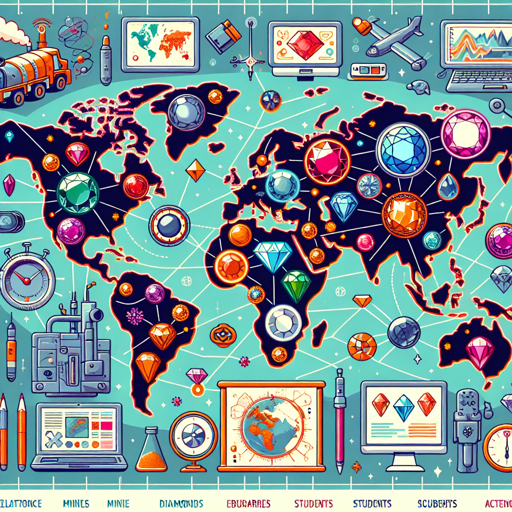
Gems That Changed the World: History, Culture, and Science
From sparkling diamonds to mystical jade, gemstones have captivated human imagination across civilizations and centuries. Their shimmer has inspired myths and legends, sparked wars, advanced science, and transformed entire economies. But beyond their beauty lies a deeper story: some gems have truly changed the course of world history.
In this article, we’ll journey through the tales of gemstones that have left indelible marks on culture, science, and society. We’ll explore their geological origins, the myths they inspired, and the ways they shaped human progress. Whether you’re a geology enthusiast, educator, student, or a lover of earth’s natural wonders, join us as we uncover how these dazzling minerals became more than mere adornments—they became catalysts of change.
Table of Contents
- The Diamond: Power, Science, and Revolution
- Emeralds: The Green Fire of Empires
- Jade: The Stone of Heaven and Civilization
- Ruby: The Gem of Passion and Politics
- Quartz: The Unsung Hero of Science & Technology
- Pearls: Nature’s First Gemstone Currency
- A Comparative Table of World-Changing Gems
- Conclusion
- Further Reading & References
The Diamond: Power, Science, and Revolution
Few gems have wielded as much influence as the diamond. Coveted for its unmatched hardness and brilliance, the diamond has been both a symbol of love and a tool of conquest.
Diamonds in Culture and Conflict
Diamonds first rose to fame in India over two thousand years ago. Their rarity made them objects of desire for monarchs and conquerors. Some legendary stones—like the Koh-i-Noor—became prizes in imperial wars. In the 19th century, diamond rushes in South Africa transformed economies and fueled colonial ambitions.
Diamonds in Science
Diamonds aren’t just for adornment—they’re crucial to modern technology. Their atomic structure makes them the hardest known material, vital for cutting tools and even quantum computing research.
Industrial Revolution & Diamonds
The De Beers company’s marketing campaign in the 20th century (“A diamond is forever”) didn’t just change how we perceive engagement rings—it created a global demand that shaped modern advertising.
“Diamonds are intrinsically worthless, except for the deep psychological need they fill.”
— Nicky Oppenheimer, former De Beers chairman
Emeralds: The Green Fire of Empires
Emeralds have enchanted civilizations from ancient Egypt to the Spanish conquistadors. Their lush green hue symbolized fertility, rebirth, and immortality.
Cleopatra’s Obsession
Egypt’s Queen Cleopatra was so enamored with emeralds that she claimed ownership over all Egyptian mines. She adorned herself and her palace with these vibrant gems—a testament to their perceived power and beauty.
Conquest and Colonialism
When Spanish explorers reached South America in the 16th century, they encountered emeralds in Colombia that surpassed all others. The quest for these gems drove expeditions and conflict—and altered the course of indigenous cultures.
Emeralds in Modern Science
Emeralds’ unique inclusions—called “jardin”—offer geologists clues about Earth’s geological processes and the conditions under which they formed.
Jade: The Stone of Heaven and Civilization
Jade is more than a gem; it’s a cultural cornerstone for civilizations in Asia and Central America.
China’s Stone of Heaven
For millennia, jade has symbolized purity and moral integrity in Chinese culture. It was used for everything from imperial seals to burial suits for royalty. Confucius himself praised jade’s virtues as reflective of humanity’s highest ideals.
The Olmecs and Maya
Across the ocean, Mesoamerican societies prized jade above gold. They crafted ritual masks, jewelry, and tools—a sign of power and connection to the gods.
Scientific Importance
Jade’s composition (either jadeite or nephrite) informs geologists about plate tectonics and mineral formation under high-pressure conditions.
Ruby: The Gem of Passion and Politics
Rubies have ignited passions—and not just romantic ones. Their deep red color has long symbolized power, courage, and vitality.
The Burmese Ruby Wars
Burma (now Myanmar) was once the world’s main source of rubies. Rival kingdoms fought over ruby-rich regions for centuries. Even today, Myanmar’s rubies are among the most prized—and controversial—gems on earth due to ongoing political issues.
Symbolism Across Cultures
In India, ancient texts described rubies as “ratnaraj”—the king of precious stones—believed to bring protection and prosperity. Medieval Europeans associated them with life force and nobility.
Scientific Impact
Rubies are a variety of corundum colored by chromium. Synthetic rubies were crucial in developing the first working laser in 1960—a breakthrough that revolutionized science and technology.
Quartz: The Unsung Hero of Science & Technology
While not as rare or prized as diamonds or emeralds, quartz is arguably one of the most important minerals in human history.
Quartz in Ancient Society
Used for tools by early humans, quartz was also believed to be “eternal ice” by ancient Greeks.
Quartz in Modern Technology
Today, quartz’s piezoelectric properties (producing electricity under pressure) make it essential for watches, clocks, electronics, radios, and even space exploration.
“If I had to choose a single mineral that made modern life possible—it would be quartz.”
— Dr. George Harlow, American Museum of Natural History
Pearls: Nature’s First Gemstone Currency
Long before diamonds were forever or rubies ignited passions, pearls ruled ancient economies as both luxury items and currency.
Pearls in Antiquity
Pearls were so valued in ancient Rome that Julius Caesar passed laws limiting their ownership to aristocrats. In India and China, pearls adorned royalty and featured in myths about purity and power.
Pearls and Trade Routes
The demand for pearls drove ancient maritime trade routes from the Persian Gulf to China—spurring cultural exchange along what would become the Silk Road.
Scientific Relevance
Pearls are organic gems formed by living mollusks—a fascinating example of biomineralization that still intrigues scientists today.
A Comparative Table of World-Changing Gems
| Gemstone | Key Region(s) | Cultural Impact | Scientific Significance | Notable Historic Use |
|---|---|---|---|---|
| Diamond | India, Africa | Symbol of power & love | Hardness; quantum tech | Crown jewels; cutting tools |
| Emerald | Egypt, Colombia | Rebirth & immortality | Geological inclusions | Cleopatra; Spanish conquest |
| Jade | China, Mesoamerica | Purity & spiritual power | Plate tectonics insights | Imperial seals; burial suits |
| Ruby | Myanmar (Burma), Asia | Passion & protection | First laser | Royal regalia; warfare |
| Quartz | Worldwide | Mystical to practical use | Piezoelectricity | Timepieces; electronics |
| Pearl | Persian Gulf, Asia | Wealth & status | Biomineralization studies | Ancient currency; trade |
Conclusion
From igniting ancient empires to powering modern technology, gemstones have been more than just beautiful objects—they’ve been agents of change woven into our shared human story. They reflect our deepest desires for beauty, power, knowledge, and meaning. As geology enthusiasts or educators, understanding these stories not only enriches our appreciation for Earth’s treasures but also connects us to the pulse of history itself.
Next time you admire a sparkling gem or teach about minerals in class, remember: beneath every facet lies a tale that might just have changed the world.
Further Reading & References
- Smithsonian National Museum of Natural History - Gems & Minerals
- Gemological Institute of America (GIA) - History of Gemstones
- “The Nature of Diamonds” by George E. Harlow
- BBC - The Secret History of the World’s Most Famous Diamonds