 Mineral Matrix: An AI Journey into Earth’s Treasures
Mining in Ancient Times Unearthing Early Ingenuity
Discover how ancient societies extracted, traded, and valued minerals and gemstones.
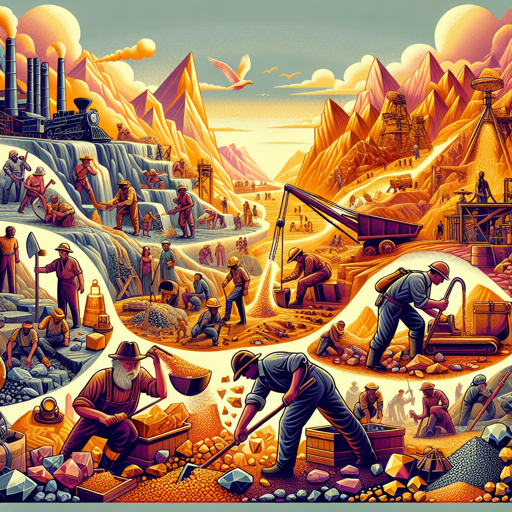
Mining in Ancient Times: Unearthing Early Ingenuity
Introduction
Long before the rise of modern machinery and industrial operations, ancient civilizations embarked on remarkable journeys beneath the earth. Driven by necessity, curiosity, and the allure of precious stones and metals, these pioneering societies developed ingenious methods to extract and utilize the planet’s mineral wealth. From the shimmering gold mines of ancient Egypt to the elaborate copper workings of the Indus Valley, mining has played a foundational role in the development of humanity.
This article explores the fascinating world of mining in ancient times—how early societies extracted, processed, and cherished minerals, the impact of these activities on cultures and economies, and the enduring legacy of ancient miners. Whether you are a geology enthusiast, educator, or simply captivated by our planet’s natural history, join us as we journey through time to uncover the roots of mining.
The Dawn of Mining: Early Beginnings
The quest for minerals began with our prehistoric ancestors. Stone tools found at various archaeological sites provide evidence that even early humans recognized and utilized different rocks for their unique properties. Over time, the transition from simple collection to organized mining marked a significant leap in human ingenuity.
Prehistoric Mining
The earliest evidence of mining dates back to the Paleolithic era. Flint was one of the first minerals systematically extracted for use in tools and weapons. Sites like Grimes Graves in England and Spiennes in Belgium reveal extensive underground networks where Neolithic people quarried flint over 5,000 years ago.
The process was laborious and often dangerous. Miners used antler picks, wooden shovels, and stone hammers to break apart rock. The resulting tools transformed hunting, construction, and daily life for early communities.
The Discovery of Metals
The discovery of metallic ores revolutionized ancient societies. Around 6,000 BCE, humans learned to extract copper from malachite and azurite, paving the way for the Chalcolithic (Copper Age). The ability to create metal tools and ornaments dramatically enhanced agriculture, warfare, and trade.
Soon, other metals like gold, silver, tin, and iron followed. Each new discovery brought technological advances and reshaped civilizations.
Mining in Ancient Civilizations
Let’s delve into how some of history’s greatest societies harnessed the earth’s treasures.
Ancient Egypt: Gold of the Pharaohs
Egypt’s deserts concealed vast reserves of gold—a metal revered for its association with the sun god Ra. By 2600 BCE, Egyptians had developed sophisticated mining techniques. They exploited quartz veins in the Eastern Desert using fire-setting (heating rock with fire then dousing it with water to fracture it) and primitive hammers.
Key facts about Egyptian mining:
- Locations: Wadi Hammamat, Nubia (modern Sudan), Eastern Desert
- Metals: Gold, copper, malachite
- Techniques: Fire-setting, manual labor (often by slaves or prisoners), use of simple stone tools
- Significance: Gold was central to Egyptian religion, economy, and royal opulence. Mined gold adorned statues, temples, and pharaohs’ tombs.
Mesopotamia: Birthplace of Civilization and Metallurgy
Between the Tigris and Euphrates rivers flourished Mesopotamia—the cradle of civilization. Here, copper was fundamental to the Sumerians’ technological advancements around 4000 BCE. They used copper for tools, weapons, and intricate artworks.
Silver also played a crucial role as a medium of exchange. Mines in Anatolia (modern Turkey) supplied much of Mesopotamia’s metal needs through extensive trade networks.
The Indus Valley Civilization: Harappan Resourcefulness
The cities of Harappa and Mohenjo-Daro (present-day Pakistan) show evidence of advanced metallurgy by 2500 BCE. The Harappans mined copper from Rajasthan’s Aravalli Hills and even sourced tin for bronze-making—an indication of long-distance trade.
Notably, carnelian beads—made from minerals mined in Gujarat—were widely traded, highlighting the importance of gemstones in ancient jewelry and culture.
Ancient China: Bronze Age Brilliance
China’s mining history stretches back millennia. The Shang Dynasty (c. 1600–1046 BCE) is celebrated for its mastery of bronze casting—a combination of copper with tin or lead. Massive mining operations supported the dynasty’s military power and artistic achievements.
Chinese miners also sought jade—a mineral more prized than gold—mined from riverbeds and mountain ranges like Khotan in Xinjiang.
The Americas: Gold and Gems Before Columbus
Long before European contact, indigenous peoples in the Americas mined a variety of minerals:
- Andean Civilizations: The Incas and their predecessors extracted gold and silver from mountain mines in Peru and Bolivia.
- Mesoamerica: The Maya obtained obsidian and jadeite for tools and adornment.
- North America: Native peoples quarried turquoise in the American Southwest.
Mining was closely linked to spiritual beliefs; gold was often reserved for ritual objects rather than currency.
Techniques and Tools: Innovation Underground
Ancient miners developed a surprising array of techniques for extracting minerals—often tailored to the geology they faced.
| Civilization | Primary Minerals | Mining Methods | Notable Sites |
|---|---|---|---|
| Egypt | Gold, copper | Fire-setting, manual labor | Wadi Hammamat, Nubia |
| Mesopotamia | Copper, silver | Surface & pit mining | Anatolia (via trade) |
| Indus Valley | Copper, carnelian | Open pits, riverbed mining | Aravalli Hills |
| China | Bronze (copper/tin), jade | Shaft & pit mining | Khotan (Xinjiang), Anyang |
| Andes (Inca) | Gold, silver | Underground mine shafts | Potosí (Bolivia), Peru |
| Mesoamerica | Jadeite, obsidian | Surface quarrying | Motagua Valley (Guatemala) |
Common Mining Techniques:
- Fire-setting: Heating rock with fire and cooling rapidly to fracture it.
- Antler picks/stone hammers: Early tools for breaking rock.
- Shafts and tunnels: Digging deep vertical shafts or horizontal tunnels.
- Placer mining: Sifting river sediments for gold or gemstones.
Safety Concerns: Ancient mining was perilous. Poor ventilation led to toxic fumes; collapses were frequent; many miners were enslaved or forced laborers.
The Uses of Minerals: Economy, Artistry, Power
The impact of ancient mining extended far beyond mere resource extraction.
Currency and Trade
Metals like gold and silver became early forms of money and were crucial in trade networks spanning continents. The value attached to these metals underpinned economic systems for millennia.
Artistry and Ornamentation
Gemstones such as lapis lazuli (from Afghanistan), turquoise (from Egypt/Persia), jade (from China/Central America), and carnelian (from India) were prized for their beauty. Intricate jewelry signified status and religious significance.
Technology and Warfare
Metal tools enabled new levels of craftsmanship in agriculture, architecture, and weaponry—ushering in the Bronze Age and later Iron Age revolutions.
Spirituality
Many minerals held symbolic or religious meaning. Gold was seen as divine; jade represented purity; turquoise signified protection. Temples and tombs were adorned with minerals thought to channel spiritual power.
The Social Cost: Slavery, Labor, and Environment
Mining’s benefits came at considerable human cost. Much ancient mining relied on slave or prisoner labor subjected to harsh conditions. In Egypt and Rome especially, thousands perished underground or from exposure to toxic substances like mercury during gold extraction.
Environmental impacts included deforestation (to supply mine fires), water pollution from tailings, and landscape alteration—long before these concerns were widely recognized.
“The earth yields its riches only with great toil; from its depths we draw metals with sweat—and often blood.”
— Adapted from Pliny the Elder’s Natural History
Enduring Legacies: What Ancient Mining Teaches Us
Many ancient mine sites are still visible today—testaments to the enduring mark left by early miners. Their ingenuity paved the way for modern geology, metallurgy, engineering, and commerce.
Archaeological discoveries continue to reshape our understanding of ancient mining:
- Grimes Graves is now an open-air museum showcasing Neolithic flint mines.
- Potosí in Bolivia remains an active silver mine after centuries.
- The knowledge embedded in ancient workings informs modern mineral exploration techniques.
Comparing Ancient Mining with Modern Practices
| Aspect | Ancient Mining | Modern Mining |
|---|---|---|
| Tools | Stone/antler picks, fire-setting | Explosives, mechanized drills |
| Safety | Minimal protections | Regulations, safety protocols |
| Labor | Manual/slave labor | Skilled workers/machines |
| Environmental Impact | Unregulated | Increasingly regulated/sustainable practices |
External Reference
For an in-depth overview of ancient mining methods across civilizations:
Mining History Network – Mining in Ancient Times
Conclusion
Mining has shaped humanity’s progress since our earliest ancestors chipped flint from stone beds. Ancient civilizations mastered remarkable techniques to unearth the earth’s buried riches—fuelling trade networks, technological leaps, artistic marvels, and spiritual practices. Yet they also faced profound social and environmental challenges that echo into our own era.
By studying ancient mining practices—from Egyptian gold to Incan silver—we gain a deeper appreciation for both our planet’s resources and the ingenuity of those who came before us. As modern geologists and mineral enthusiasts explore these echoes of history, we are reminded that every mineral specimen or gemstone carries stories forged through centuries of human endeavor beneath the ground.
Whether you’re a student tracing humanity’s mineral heritage or a geologist seeking inspiration from history’s deep roots—let the mines of antiquity remind us that curiosity is humanity’s oldest tool.