 Mineral Matrix: An AI Journey into Earth’s Treasures
Minerals in Ancient Civilizations Art and Tools
Explore how minerals shaped ancient tools, art, and culture across early civilizations.
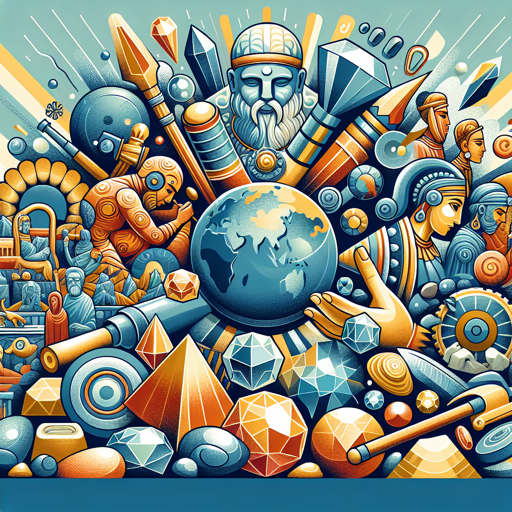
Minerals Used in Ancient Civilizations: From Tools to Timeless Art
Introduction
Have you ever wondered how ancient people built their world before the age of steel, concrete, and modern technology? Minerals—those natural treasures hidden beneath our feet—were the bedrock of civilization’s progress. From the first spark of a flint tool to the glitter of royal jewels, minerals shaped societies, inspired mythologies, and transformed ordinary humans into artisans, builders, and pioneers.
In this article, we’ll journey through the fascinating ways ancient cultures uncovered, worked, and celebrated minerals. We’ll highlight iconic examples from Egypt, Mesopotamia, the Indus Valley, Mesoamerica, China, and beyond. Whether you’re a geology enthusiast, educator, student, or simply curious about earth’s wonders, join us as we dig deep into the mineral legacy of our ancestors.
The Foundation of Civilization: Minerals as Tools
Before iron and bronze, early humans learned to harness the power of hard minerals for survival. The story of civilization begins with the Stone Age, when rocks were more than just landscape—they were lifelines.
Stone Age Ingenuity: Flint and Obsidian
Flint is a microcrystalline quartz prized for its hardness and ability to fracture with sharp edges. Early hunter-gatherers shaped flint into cutting tools, arrowheads, and scrapers. The famous “Oldowan” tools—some over 2 million years old—are simple yet effective examples made by chipping stones.
Obsidian, a volcanic glass with razor-sharp edges, was another prized material. Ancient Anatolia (modern Turkey), Mesoamerica, and the Near East traded obsidian across great distances. Its use extended beyond tools to ritual objects and even surgical instruments due to its fine edge.
Table 1: Key Tool-Making Minerals in Ancient Times
| Mineral | Properties | Example Uses | Key Civilizations |
|---|---|---|---|
| Flint | Hardness, conchoidal fracture | Cutting tools, weapons | Global (Europe, Africa) |
| Obsidian | Volcanic glass, sharpness | Blades, ritual items | Mesoamerica, Near East |
| Quartzite | Durability | Hammerstones | Africa, Europe |
| Jade | Toughness | Axes, ornaments | China, Mesoamerica |
| Hematite | Red pigment | Paints, burials | Africa (Blombos Cave), Egypt |
Building Wonders: Minerals in Architecture
The leap from nomadic life to settled societies brought the need for durable structures. Minerals again became central—this time as building materials.
The Pyramids: Egypt’s Limestone Legacy
The Pyramids of Giza are perhaps history’s most iconic stone structures. Built primarily from limestone quarried nearby, these monuments showcase not just engineering prowess but also careful selection of mineral resources. The outer casing stones—now mostly gone—were made from fine white Tura limestone that gleamed under the Egyptian sun.
Granite from Aswan was used for inner chambers and sarcophagi due to its strength and prestige. Transporting these massive blocks over hundreds of kilometers was a feat that still fascinates geologists and engineers alike.
Mesopotamian Ziggurats: Clay and Bitumen
In Mesopotamia (modern Iraq), stone was scarce. Instead, people turned to clay minerals, shaping sun-dried or kiln-fired bricks. Bitumen, a naturally occurring tar-like substance, served as mortar and waterproofing agent for structures like the Ziggurat of Ur.
Artistry in Stone: Minerals as Canvas and Color
Ancient artists didn’t just carve or build with minerals—they ground them into pigments or shaped them into objects of beauty.
Pigments: The Palette of Antiquity
Many ancient paintings and decorations still dazzle today thanks to mineral pigments:
- Ochre (Hematite/Goethite): Reds and yellows found in cave art worldwide.
- Malachite: A copper carbonate yielding vibrant green.
- Azurite: Deep blue pigment for murals and manuscripts.
- Lapis Lazuli: Prized for ultramarine blue; sourced mainly from what is now Afghanistan.
“The colors of ancient art are the language through which minerals speak across millennia.” — Dr. Sarah Johnson, Archaeological Chemist
Gemstones and Ornamentation
Jewelry was more than decoration—it was status, protection, and spiritual connection.
Egypt’s Love Affair with Lapis Lazuli
The ancient Egyptians imported lapis lazuli for pharaohs’ jewelry and funerary masks (like that of Tutankhamun). Its deep blue symbolized the heavens and divinity.
Jade: Symbol of Power in China and Mesoamerica
Jade (primarily jadeite in Mesoamerica and nephrite in China) was carved into intricate figurines, weapons, and ritual objects. In both cultures, jade was believed to embody purity, virtue, and immortality.
Turquoise: The Gem of the Americas
Found in the American Southwest and Mexico, turquoise adorned ceremonial masks (like those of the Aztecs) and jewelry. Its color was associated with water and sky—a vital connection in arid regions.
Spiritual Significance: Minerals in Rituals and Mythology
To ancient peoples, minerals were not just practical materials. Many held spiritual or magical powers.
Amulets and Talismans
- Carnelian: Used by Egyptians for “Eye of Horus” amulets; believed to protect against evil.
- Hematite: Associated with blood and rebirth.
- Quartz Crystals: Used in divination across many cultures.
Sacred Stones
The Kaaba’s Black Stone (likely a meteorite or agate) has been venerated in Mecca since pre-Islamic times. In Britain and Ireland, standing stones like Stonehenge were erected from sarsen (silicified sandstone) and bluestone (dolerite), their exact purposes still debated.
Mining in Antiquity: Methods and Marvels
Mining is as old as civilization itself. Archaeological evidence shows that even Neolithic peoples dug shafts for flint or copper thousands of years ago.
Early Mining Techniques
- Quarrying: Extracting blocks of stone using stone or metal tools.
- Fire-setting: Heating rock with fire then cooling rapidly to crack it—used for hard stones like granite.
- Alluvial Mining: Washing sediments for gold or gemstones using simple pans or sluices.
- Shaft Mining: Vertical pits dug for deeper minerals (notably at Timna copper mines in Israel).
Table 2: Notable Ancient Mining Sites
| Site | Mineral(s) | Civilization | Approximate Date |
|---|---|---|---|
| Great Orme Mines | Copper | Bronze Age Britain | 4000–600 BCE |
| Timna Valley | Copper | Ancient Israel/Egypt | 3500 BCE onwards |
| Lavrion Mines | Silver | Ancient Greece | 6th c. BCE onwards |
| Serabit el-Khadim | Turquoise | Ancient Egypt | 2600 BCE onwards |
| Faynan Mines | Copper | Edomites/Nabateans | Iron Age |
Innovations Born from Mineral Mastery
Harnessing minerals led to breakthroughs that defined eras:
- Bronze Age: Alloying copper with tin created bronze—harder than pure copper—sparking new weaponry and tools.
- Iron Age: Smelting iron ore revolutionized agriculture and warfare.
- Glassmaking: Silica sand (quartz) plus soda ash and lime produced glass artifacts as early as 3500 BCE in Mesopotamia.
- Ceramics: Clay minerals fired at high temperatures yielded pottery central to storage and trade.
Legacy: How Ancient Mineral Use Still Shapes Us
Modern geology owes much to ancient curiosity about rocks and minerals. Many geological terms (like “lapis,” “basalt,” “mica”) have roots in antiquity. And today’s mining industry builds on techniques honed by our ancestors.
Even now, cultural values attached to minerals endure—diamonds symbolize love; jade is gifted for luck; gold remains a measure of wealth.
External Reference
For a deeper dive into ancient mineral use in art and technology, visit The Metropolitan Museum of Art’s Resource on Materials & Techniques.
Conclusion
From the sharp edge of flint to the shimmering splendor of lapis lazuli, minerals were woven into every facet of ancient life. They built empires, inspired masterpieces, enabled technological revolutions, and connected mortals to the divine. Understanding how ancient civilizations used minerals is not just a journey into geology—it is a window into humanity’s creative spirit and enduring relationship with Earth’s hidden treasures.
Whether you’re exploring a museum exhibit or examining a stone tool in the field, remember: every mineral artifact is a testament to our ancestors’ ingenuity—and an invitation to keep digging deeper into the story of our planet.