 Mineral Matrix: An AI Journey into Earth’s Treasures
Sustainable Mining Practices Shaping Our Future
Discover the eco-friendly innovations redefining modern mining for a greener planet.
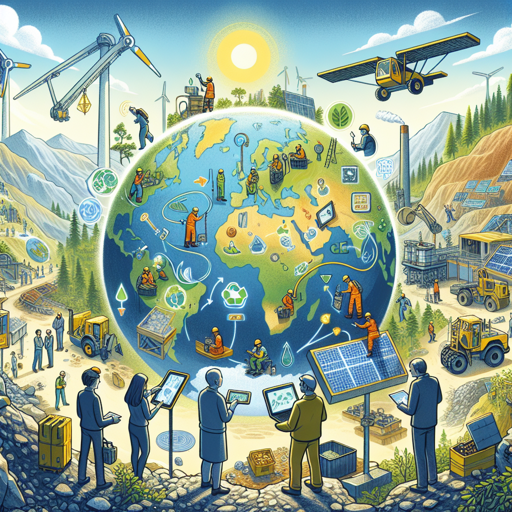
Introduction
Mining has always been at the heart of human progress. From the copper tools of the Stone Age to the lithium powering our smartphones and electric vehicles, minerals and metals drive modern life. However, this essential industry faces a paradox: how do we meet society’s growing resource demands while preserving the environment for future generations? Enter sustainable mining—a transformative movement redefining how we extract, process, and restore Earth’s treasures.
For geology enthusiasts, educators, students, and earth science lovers, sustainable mining is more than a buzzword. It’s a vital commitment to responsible stewardship that blends technological innovation, environmental consciousness, and social responsibility. In this article, we’ll delve into the principles, techniques, and future of sustainable mining, providing a comprehensive overview of today’s eco-friendly practices.
What is Sustainable Mining?
Sustainable mining refers to a suite of strategies and practices that minimize environmental impact, conserve resources, and promote social well-being throughout the lifecycle of a mine. Unlike traditional mining, which often prioritized profit over planet, sustainable mining seeks harmony between economic development and ecological preservation.
At its core, sustainable mining addresses three pillars:
- Environmental Protection: Reducing land disturbance, preventing water and air pollution, and restoring mined landscapes.
- Social Responsibility: Ensuring fair labor practices, respecting indigenous rights, and contributing to local communities.
- Economic Viability: Maintaining profitability while investing in greener technologies and long-term ecosystem health.
“Mining is not about extracting minerals from the earth; it’s about doing so in a way that leaves the planet better for future generations.”
— Dr. Jane Goodall
Eco-Friendly Mining Techniques: Innovations in Action
Today’s mining industry is undergoing a green revolution. Let’s explore some of the most impactful sustainable practices being implemented around the world:
1. Advanced Water Management
Water is critical in mining operations—for mineral processing, dust control, and site rehabilitation. Yet traditional mining often led to water pollution and overuse. New approaches include:
- Closed-loop water systems: Recycling water within the facility reduces consumption and prevents contamination.
- Passive treatment wetlands: Using natural vegetation to filter and clean runoff before it enters nearby rivers and streams.
- Real-time water quality monitoring: Digital sensors track water parameters 24/7 for rapid response to potential issues.
2. Reduced Energy Consumption & Renewable Power
Mining is energy-intensive. To curb greenhouse gas emissions, companies are innovating through:
- Solar and wind integration: Mines in Australia and Chile have installed large-scale solar arrays and wind farms directly at extraction sites.
- Electric vehicles (EVs) for hauling: Replacing diesel trucks with battery-powered alternatives dramatically cuts emissions underground and above.
- Energy-efficient processing: New grinding technologies and ore sorting reduce power needs by focusing on higher-grade materials.
3. Tailings Management & Waste Reduction
Mine tailings—residual materials after ore extraction—pose significant environmental risks. Sustainable solutions include:
- Dry stacking: Removing water from tailings for safer storage reduces the risk of dam failures.
- Reprocessing old tailings: Extracting residual metals from legacy waste both recovers resources and cleans up old sites.
- Circular economy approaches: Using waste rock as construction material or for backfilling mined-out areas.
4. Biodiversity Preservation & Land Rehabilitation
Modern mines create detailed plans to restore land post-extraction:
- Progressive rehabilitation: Rehabilitating sections of a mine site while extraction continues elsewhere.
- Native species replanting: Restoring original vegetation to support local ecosystems.
- Wildlife corridors: Designing landscapes that allow animals to migrate safely through or around mining areas.
5. Community Engagement & Social License
Sustainable mining isn’t just about technology—it’s about people:
- Consulting indigenous groups: Integrating traditional knowledge into environmental planning.
- Community investment programs: Supporting local education, healthcare, and infrastructure.
- Transparent reporting: Openly sharing environmental data with stakeholders builds trust.
Table: Comparing Traditional vs. Sustainable Mining Practices
| Aspect | Traditional Mining | Sustainable Mining |
|---|---|---|
| Water Use | High consumption, frequent pollution | Recycling, closed loops, clean runoff |
| Energy Source | Fossil fuels (coal, diesel) | Renewables (solar, wind), EVs |
| Tailings Management | Wet storage, risk of dam failures | Dry stacking, reprocessing |
| Land Rehabilitation | Minimal or post-mining only | Ongoing restoration, biodiversity focus |
| Community Relations | Limited engagement | Inclusive consultation, investment |
| Transparency | Basic reporting | Open data sharing |
Global Examples of Sustainable Mining
Chile: Solar-Powered Copper Mines
Chile’s Atacama Desert hosts some of the world’s largest copper mines—and some of its sunniest skies. Companies like Antofagasta Minerals have invested in solar power plants that provide up to 80% of mine energy needs during daylight hours. The result? Lower carbon footprints and reduced reliance on imported fossil fuels.
Canada: Rehabilitating Diamond Mines
The Ekati Diamond Mine in Canada’s Northwest Territories is a leader in progressive reclamation. As soon as an area is mined out, native plant species are sown and habitats restored—even before full closure. This approach ensures lasting biodiversity in sensitive arctic tundra ecosystems.
Australia: Electric Underground Fleets
Several Australian gold mines have replaced diesel-powered machinery with electric vehicles underground. This not only slashes emissions but also improves air quality for workers—demonstrating how sustainability benefits both environment and people.
Challenges on the Road to Sustainability
Despite these advances, achieving truly sustainable mining is complex. Common challenges include:
- High initial investment costs for new technologies.
- Technical limitations—not all renewable solutions are suitable everywhere.
- Regulatory differences across countries.
- Balancing resource demand with conservation goals.
Yet as climate change intensifies and public scrutiny grows, the incentive to innovate has never been greater.
The Role of Technology in Sustainable Mining
Digital transformation is accelerating progress on all fronts:
Automation & Artificial Intelligence (AI)
AI-powered equipment can optimize ore extraction while minimizing waste rock removal. Automated trucks and drills reduce energy use by following precise GPS-guided routes.
Drones & Remote Sensing
Drones map landscapes more efficiently than ground surveys—monitoring vegetation recovery or detecting illegal encroachments with high-resolution imagery.
Big Data & IoT (Internet of Things)
Connected sensors provide real-time data on everything from air quality underground to equipment health—enabling predictive maintenance and safer workplaces.
Engaging Communities & Ensuring Social Responsibility
A mine’s “social license to operate” is just as important as its environmental performance. Companies now invest heavily in:
- Stakeholder dialogues to understand local concerns.
- Benefit-sharing agreements that channel a portion of profits into community development.
- Education programs that equip locals with skills for both mining jobs and post-mining careers.
By prioritizing people alongside profit and planet, sustainable mining builds enduring trust.
External Resource
For an in-depth look at global standards in sustainable mining, visit the International Council on Mining & Metals (ICMM).
The Future: Toward Regenerative Mining?
Whereas sustainability seeks to “do no harm,” the next frontier is regenerative mining: leaving environments better than they were found. Concepts include:
- Restoring degraded lands beyond the mine boundary.
- Boosting carbon sequestration through reforestation.
- Enhancing local economies through nature-based tourism after mine closure.
Sustainable mining today sets the stage for regenerative thinking tomorrow—a vision where extracting resources also means restoring Earth’s natural balance.
Conclusion
The journey toward sustainable mining is one of innovation, collaboration, and responsibility. For geology enthusiasts, educators, students, and anyone passionate about our planet’s future, understanding these new practices is essential—not only for appreciating minerals themselves but for shaping how we source them responsibly.
As technology advances and society demands more accountability from industry leaders, sustainable mining will remain at the forefront of earth sciences—a testament to our ability to balance progress with planetary stewardship.
Let’s continue exploring how minerals can be both a gift from the Earth—and a legacy we honor for generations to come.