 Mineral Matrix: An AI Journey into Earth’s Treasures
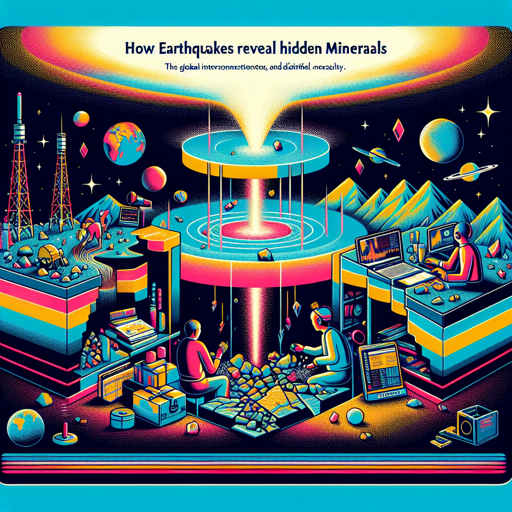
How Earthquakes Reveal Hidden Minerals
Discover how seismic activity uncovers new mineral deposits deep within the Earth.
Introduction
Throughout human history, the search for valuable minerals has shaped civilizations, economies, and even geopolitics. While most mineral discoveries have resulted from painstaking exploration and scientific advancements, there exists a powerful natural force—earthquakes—that can reveal Earth’s hidden treasures in dramatic and often unexpected ways. From gold veins in California to rare gemstones in the Himalayas, seismic activity has played a pivotal role in shaping the mineral wealth of our planet.
But how exactly do earthquakes expose new mineral deposits? What processes are at play deep beneath our feet, and how can geologists harness this knowledge for future exploration? In this in-depth article, we’ll journey into the dynamic relationship between earthquakes and minerals. Whether you’re a geology enthusiast, educator, student, or simply curious about the planet’s inner workings, prepare to uncover the secrets beneath the surface.
The Science of Earthquakes: A Brief Overview
Earthquakes occur when stress within the Earth’s crust builds up and is suddenly released along faults—fractures in rocks where movement has occurred. This release of energy causes seismic waves that shake the ground. Most earthquakes are associated with tectonic plate boundaries, where plates collide, pull apart, or slide past each other. However, earthquakes can also arise within plates due to other geological processes.
Key earthquake features include:
- Focus (Hypocenter): The point inside Earth where the earthquake starts.
- Epicenter: The point on Earth’s surface directly above the focus.
- Faults: Breaks in Earth’s crust where movement and earthquakes occur.
As rocks slide past each other along faults during an earthquake, they can create new pathways for fluids, rearrange underground structures, and even bring previously buried mineral deposits closer to the surface.
How Earthquakes Expose Hidden Minerals
1. Creation and Expansion of Fault Zones
When an earthquake strikes, it often causes existing faults to slip or new fractures to form. These fault zones become conduits for hot fluids rich in dissolved minerals. Over time, as these fluids move through the cracks and cool down or react with surrounding rocks, they can deposit minerals such as quartz, gold, copper, and more. This process is known as hydrothermal mineralization.
“Earthquakes are nature’s way of reshaping our world—sometimes revealing riches that have lain hidden for millions of years.”
— Dr. Emily Carter, Geologist
Famous Example: The California Gold Rush
Many of California’s richest gold deposits are associated with ancient fault zones. Seismic activity fractured rocks and allowed mineral-laden fluids to deposit gold veins near the surface—a fact that prospectors unwittingly benefited from during the 19th-century Gold Rush.
2. Exposing Buried Deposits
Earthquakes can cause landslides and uplift large blocks of rock, bringing previously buried mineral layers to light. For example:
- Landslides triggered by earthquakes can expose fresh rock faces rich in minerals or gems.
- Uplift along fault lines can elevate entire mountain ranges or local outcrops, making deep-seated mineral veins accessible.
Himalayan Gemstones
The Himalayas are an active seismic zone. Earthquakes and continuous tectonic collisions have exposed a wealth of gemstones—tourmaline, aquamarine, and garnet—by thrusting ancient rocks upward and causing landslides that reveal new deposits.
3. Creating New Pathways for Exploration
Modern geologists use seismic data to map subsurface structures. Earthquakes generate seismic waves that travel at different speeds through various rocks and minerals. By analyzing these waves (a technique called seismic tomography), scientists can identify areas with unusual density or composition—potential signs of hidden mineral deposits.
Table: Key Ways Earthquakes Reveal Minerals
| Mechanism | Description | Notable Examples |
|---|---|---|
| Fault Zone Formation | Creates pathways for mineral-rich fluids | California Gold Belt |
| Uplift & Exposure | Brings deep rocks/minerals to the surface | Himalayan Gemstone Deposits |
| Landslides | Exposes fresh mineral surfaces | Andes Copper Mines |
| Seismic Imaging | Reveals subsurface anomalies using earthquake waves | Exploration in Africa & Australia |
Real-World Discoveries Attributed to Seismic Activity
Gold Veins of South Africa
South Africa’s Witwatersrand Basin contains some of the world’s largest gold deposits. Research suggests that ancient seismic activity created extensive fracture networks that allowed hydrothermal fluids to concentrate gold in these regions. Without such tectonic forces, these vast reserves might have remained undiscovered.
Gemstone Finds in Myanmar
Myanmar is famous for its high-quality rubies and jadeite. Many deposits are located along tectonic suture zones—where continental plates have collided violently over millions of years. Periodic earthquakes have fractured the rocks, allowing magma and fluids to form rare gemstones near the surface.
Chile’s Copper Bonanza
The Andes Mountains are one of the most seismically active regions on Earth. Frequent earthquakes have played a major role in forming copper-rich porphyry deposits by repeatedly breaching rocks and enabling mineral-rich fluids to permeate and deposit metals.
The Role of Technology in Seismic Mineral Exploration
Advancements in technology have revolutionized how geologists use seismic activity to find new mineral resources:
- Seismic Tomography: Like a CT scan of the Earth, this method uses natural and artificial earthquake waves to image underground structures.
- Remote Sensing: Satellites can detect subtle changes in Earth’s surface after earthquakes, highlighting areas where rocks (and potential minerals) have been exposed.
- GIS Mapping: Geographic Information Systems help overlay seismic data with geological maps to pinpoint promising exploration targets.
These tools not only improve mineral exploration but also reduce environmental impact by focusing efforts on high-potential zones.
Table: Comparing Traditional vs. Seismic-Informed Exploration
| Approach | Advantages | Limitations |
|---|---|---|
| Traditional Prospecting | Simple, low-tech | Time-consuming, limited depth |
| Geochemical Sampling | Identifies surface anomalies | Misses deep/buried deposits |
| Seismic Tomography | Maps deep structures, non-invasive | Requires expertise & equipment |
| Remote Sensing | Covers large areas quickly | Surface only; indirect indications |
Environmental Considerations: Earthquakes as Double-Edged Swords
While earthquakes can reveal valuable minerals, they also pose risks:
- Landslides and Rockfalls: Can destroy habitats or communities.
- Water Contamination: Newly exposed minerals may leach heavy metals into groundwater.
- Mining Hazards: Regions with frequent seismic activity require special safety measures for mining operations.
Responsible exploration must balance the benefits of newfound resources with environmental stewardship and community safety.
The Future: Can We Predict Mineral Deposits from Seismicity?
Emerging research is exploring whether patterns in earthquake activity could help predict where undiscovered mineral deposits lie. By integrating seismic histories with geological models, scientists hope to create more accurate maps of Earth’s hidden mineral wealth.
A fascinating study by Nature Geoscience suggests that certain types of earthquakes—especially those associated with fluid movement—are more likely to create conditions favorable for ore formation.
Conclusion
Earthquakes are often viewed as destructive forces—but for geologists and mineral explorers, they are also agents of discovery and change. By fracturing rocks, opening new pathways for fluids, uplifting mountains, and exposing hidden layers, seismic activity continually reshapes Earth’s geology and reveals remarkable mineral treasures.
As our technological prowess grows and our understanding deepens, we stand on the brink of a new era in exploring Earth’s wealth—one where every tremor might just hint at a hidden vein of gold or a pocket of rare gemstones.
Whether you’re hunting for minerals in your own backyard or teaching the next generation about Earth’s dynamic processes, remember: sometimes it takes a shake to uncover what lies beneath.
References & Further Reading
- Nature Geoscience: Earthquakes create gold veins
- USGS: The Science of Earthquakes
- Geology.com: Mineral Resources
Explore more about minerals, mining, and earth sciences at Galena.es.