 Mineral Matrix: An AI Journey into Earth’s Treasures
How Mountains Are Made Geology Tectonics and Minerals
Explore the tectonic forces behind mountains and their rich mineral deposits.
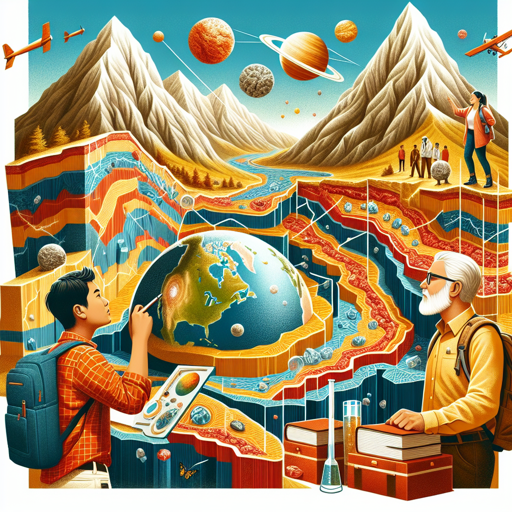
Introduction
From the majestic Himalayas piercing the sky to the ancient, weathered Appalachians rolling across continents, mountain ranges have captured human wonder for millennia. But beyond their breathtaking beauty lies a captivating story of slow-moving continents, titanic forces, and a secret world of hidden minerals and gems. Understanding how mountains are formed not only unravels the earth’s dynamic history but also reveals why these geological giants are treasure troves for minerals and gemstones.
Join us on an in-depth exploration of the geology behind mountain ranges. We’ll journey through the tectonic processes that create mountains, reveal how these processes concentrate valuable minerals, and provide insights for geology enthusiasts, educators, and students eager to unlock the secrets of our planet’s backbone.
The Building Blocks: Plate Tectonics and Mountain Formation
Mountain ranges are not random accidents—they are the result of profound earth-shaping processes. The theory of plate tectonics, developed in the 20th century, revolutionized our understanding of how mountains form and where mineral deposits can be found.
What Is Plate Tectonics?
The Earth’s outer shell is not a single solid piece. Instead, it is divided into several large slabs called tectonic plates. These plates float atop the semi-fluid asthenosphere and are constantly in motion due to convection currents deep within the mantle.
When these plates interact, they create zones of immense geological activity—including mountain building. Let’s look at the primary ways mountains are formed:
1. Convergent Boundaries: Colliding Plates
At convergent boundaries, two plates move toward each other. If both plates are continental (such as the collision between the Indian Plate and Eurasian Plate), they crumple and fold, pushing massive rock layers upwards to form towering mountain ranges.
Example:
- The Himalayas—the highest mountain range on Earth—formed from the ongoing collision between India and Eurasia.
2. Subduction Zones: Oceanic Meets Continental
When a denser oceanic plate collides with a lighter continental plate, it is forced (subducted) beneath the continent. Melting of the subducted slab generates magma that rises to form volcanic mountain ranges along continental margins.
Example:
- The Andes in South America are a prime example of mountains formed by subduction, where the Nazca Plate slides beneath the South American Plate.
3. Continental Rifting: Plates Pulling Apart
Mountain ranges can also form where plates are moving away from each other, creating rift valleys and block-faulted mountains.
Example:
- The East African Rift Valley is an excellent site where rifting creates both valleys and uplifted mountains.
4. Uplift and Erosion
Over time, ancient mountain belts such as the Appalachians have been shaped by uplift (vertical movement of crust) and sculpted by erosion, revealing deep rock layers and mineral deposits.
Anatomy of a Mountain Range
Mountain ranges are not monolithic blocks of rock; they’re complex zones filled with folded strata, thrust faults, igneous intrusions, and metamorphic rocks. This complexity is key to understanding why they are often rich in minerals.
Key Features
- Folded Rocks: Layers of sedimentary rocks buckle under pressure.
- Faults: Fractures along which rocks slip—key pathways for mineral-rich fluids.
- Igneous Intrusions: Magma cools inside the crust, forming granite batholiths or dikes.
- Metamorphic Zones: Heat and pressure transform rocks into new mineral-rich forms.
Mountain Ranges as Mineral Factories
Mountains are geological laboratories where heat, pressure, and fluids interact to form ore deposits. The combination of tectonic activity and hydrothermal processes often concentrates valuable metals and gemstones.
How Mountains Concentrate Minerals
Why are so many mineral deposits found in mountainous regions? Let’s explore the primary geological processes at work:
1. Magmatic Processes
In subduction zones or areas with igneous intrusions, magma cools slowly underground. This allows large crystals to form and heavy metals such as gold, copper, molybdenum, and tin to accumulate in concentrated veins.
Key Minerals: Copper (porphyry deposits), gold (epithermal veins), molybdenum.
2. Hydrothermal Activity
Hot fluids circulate through faults and fractures in mountain belts. As these fluids cool or react with host rocks, they deposit minerals such as quartz, silver, lead, zinc, and a variety of gemstones.
Key Minerals: Silver (veins), lead-zinc (Mississippi Valley-type), fluorite, tourmaline.
3. Metamorphism
Heat and pressure transform existing rocks into new mineral assemblages. This process can create valuable minerals like graphite, talc, garnet, and kyanite.
Key Minerals: Garnet (metamorphic rocks), slate (roofing material), talc (industrial uses).
4. Erosion and Placer Deposits
Erosion wears down mountains over millions of years. Heavy minerals like gold, diamonds, or sapphires are transported by rivers and accumulate in alluvial (placer) deposits in valleys downstream.
Key Minerals: Gold (placer nuggets), diamonds (alluvial gravels), sapphires.
Table: Mountain Ranges, Tectonic Setting & Key Minerals
| Mountain Range | Tectonic Setting | Main Rock Types | Major Mineral Deposits |
|---|---|---|---|
| Himalayas | Continental Collision | Metamorphic/Igneous | Graphite, kyanite, quartz |
| Andes | Subduction Zone | Volcanic/Igneous | Copper (porphyry), silver, gold |
| Rockies | Subduction/Uplift | Sedimentary/Igneous | Lead-zinc, molybdenum |
| Alps | Continental Collision | Metamorphic | Talc, barite |
| Appalachians | Ancient Collision/Uplift | Sedimentary/Metamorphic | Coal, iron ore |
| Ural Mountains | Ancient Collision | Metamorphic/Igneous | Platinum, chromite |
| East African Rift | Rifting/Faulting | Volcanic/Basaltic | Rare earth elements |
Famous Gemstones Born in Mountains
Many of the world’s most coveted gemstones trace their origins to mountainous regions:
- Emeralds: Colombia’s Andes have produced some of history’s finest emeralds.
- Rubies & Sapphires: Myanmar’s Mogok Valley lies amid metamorphic hills.
- Diamonds: While many diamonds form deep in the mantle, they reach the surface via volcanic pipes often associated with ancient uplifts (e.g., South Africa).
- Tourmaline & Topaz: Found in pegmatite veins within granitic mountain roots (Brazil, Himalayas).
Mining in Mountain Ranges: Opportunities & Challenges
Mountains may be rich in resources—but extracting them is no easy task.
Advantages
- High Mineral Concentration: Geological complexity leads to diverse ore deposits.
- Accessibility for Certain Deposits: Steep valleys expose mineralized veins.
Challenges
- Harsh Terrain: Rugged landscapes complicate transportation and logistics.
- Environmental Sensitivity: Mountain ecosystems are fragile—mining can amplify erosion or disrupt habitats.
- Political & Social Impact: Many mountain regions are home to indigenous peoples or sacred sites.
Modern mining techniques aim to balance resource extraction with environmental stewardship—a challenge for scientists, governments, and local communities alike.
The Mountain-Building Cycle: Erosion & Renewal
Mountains may seem eternal but are constantly changing. After rising skyward during tectonic collisions, erosion works tirelessly to wear them down. Rivers slice through rock layers; glaciers sculpt valleys; landslides move tons of earth in moments.
Yet as old mountains erode away, new ones begin their slow ascent elsewhere—demonstrating Earth’s endless cycle of creation and destruction.
“The mountains are calling and I must go.”
—John Muir
Visualizing Geologic Time: How Long Does It Take to Build a Mountain?
To appreciate mountain formation requires thinking on timescales far longer than a human lifetime:
| Process | Typical Timescale |
|---|---|
| Plate collision/uplift | 10–100 million years |
| Magma intrusion | Thousands to millions |
| Erosion/removal | Tens to hundreds million |
| Ore deposit formation | Thousands to millions |
This immense span explains why mountains tell such rich stories about Earth’s past—and why their resources have taken ages to concentrate.
Educational Resources & Further Exploration
For students or educators seeking to delve deeper into mountain geology:
- Interactive plate tectonics simulations
- Virtual field trips to famous mountain belts
- Mineral identification kits for classroom use
- US Geological Survey’s Tectonics Page
Conclusion
Mountain ranges are more than stunning panoramas—they’re living records of Earth’s restless interior. Every peak holds clues about continents colliding or drifting apart; every valley may conceal veins of copper or hidden gemstones shaped by ancient heat and pressure.
Understanding how mountains form connects us with processes that shape our planet—and guide our search for its hidden treasures. Whether you’re a geology enthusiast mapping local hillsides or an educator inspiring tomorrow’s scientists, remember: every mountain tells a story written in stone.
Let us continue to explore these giants—not just for their resources but for the knowledge they offer about our ever-changing Earth.
For more articles on minerals, mining discoveries, and geology education, follow our blog or join our community discussions!