 Mineral Matrix: An AI Journey into Earth’s Treasures
The Most Valuable Gemstones on Earth
Discover which rare gems command the highest prices and why they captivate collectors.
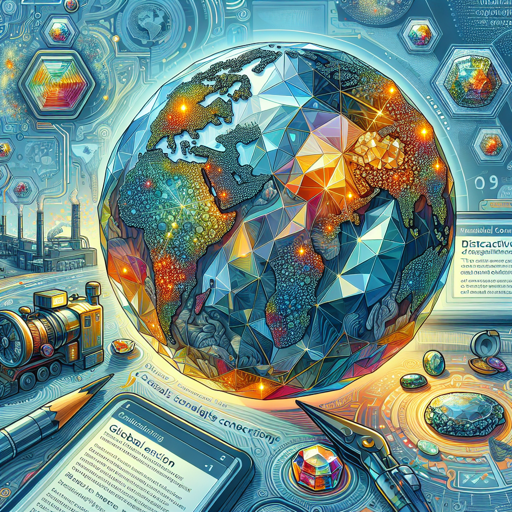
The Most Valuable Gemstones on Earth
Gemstones have fascinated humanity for thousands of years, adorning crowns, inspiring myths, and igniting adventures across continents. But beyond their beauty and symbolism, some gems command astronomical prices—making them coveted prizes for collectors, investors, and geology enthusiasts alike. What drives a gemstone’s value? Is it rarity, history, or sheer spectacle? In this in-depth guide, we’ll uncover the world’s most valuable gemstones, the factors that make them so precious, and the geological marvels behind their creation.
Introduction
From the ancient mines of India to the modern auctions of Geneva, gemstones have played a dazzling role in human history. Their vibrant colors and mesmerizing brilliance have adorned royalty, inspired legends, and even sparked fierce rivalries. Yet, among the multitude of minerals on Earth, only a select few reach the pinnacle of value—fetching millions per carat and captivating gemologists worldwide.
What makes diamonds, rubies, emeralds, and lesser-known stones like jadeite or musgravite so valuable? Is it all about rarity, or are there hidden factors at play? This article explores the science, history, and intrigue behind the most expensive gemstones ever unearthed.
What Determines a Gemstone’s Value?
Before diving into the list of record-breaking gems, it’s essential to understand what drives their astronomical prices. The value of a gemstone is determined by a combination of factors:
- Rarity: The scarcer a gem, the more valuable it is. Some stones are found in only one location on Earth.
- Color and Clarity: Vividness of color and absence of inclusions or imperfections significantly enhance value.
- Carat Weight: Larger stones are exponentially more valuable due to their rarity.
- Cut: A masterful cut brings out brilliance and fire, increasing desirability.
- Historical Significance: Gems with storied pasts or celebrity connections often command premium prices.
As gemologist and author Richard W. Wise notes:
“A gemstone’s value is determined as much by its story as by its sparkle. Rarity and beauty are essential, but provenance can make all the difference.”
The World’s Most Valuable Gemstones
Let’s embark on a journey through the rarest and most valuable gemstones on Earth—each a geological miracle millions of years in the making.
1. Pink Star Diamond
- Value: $71.2 million (59.60 carats; Sotheby’s Hong Kong, 2017)
- Per Carat Value: ~$1.19 million
- Origin: South Africa
The Pink Star is not only the most expensive gemstone ever sold at auction but also a symbol of exceptional rarity. Its vivid pink color and flawless clarity make it a marvel among diamonds. Cut from a rough stone weighing 132.5 carats, it took over two years to shape this masterpiece.
2. Jadeite
- Value: $27.4 million (Hutton-Mdivani Necklace; Sotheby’s Hong Kong, 2014)
- Per Carat Value: Can exceed $3 million for top quality
- Origin: Myanmar (Burma)
Jadeite—distinct from common jade (nephrite)—is revered in Chinese culture as a stone of luck and status. The finest “Imperial Jade” displays an intense emerald-green hue and translucency that collectors prize above all else.
3. Blue Diamond (Oppenheimer Blue)
- Value: $57.5 million (14.62 carats; Christie’s Geneva, 2016)
- Per Carat Value: ~$3.93 million
- Origin: South Africa
Blue diamonds are among the rarest colored diamonds on Earth. The Oppenheimer Blue’s mesmerizing hue comes from trace amounts of boron within its crystal lattice.
4. Ruby (Sunrise Ruby)
- Value: $30.4 million (25.59 carats; Sotheby’s Geneva, 2015)
- Per Carat Value: ~$1.19 million
- Origin: Myanmar
Burmese rubies with “pigeon blood” color—vivid red with a hint of blue—are considered the holy grail among rubies. The Sunrise Ruby set a world record for any colored gemstone other than diamonds.
5. Emerald (Rockefeller Emerald)
- Value: $5.5 million (18.04 carats; Christie’s New York, 2017)
- Per Carat Value: ~$305,000
- Origin: Colombia
Colombian emeralds are prized for their pure green hue and exceptional clarity. The Rockefeller Emerald, formerly owned by the American dynasty, is one of the finest examples ever auctioned.
6. Alexandrite
- Value: Up to $70,000 per carat for top specimens
- Origin: Russia (Ural Mountains), Brazil, Sri Lanka
Alexandrite is famed for its dramatic color change—from green in daylight to red under incandescent light—a phenomenon called pleochroism.
7. Musgravite
- Value: Up to $35,000 per carat
- Origin: Australia (Musgrave Range), Greenland, Madagascar
Discovered only in 1967 and even rarer than alexandrite, musgravite’s grayish-purple hue makes it one of the world’s rarest gems.
8. Red Beryl (Bixbite)
- Value: Up to $10,000 per carat
- Origin: Wah Wah Mountains, Utah, USA
Red beryl is about 1,000 times rarer than diamonds. Its vibrant raspberry-red color is attributed to trace manganese.
Comparative Table: The World’s Most Valuable Gemstones
| Rank | Gemstone | Highest Price Paid | Per Carat Value | Primary Origin | Key Characteristics |
|---|---|---|---|---|---|
| 1 | Pink Star Diamond | $71.2 million | ~$1.19M | South Africa | Flawless vivid pink diamond |
| 2 | Jadeite | $27.4 million | Up to $3M+ | Myanmar | Emerald-green “Imperial” |
| 3 | Oppenheimer Blue | $57.5 million | ~$3.93M | South Africa | Intense blue diamond |
| 4 | Sunrise Ruby | $30.4 million | ~$1.19M | Myanmar | “Pigeon blood” red |
| 5 | Rockefeller Emerald | $5.5 million | ~$305K | Colombia | Pure green emerald |
| 6 | Alexandrite | Up to $70K/carat | ~$70K | Russia/Brazil | Color-changing |
| 7 | Musgravite | Up to $35K/carat | ~$35K | Australia | Grayish-purple |
| 8 | Red Beryl | Up to $10K/carat | ~$10K | USA | Vivid raspberry-red |
Why Are Some Gemstones So Rare?
The rarity of these stones often stems from unique geological conditions required for their formation:
- Pink Diamonds: Formed under immense pressure with specific lattice distortions that cause pink coloration; only select mines like Argyle in Australia have produced significant quantities.
- Jadeite: Requires high-pressure metamorphic environments found mainly in Myanmar.
- Alexandrite: Needs both beryllium and chromium—elements rarely found together in nature.
- Red Beryl: Forms in topaz-bearing rhyolites under highly specific geochemical conditions.
These factors mean that even with modern mining techniques, new discoveries are exceedingly rare.
The Role of History and Mythology
Beyond geology, gemstones have long held symbolic power:
- Emeralds adorned Inca treasures and Cleopatra’s crown.
- Rubies were believed to bestow invincibility in battle.
- Jadeite has been revered in Chinese culture for millennia as “the stone of heaven.”
Provenance—such as being part of royal collections or famous jewelry pieces—can add enormous value at auction.
Market Trends: Investing in Rare Gemstones
In recent years, rare gemstones have gained popularity as alternative investments due to their portability and resistance to market fluctuations. However, investing requires expertise:
- Demand for colored diamonds and ultra-rare stones is rising.
- Provenance and certification are essential to avoid counterfeits.
- Market liquidity is lower than that for precious metals.
For collectors and geology enthusiasts alike, knowledge is the greatest asset—understanding both mineralogy and the nuances of the global gem market.
Famous Mines That Shaped History
Some deposits have become legendary for producing extraordinary gems:
- Argyle Mine (Australia): Source of over 90% of the world’s pink diamonds before closing in 2020.
- Mogok Valley (Myanmar): Known as “Ruby Land,” home to the world’s finest rubies.
- Muzo Mine (Colombia): Synonymous with top-quality emeralds.
- Wah Wah Mountains (Utah): Only known commercial source for red beryl.
These sites are geologically unique—and their depletion only increases the value of stones already unearthed.
Ethical Mining and Sustainability
The quest for rare gems has also sparked concerns about ethical sourcing:
- Conflict diamonds and unregulated mining can fund violence or environmental destruction.
- Responsible sourcing initiatives like the Kimberley Process aim to ensure ethical trade.
- Lab-grown gemstones offer sustainable alternatives with identical chemical compositions.
Consumers increasingly demand transparency about a gemstone’s origin—a trend likely to shape the future of gem mining.
External Reference
For further reading on gemstone values and geology, visit Gemological Institute of America, a globally recognized authority on gems and mineralogy.
Conclusion
The allure of gemstones lies not only in their breathtaking beauty but also in their rarity—a union of chance geology and human history. From pink diamonds that dazzle with unmatched brilliance to jadeite revered for millennia in Asia, these stones represent some of nature’s most exquisite creations.
As we continue to explore Earth’s geological wonders, who knows what new treasures await discovery beneath our feet? For geology enthusiasts, educators, students—and anyone captivated by the mineral kingdom—the story of gemstones is an ongoing adventure at the intersection of science and splendor.
Whether you’re an aspiring collector or simply awed by Earth’s treasures, understanding what makes these gems so valuable deepens our appreciation for both nature’s artistry and human ingenuity.
“In every facet of a gemstone lies a story millions of years in the making—a story shaped by Earth’s relentless creativity.”