 Mineral Matrix: An AI Journey into Earth’s Treasures
Famous Mineral Discoveries That Changed History
Explore the world’s most significant mineral finds and their impact on society, science, and culture.
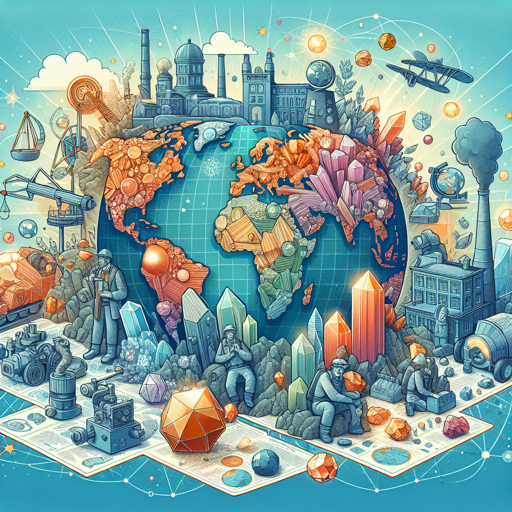
Famous Mineral Discoveries That Changed History
Minerals are the building blocks of civilization. From the first spark of fire struck from a flint to the dazzling allure of diamonds and gold, the discovery of minerals has shaped humanity’s progress, ambitions, and even our sense of wonder. The world beneath our feet is a treasure trove of hidden riches and scientific marvels. This article delves into some of history’s most famous mineral discoveries—moments when Earth’s deep secrets changed the course of science, industry, and culture.
Introduction
Imagine a time before the elements were known—before gold adorned crowns or copper carried electricity. Every great civilization owes something to a mineral discovery: a glittering nugget in a riverbed, a vein of metal in a mountain, or a crystal with properties no one had ever seen. These discoveries not only unlocked wealth but also drove technology, inspired legend, and changed the fate of nations.
In this journey through time, we’ll explore extraordinary finds—from the gold fields of California to the diamond mines of South Africa. We’ll see how chance, curiosity, and courage led to discoveries that transformed society. Whether you’re a geology enthusiast, an educator, or a curious reader, prepare to uncover the stories behind some of the world’s most significant mineral finds.
Table of Contents
- The Lure of Gold: From Ancient Civilizations to Modern Rushes
- Diamond Discoveries: Myths, Monopolies, and Marvels
- Copper: The Spark of Civilization
- The Silver Bonanza: Riches and Rivalries
- Gems of Legend: Emeralds, Sapphires, and Rubies
- Modern Marvels: Rare Earth Elements and Lithium
- Timeline Table: Key Mineral Discoveries
- Conclusion
- Further Reading
The Lure of Gold: From Ancient Civilizations to Modern Rushes
Gold has captivated humanity for thousands of years. Its rarity, malleability, and luster made it a symbol of power and divinity long before it became a global currency.
Ancient Gold
The earliest known gold artifacts date back over 6,000 years to ancient Egypt and the Balkans. Egyptian pharaohs adorned themselves with gold jewelry, believing it was the flesh of the gods. Gold’s allure spread across empires—Minoans, Persians, Greeks, and Romans all prized it.
The California Gold Rush (1848–1855)
The discovery of gold at Sutter’s Mill in 1848 ignited one of history’s greatest migrations. Hundreds of thousands flocked to California with dreams of fortune. This rush transformed San Francisco from a sleepy village into a booming city and accelerated America’s westward expansion.
Witwatersrand Goldfields (1886)
In 1886, prospectors struck gold in South Africa’s Witwatersrand Basin. This find became the richest goldfield in history—producing over 40% of all gold ever mined. It reshaped South Africa’s economy and politics, laying foundations for Johannesburg and fueling conflicts such as the Boer Wars.
“Gold is tried by fire, brave men by adversity.” — Seneca
Diamond Discoveries: Myths, Monopolies, and Marvels
Diamonds have long been associated with power and eternal love—but their story is also one of empire-building and scientific intrigue.
Ancient India
For centuries, India was the world’s primary source of diamonds. Alluvial deposits were mined along rivers like the Krishna and Penneru. Diamonds from India adorned royal treasuries from Rome to Persia.
The Eureka Diamond (South Africa, 1867)
In 1867, a young boy found a shiny pebble on the banks of South Africa’s Orange River—a 21-carat diamond later named Eureka. This discovery sparked a diamond rush and led to the founding of Kimberley Mine (“Big Hole”), revolutionizing the global diamond trade.
The Cullinan Diamond (1905)
The largest gem-quality diamond ever found—the Cullinan Diamond—was discovered in South Africa in 1905. Weighing an astonishing 3,106 carats (about 1.3 pounds), it was cut into major stones for Britain’s Crown Jewels.
Modern Marvels
Today, Russia’s Mirny Mine and Canada’s Diavik Mine are among the world’s richest diamond sources. New techniques—like synthetic production—are expanding what “diamond discovery” means for science and industry.
Copper: The Spark of Civilization
Copper may not dazzle like gold or diamonds, but its discovery was arguably more transformative for civilization.
The First Metalworkers
Copper artifacts date as far back as 8700 BCE in Anatolia (modern-day Turkey). Unlike most metals found as ores, copper sometimes appears as native metal—ready to shape into tools or ornaments.
The Chalcolithic Revolution
The ability to smelt copper from ore marked humanity’s transition from the Stone Age to the Copper Age (Chalcolithic). This led eventually to bronze (an alloy of copper and tin), which powered agriculture, weaponry, and infrastructure in ancient Mesopotamia, Egypt, China, and beyond.
Modern Copper Discoveries
The discovery of massive copper porphyry deposits—from Chile’s Chuquicamata to Utah’s Bingham Canyon—has made copper an industrial backbone in wiring, electronics, and renewable energy today.
The Silver Bonanza: Riches and Rivalries
Silver mining sparked economic booms and bitter conflicts throughout history.
Ancient Silver
Silver was used by ancient civilizations for currency and artistry. The Laurion mines near Athens fueled Athens’ Golden Age and helped fund its mighty fleet.
Potosí: The Mountain That Eats Men
In 1545, Spanish conquistadors discovered Cerro Rico (“Rich Mountain”) in present-day Bolivia—a mountain riddled with silver veins. Potosí became one of the largest cities in the world by population in the 17th century. The silver extracted (often through forced labor) helped finance European empires but at great human cost.
The Comstock Lode (1859)
The discovery of Nevada’s Comstock Lode triggered America’s first major silver rush. Innovations like the Washoe Process for extracting silver shaped mining technology for decades.
Gems of Legend: Emeralds, Sapphires, and Rubies
Some mineral discoveries have become the stuff of legend—not just for their value but for their beauty and symbolism.
Colombian Emeralds
Colombia is famed for its deep-green emeralds. Muzo mines have produced gems admired since pre-Columbian times; Spanish conquistadors later claimed them for European royalty.
Burmese Rubies
Upper Myanmar (Burma) has yielded rubies so vibrant they’re called “pigeon blood.” These stones have been prized by kings and collectors for centuries.
Kashmir Sapphires
Discovered in the late 19th century in the Himalayas, Kashmir sapphires are renowned for their velvety blue hue—a benchmark for quality even today.
| Gemstone | Famous Source | Notable Discovery Date | Remarkable Fact |
|---|---|---|---|
| Emerald | Muzo Mines (Colombia) | Pre-Columbian | Source for Spanish Crown Jewels |
| Ruby | Mogok Valley (Myanmar) | Centuries ago | “Pigeon blood” color is world-renowned |
| Sapphire | Kashmir (India) | ~1880 | Famed for velvety blue |
Modern Marvels: Rare Earth Elements and Lithium
The mineral discoveries that shape our digital age are less about glitter—and more about technology.
Rare Earth Elements (REEs)
Discovered mainly in China’s Bayan Obo deposit (and later in Australia and North America), rare earths are crucial for smartphones, renewable energy tech, defense systems, and electric vehicles.
Lithium: Powering a Battery Revolution
Lithium brines in Chile’s Atacama Desert (and hard rock mines in Australia) have become vital as lithium-ion batteries transform everything from laptops to electric cars.
“Geology holds the key to tomorrow’s technology.” — Anonymous
Timeline Table: Key Mineral Discoveries
| Year/Period | Location | Mineral / Gem | Impact |
|---|---|---|---|
| ~4000 BCE | Egypt / Balkans | Gold | Early jewelry/artifacts; symbolized divinity |
| ~8700 BCE | Anatolia | Copper | Sparked metalworking revolution |
| Pre-1500 CE | India | Diamonds | Only source; fueled legends |
| 1545 | Potosí, Bolivia | Silver | Financed European empires |
| 1848–1855 | California | Gold | Mass migration; statehood |
| 1859 | Nevada | Silver (Comstock) | Mining tech advances; economic boom |
| 1867 | South Africa | Diamonds | Led to De Beers; global diamond industry |
| 1886 | Witwatersrand | Gold | World’s richest goldfield |
| Late 1800s | Colombia | Emeralds | Coveted by royalty |
| ~1880 | Kashmir | Sapphires | Standard for blue sapphires |
| 20th century | Chile/Australia/China | Copper / REEs / Li | Foundation for electronics & green tech |
Conclusion
From ancient riverbeds to high-tech laboratories, mineral discoveries have written—and continue to write—the story of civilization. Each find has triggered waves of innovation or upheaval: fueling empires with precious metals; inspiring art with gems; or powering modern life with rare earths and lithium.
For geology enthusiasts and educators alike, famous mineral discoveries offer more than tales of glittering stones or lost fortunes—they illuminate humanity’s enduring curiosity about our planet. Mining is not just about extraction; it is about exploration, science, and understanding Earth as an evolving system.
As we look to the future—towards sustainable mining and new frontiers like asteroid prospecting—the next great mineral discovery may yet change history once again.
Further Reading
- Smithsonian National Museum of Natural History: Geology, Gems & Minerals
- The Mineralogical Society of America
- USGS Mineral Resources Program
- Britannica – Major mineral discoveries