 Mineral Matrix: An AI Journey into Earth’s Treasures
The Value of Gemstones Explained Simply
Discover how color, clarity, rarity, and history shape gemstone values.
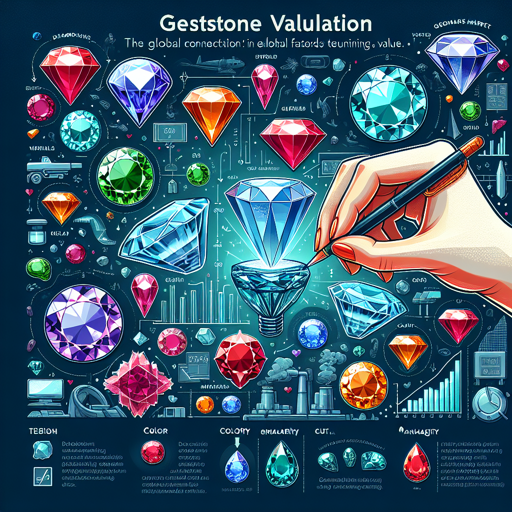
The Value of Gemstones Explained
Gemstones have mesmerized humanity for millennia. From the luminous blues of sapphires to the fiery brilliance of rubies and diamonds, these natural marvels have adorned crowns, inspired legends, and become cherished heirlooms. But what truly determines a gemstone’s value? Is it simply beauty, or do deeper geological and historical factors come into play?
Whether you’re a geology enthusiast, an aspiring gemologist, an educator crafting lessons for curious minds, or simply someone captivated by the allure of earth’s treasures, understanding what makes a gemstone valuable is both fascinating and essential. In this article, we’ll dive deep into the factors that determine the worth of different gemstones—unraveling the science, artistry, and economics at play.
Table of Contents
- What Is a Gemstone?
- Key Factors That Shape Gemstone Value
- Comparative Table: Gemstone Value Factors
- A Closer Look: Famous High-Value Gemstones
- How Gemstones Are Appraised
- The Market: Supply, Demand & Trends
- Conclusion
- Further Reading & References
What Is a Gemstone?
A gemstone is a mineral (and occasionally an organic material) that has been chosen for its beauty, durability, and rarity. Once cut and polished, gemstones are used in jewelry or as collectors’ items. The most renowned gemstones—diamond, ruby, sapphire, and emerald—are often called “precious,” while others fall under the term “semi-precious.”
But these classifications are not always clear-cut. For example, a rare, top-quality spinel or alexandrite can be far more valuable than a common sapphire or even certain diamonds.
“The value of gemstones reflects not only their natural beauty but also the unique interplay between geology, human history, and economics.”
— Dr. Emily Harper, Gemological Institute of America
Key Factors That Shape Gemstone Value
Professional gemologists and appraisers consider several main criteria when evaluating gemstones. The famous “Four Cs” (color, clarity, cut, carat) are foundational for diamonds but also apply—sometimes with different emphasis—to colored gemstones. Let’s unravel these factors.
Color
Color is often the most critical value determinant for colored gems. It encompasses three elements:
- Hue: The basic color (e.g., red in ruby).
- Tone: Lightness or darkness.
- Saturation: Intensity or purity of color.
For instance, the finest rubies exhibit a vibrant pigeon’s blood red—a rare hue commanding extraordinary prices.
Clarity
Clarity refers to the presence of internal features (inclusions) or surface blemishes. While flawless diamonds are highly prized, many colored stones (like emeralds) commonly have inclusions. In fact, some inclusions can even enhance value if they create desirable visual effects (like star sapphires).
Cut
The cut determines how well a gemstone interacts with light—impacting its brilliance or “fire” (in diamonds). A skillful cut maximizes beauty even in stones with less-than-perfect clarity.
Carat Weight
Carat is a measurement of weight (not size). All else being equal, larger stones are rarer and command higher prices per carat.
Rarity
Rarity is key—some gem minerals are inherently scarce due to their formation conditions or limited geographic occurrence (e.g., tanzanite is found only in Tanzania).
Origin
Certain mines or regions are famed for producing superior or uniquely colored stones—think Kashmir sapphires or Colombian emeralds. Provenance can add substantial value.
Treatments and Enhancements
Many gems undergo treatments (e.g., heat treatment in sapphires) to improve color or clarity. Untreated stones typically fetch premium prices.
Historical and Cultural Significance
Stones with storied histories (like the Hope Diamond) or specific cultural associations (jade in China) can achieve nearly priceless status.
Comparative Table: Gemstone Value Factors
| Gemstone | Color Importance | Clarity Importance | Cut Importance | Rarity | Notable Origins | Typical Treatments |
|---|---|---|---|---|---|---|
| Diamond | Medium | High | High | Medium | South Africa, Russia | Few (color/clarity) |
| Ruby | High | Medium | High | High | Myanmar (Burma), Mozambique | Heat treatment |
| Sapphire | High | Medium | High | Medium | Sri Lanka, Kashmir | Heat treatment |
| Emerald | High | Low | Medium | High | Colombia, Zambia | Oil/resin filling |
| Alexandrite | High | Medium | High | Very High | Russia, Brazil | Minimal |
| Tanzanite | High | Medium | High | Very High (single locality) | Tanzania | Heat treatment |
| Jade | Medium | Low | Medium | Medium | Myanmar, Guatemala | Polymer impregnation |
Note: This table highlights general trends; individual stones may differ.
A Closer Look: Famous High-Value Gemstones
The Hope Diamond
Perhaps the world’s most legendary blue diamond, the 45.52-carat Hope Diamond is prized not only for its rare deep blue hue but also its storied past—passing through royal hands and acquiring tales of mystery and misfortune.
The Sunrise Ruby
Fetching over $30 million at auction in 2015, this Burmese ruby demonstrates how exceptional color (“pigeon’s blood” red) and provenance combine to create astronomical value.
The Rockefeller Emerald
This 18.04-carat Colombian emerald set records for price per carat due to its vivid green color and historic provenance.
Musgravite
A relatively new discovery (1967), musgravite is one of the world’s rarest gemstones. Fine specimens fetch staggering prices due to extreme scarcity.
How Gemstones Are Appraised
Professional appraisal involves:
- Identification: Determining if the gem is natural or synthetic.
- Assessment: Grading color, clarity, cut, carat.
- Origin Analysis: Tracing geographic source via advanced techniques.
- Treatment Detection: Identifying enhancements.
- Market Analysis: Comparing recent sales of similar stones.
- Documentation: Producing detailed reports for insurance or resale.
Institutions like the Gemological Institute of America (GIA) set global standards for gemstone grading.
The Market: Supply, Demand & Trends
Gemstone values are not static—they fluctuate with changes in supply (new discoveries), demand (fashion trends), and even global events (e.g., sanctions on certain mining regions). For instance:
- Tanzanite’s price surged after its sole mining area was threatened by depletion.
- Lab-grown diamonds now offer affordable alternatives—but natural stones retain prestige value.
- Colored gems like Paraíba tourmaline can see meteoric price jumps after media exposure or celebrity endorsements.
Ethical sourcing has become increasingly important; traceability and “conflict-free” credentials may affect both marketability and value.
Conclusion
The value of gemstones is shaped by a remarkable interplay of nature’s artistry and human culture—from vivid colors formed deep within the earth to legendary histories that captivate collectors worldwide. Understanding what drives gemstone worth empowers enthusiasts, students, educators, and collectors alike—whether you’re admiring minerals in the field or handling a family heirloom.
The next time you gaze into the depths of a sapphire or marvel at an emerald’s lush green hue, remember: every gemstone carries a story—and its value is as much about that story as it is about science.
Further Reading & References
- Gemological Institute of America – Education & Research
- Hughes, Richard W., Ruby & Sapphire (2017)
- Nassau, Kurt. Gemstone Enhancement: History, Science and State of the Art (2002)
- International Gem Society – Gemstone Price Guide
Explore more articles on minerals, mining discoveries, and gemstone guides at our blog!