 Mineral Matrix: An AI Journey into Earth’s Treasures
Gemstone Grading Demystified for All
Understand how gemstones are valued and graded with clear, practical insights for geology enthusiasts and learners.
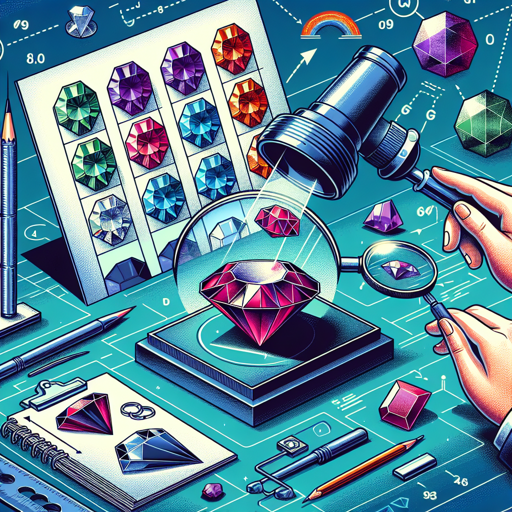
Gemstone Grading Explained: A Clear Guide to Value and Beauty
Gemstones have enchanted humanity for millennia, their brilliant colors and captivating clarity inspiring myths, art, and science alike. But what truly determines a gemstone’s value? Why are some rubies worth more than diamonds, or certain sapphires prized above all others? The answer lies in gemstone grading—a fascinating and rigorous process that brings together science, artistry, and commerce.
In this comprehensive guide, we’ll unravel the secrets behind gemstone grading. Whether you’re a geology enthusiast, educator, student, or simply fascinated by the world of minerals and gems, you’ll find clear explanations and practical insights into how gemstones are assessed, valued, and cherished across the globe.
Table of Contents
- Why Grade Gemstones?
- The 4Cs: Cornerstones of Gemstone Grading
- Color: The Heart of Gem Value
- Clarity: Nature’s Fingerprint
- Cut: Unveiling the Inner Fire
- Carat Weight: Size Isn’t Everything
- Beyond the 4Cs: Additional Factors
- A Comparison Table: Grading Rubies, Sapphires, Diamonds
- Who Grades Gemstones? Laboratories and Standards
- Common Misconceptions About Grading
- Further Learning and Resources
- Conclusion: The Beauty of Knowledge
Why Grade Gemstones?
Gemstone grading is the systematic evaluation of a gem’s physical characteristics to determine its quality and value. This process is essential for:
- Establishing Fair Market Value: Buyers and sellers need standardized grades to ensure fair transactions.
- Identifying Rarity: Certain features make gems more unique—and therefore more valuable.
- Ensuring Authenticity: Grading helps distinguish between natural, synthetic, and treated stones.
- Educating Consumers: An informed buyer is less likely to fall victim to scams or misunderstandings.
“The value of a gemstone is not just in its beauty, but in our ability to understand and appreciate its unique story.”
— Anonymous Gemologist
The 4Cs: Cornerstones of Gemstone Grading
While many factors affect gem valuation, four have become central to both scientific assessment and commercial transactions. Originally developed for diamonds by the Gemological Institute of America (GIA), the “4Cs” are now widely used across the gemstone world:
- Color
- Clarity
- Cut
- Carat Weight
Let’s delve into each of these in detail.
Color: The Heart of Gem Value
For most colored gemstones—rubies, sapphires, emeralds, tourmalines—color is king. But what makes one blue sapphire more valuable than another?
Three Aspects of Color
- Hue: The basic color (e.g., red, blue, green).
- Tone: The lightness or darkness of the color.
- Saturation: The intensity or purity of the color.
A top-grade ruby, for example, will be a pure, vivid red with high saturation and medium tone—not too dark or pale.
Color Grading in Practice
Gemologists use comparison stones called “master stones” to judge hue and saturation under controlled lighting conditions. Color descriptions may include modifiers (e.g., “slightly purplish-red” for rubies).
Fun Fact: Some gemstones display phenomena like color change (as in alexandrite) or play-of-color (as in opals), adding complexity to grading.
Clarity: Nature’s Fingerprint
Every gemstone forms under unique geological conditions, often leaving behind telltale marks called inclusions—tiny mineral crystals, gas bubbles, or fractures trapped within the stone.
Clarity Grading
Clarity refers to the relative absence of inclusions or blemishes inside or on the surface of a gem.
- Diamonds are prized for extreme clarity; even small inclusions can greatly affect value.
- Colored Gems like emeralds are expected to have some inclusions (sometimes called “jardin” for their garden-like appearance in emeralds).
Clarity is typically graded with magnification (usually 10x), assessing how visible inclusions are to the naked eye.
Cut: Unveiling the Inner Fire
The cut transforms rough crystal into a sparkling gem—maximizing brilliance, fire (color dispersion), and overall beauty.
Cut Quality Factors
- Proportion: Angles and dimensions that affect how light enters and exits the stone.
- Symmetry: Balance and regularity of facets.
- Polish: Surface finish quality.
A well-cut stone will appear lively and bright; a poor cut can make even a high-quality crystal look dull.
Note: For colored gems, cuts are often chosen to emphasize color rather than brilliance.
Carat Weight: Size Isn’t Everything
Carat (ct) is a unit of weight equal to 0.2 grams. Larger stones are rarer and often more valuable—but size alone doesn’t dictate price.
A small gem with exceptional color and clarity can be worth more than a much larger but inferior stone.
Size vs. Value
- Value increases exponentially with size for rare gems.
- Some stones are cut deeper or shallower to improve color appearance (affecting carat without increasing face-up size).
Beyond the 4Cs: Additional Factors
The 4Cs are just the beginning! Other factors can influence grading and value:
- Origin: Gems from historically significant sources (e.g., Burmese rubies) may command premiums.
- Treatments: Heat treatment, irradiation, fracture filling—these can enhance beauty but may lower value if declared.
- Phenomena: Asterism (star effect), chatoyancy (cat’s eye), play-of-color—all add unique appeal.
- Transparency: Some gems are valued for their translucence rather than complete transparency.
A Comparison Table: Grading Rubies, Sapphires, Diamonds
The following table highlights key grading differences among three major gemstones:
| Feature | Diamond | Ruby | Sapphire |
|---|---|---|---|
| Primary Value Factor | Clarity & Cut | Color | Color |
| Ideal Color | Colorless (D) | Vivid red (“pigeon blood”) | Intense blue (“cornflower blue”) |
| Common Inclusions | Tiny crystals; feathers | Rutile needles (“silk”); mineral inclusions | Rutile needles; color zoning |
| Cut Styles | Brilliant (round), fancy shapes | Mixed cuts; cushions & ovals | Ovals; cushions; sometimes cabochon |
| Carat Impact | High price jump over 1ct | Price increases with size | Price increases with size |
| Treatments | Laser drilling, clarity enhancement | Heat treatment common | Heat treatment common |
| Origin Premiums | Golconda (India), Canada | Myanmar (Burma) | Kashmir (India), Ceylon (Sri Lanka) |
Who Grades Gemstones? Laboratories and Standards
Professional gemstone grading combines expertise with advanced technology. Leading gemological laboratories include:
- GIA (Gemological Institute of America): Internationally recognized standards for diamonds and colored stones.
- AGL (American Gemological Laboratories): Known for colored stone origin reports.
- SSEF (Swiss Gemmological Institute): Expert in origin determination.
- IGI (International Gemological Institute): Widely used in jewelry retail.
The Grading Report
Lab reports provide documentation on:
- Species (e.g., corundum for rubies and sapphires)
- Variety
- Measurements
- Weight
- Color description
- Clarity assessment
- Cut style
- Treatments detected
- Origin (if determinable)
For more on laboratory standards and processes, visit GIA’s Guide to Gemstone Grading.
Common Misconceptions About Grading
Gemstone grading can seem mysterious or intimidating at first glance. Here are some myths debunked:
-
Myth: Only diamonds are graded by strict standards.
- Fact: Colored stones have rigorous grading systems too—though emphasis differs.
-
Myth: Bigger always means better.
- Fact: Color and clarity can outweigh size in value.
-
Myth: Treatments always ruin value.
- Fact: Some treatments are industry-standard; disclosure is key.
Further Learning and Resources
For those eager to deepen their knowledge:
- Gemological Institute of America (GIA)
- International Colored Gemstone Association
- Books such as “Gemstones of the World” by Walter Schumann
Many museums feature gemology exhibits—perfect for geology enthusiasts!
Conclusion: The Beauty of Knowledge
Understanding gemstone grading unlocks a deeper appreciation for these natural wonders—not just as jewels, but as geological marvels shaped over millions of years.
Whether you’re examining a sparkling sapphire under magnification or teaching students about crystal formation, knowledge empowers you to see beyond the surface—to recognize rarity, craftsmanship, and history in every shimmering facet.
As our fascination with minerals continues to grow, so does our responsibility to value them wisely—with respect for science and wonder for the Earth’s creative power.
“In every gemstone lies a story written by time—grading helps us read it.”
— Galena Blog Team
For more expert articles and guides on minerals, mining, gemstones, and geology education, explore our full archive at Galena.es.