 Mineral Matrix: An AI Journey into Earth’s Treasures
Mining and the Environment A Balancing Act
Explore mining's environmental impacts and sustainable solutions for a greener future.
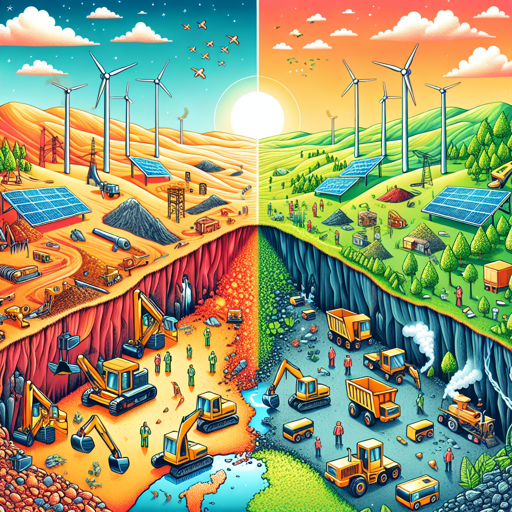
How Mining Impacts the Environment: Challenges and Solutions
Mining is an ancient human endeavor—responsible for the gleaming gemstones in jewelry, the metals in our smartphones, and the minerals that power modern society. Yet, as we dig deeper for Earth’s treasures, we must also reckon with mining’s profound impact on our planet. This article delves into how mining shapes the environment, explores the challenges faced by communities and ecosystems, and highlights innovative solutions for a more sustainable future.
Table of Contents
- Introduction
- Mining Activities and Environmental Impact
- Key Environmental Challenges
- Case Studies: Mining Around the World
- A Comparative Table: Conventional vs. Sustainable Mining
- Sustainable Solutions and Industry Innovations
- Quote: The Call for Responsible Mining
- Conclusion
- Further Reading
Introduction
From the dazzling brilliance of diamonds to the copper wiring that powers our homes, mining has played a pivotal role in shaping civilization. But beneath the surface—often quite literally—lies a complex story of environmental transformation.
For geology enthusiasts, earth science educators, or anyone captivated by the mineral world, understanding the environmental footprint of mining is crucial. The challenge is not to halt mining altogether, but to balance our mineral needs with environmental stewardship.
Did you know? According to the World Bank, demand for minerals could increase by nearly 500% by 2050 due to the clean energy transition.
As we embark on this exploration, let us examine mining’s environmental impacts and the innovative paths toward sustainability.
Mining Activities and Environmental Impact
Mining encompasses a variety of processes—including exploration, extraction, processing, and closure—all of which leave an imprint on land, water, air, and local communities.
Types of Mining
- Surface Mining: Open-pit and strip mining remove large areas of soil and rock to access minerals.
- Underground Mining: Tunnels or shafts are dug to reach deeper ore bodies.
- Placer Mining: Minerals are extracted from alluvial deposits in riverbeds.
- In-situ Mining: Minerals are dissolved underground and pumped to the surface.
Each method brings its own set of environmental challenges.
Key Environmental Challenges
1. Land Degradation
Mining operations can strip landscapes of vegetation, disrupt soil structure, and leave behind open pits or tailings piles. This not only affects ecosystems but also alters local topography and can lead to issues like erosion and landslides.
Example: The Grasberg Mine in Indonesia—one of the world’s largest gold mines—has left significant scars on the surrounding landscape due to open-pit mining.
2. Water Pollution
Processing minerals often involves chemicals such as cyanide or mercury, which can seep into waterways. Acid mine drainage (AMD), where exposed sulfide minerals react with water and air to form sulfuric acid, is another persistent issue—acidifying streams and leaching heavy metals into aquatic environments.
Example: The abandoned Iron Mountain Mine in California continues to release acidic runoff decades after closure.
3. Air Pollution
Dust from blasting and crushing rocks can carry toxic particles into the air. Smelting operations may release sulfur dioxide (SO₂), contributing to acid rain and respiratory problems for nearby communities.
4. Biodiversity Loss
Mining often takes place in biodiverse regions—tropical rainforests, river valleys, or mountainous habitats. Habitat destruction, noise pollution, and contamination can threaten endemic species and disrupt ecological balance.
Example: Artisanal gold mining in the Amazon has led to deforestation and mercury poisoning of local wildlife.
5. Social Impacts
Beyond ecological repercussions, mining affects human populations—ranging from displacement of indigenous communities to health risks from pollution. It can also foster economic opportunities but may create dependency or inequality if not managed equitably.
Case Studies: Mining Around the World
| Country | Notable Mine | Major Impact | Environmental Challenge |
|---|---|---|---|
| Australia | Super Pit (Kalgoorlie) | Land transformation | Habitat loss |
| South Africa | Witwatersrand | Acid mine drainage | Water contamination |
| Peru | Yanacocha | Gold mining | Cyanide spills |
| China | Bayan Obo | Rare earth extraction | Radioactive waste |
| Canada | Sudbury Basin | Nickel mining | Air pollution (SO₂) |
| Brazil | Carajás | Iron ore extraction | Deforestation |
A Comparative Table: Conventional vs. Sustainable Mining
| Aspect | Conventional Mining | Sustainable Mining |
|---|---|---|
| Land Use | Large-scale disturbance | Minimized footprint, reclamation |
| Water Management | Potential contamination | Closed-loop systems |
| Energy Consumption | Fossil-fuel dependency | Renewable energy integration |
| Waste Handling | Tailings dams, open dumps | Recycling, dry stacking of tailings |
| Community Relations | Often limited engagement | Active participation, benefit-sharing |
| Biodiversity Impact | High (habitat loss) | Mitigation measures, offsets |
Sustainable Solutions and Industry Innovations
While the environmental challenges are formidable, they are not insurmountable. Governments, mining companies, researchers, and local communities are stepping up with creative solutions.
Rehabilitation and Reclamation
Modern regulations require mines to restore land post-extraction—reshaping terrain, replanting native vegetation, and creating new habitats or recreational areas.
Example: The Eden Project in Cornwall, UK transformed a former clay pit into a thriving botanical garden.
Water Management
Innovations like water recycling systems, constructed wetlands for filtration, and treatment plants help mitigate water pollution.
Case Study: In Canada’s oil sands region, companies use tailings reduction technologies to treat and recycle process water.
Green Mining Technologies
Automation, remote sensing, and machine learning optimize resource use while reducing energy consumption and waste. Electric vehicles (EVs) within mines reduce emissions.
Emerging Trend: Bioleaching uses bacteria to extract metals from ores with less environmental impact than traditional methods.
Community Engagement and Policy
Meaningful dialogue with local stakeholders ensures that mining benefits are shared equitably and social impacts minimized. International standards such as the Initiative for Responsible Mining Assurance (IRMA) promote transparency and accountability.
Quote: The Call for Responsible Mining
“Mining is a necessity for modern civilization—but it must be done in a way that respects both people and planet. Our legacy should be one of responsible stewardship.”
— Dr. Jane Willoughby, Geologist & Environmental Advocate
Conclusion
Mining will remain integral to society’s progress—from building infrastructure to powering green technologies like wind turbines and electric cars. The challenge before us is not simply to extract more—but to do so wisely, with respect for the intricate systems that sustain life on Earth.
By adopting sustainable practices, leveraging technology, engaging communities, and enforcing robust regulations, we can strike a balance between resource development and environmental preservation—a legacy worthy of future generations.
Further Reading
- World Bank: Minerals for Climate Action
- International Council on Mining & Metals (ICMM): Environment
- US EPA: Abandoned Mine Lands
Curious about specific minerals or want to learn more about sustainable mining practices? Stay tuned for upcoming articles, guides, and news on our blog!