 Mineral Matrix: An AI Journey into Earth’s Treasures
The Journey of a Diamond From Mine to Market
Discover how diamonds travel from deep within the earth to glittering jewelry stores worldwide.
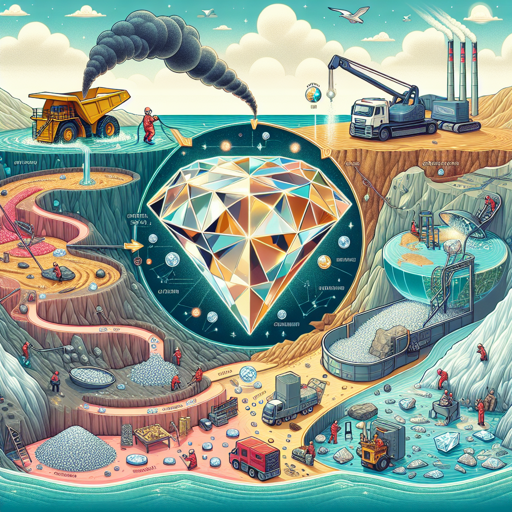
The Journey of a Diamond From Mine to Market
Introduction
Few natural wonders capture the imagination quite like diamonds. Their unmatched brilliance, enduring strength, and storied history have made them symbols of love, power, and prestige across cultures and centuries. But while many admire diamonds in glittering jewelry stores or on engagement rings, few know the incredible journey each stone undertakes—from deep within the Earth’s mantle to the showcases of high-end retailers.
This article unearths the remarkable voyage of a diamond: its formation under extreme geological conditions, its extraction from ancient rocks, the rigorous processes of sorting, cutting, and polishing, all the way to its final destination as an object of desire. Whether you are a geology enthusiast, an educator seeking to inspire students, or simply a lover of gemstones, this comprehensive guide will take you on an adventure through the science, industry, and artistry that transform rough stones into sparkling treasures.
1. The Birth of a Diamond: Origins Deep Within the Earth
Diamonds are more than just sparkling gems; they are geological marvels born under conditions few minerals can withstand. Formed at depths of 140 to 200 kilometers beneath the Earth’s surface, diamonds crystallize from pure carbon under intense heat (900–1300°C) and pressure (45–60 kilobars), conditions found only in the Earth’s mantle.
How Are Diamonds Formed?
- Carbon Source: The carbon that becomes diamond can originate from subducted oceanic plates (organic carbon) or from primordial carbon in the mantle.
- Crystallization: Over millions to billions of years, carbon atoms bond in a unique cubic structure—making diamond the hardest natural substance known.
- Transport to Surface: Volcanic eruptions bring diamonds to the surface via kimberlite or lamproite pipes—vertical conduits filled with volcanic rock.
“A diamond is a chunk of coal that did well under pressure.”
— Henry Kissinger
Table 1: Comparison of Diamond Formation vs. Other Gemstones
| Gemstone | Depth of Formation | Temperature (°C) | Pressure (kbar) | Primary Host Rock |
|---|---|---|---|---|
| Diamond | 140–200 km | 900–1300 | 45–60 | Kimberlite/Lamproite |
| Sapphire | 25–60 km | 700–1100 | 10–20 | Metamorphic Basalt |
| Emerald | 3–25 km | 400–600 | 1–3 | Schist/Pegmatite |
| Garnet | 25–90 km | 700–1200 | 15–35 | Metamorphic Rocks |
2. Mining: Extracting Diamonds From the Earth
Once brought near the surface by volcanic eruptions, diamonds await discovery within their host rocks. The process of mining them is as challenging as their creation.
Major Types of Diamond Mining
- Open-Pit Mining: Large pits are excavated where kimberlite pipes reach the surface. This method is used when deposits are relatively shallow.
- Underground Mining: When diamond-bearing pipes extend deep underground, tunnels are constructed to follow these pipes below the surface.
- Alluvial Mining: Diamonds weathered out of kimberlite deposits can be transported by rivers and streams. Miners sift through gravel beds in river channels or ancient river terraces.
- Marine Mining: Off the coasts of Namibia and South Africa, specialized ships vacuum diamond-rich sediments from the seafloor.
Key Steps in the Mining Process
- Exploration: Geologists survey for kimberlite pipes using geophysical techniques and sampling.
- Extraction: Rock is blasted or dug out and transported for processing.
- Processing: Ore is crushed and processed using density separation (since diamonds are denser than most minerals).
Environmental Considerations
Modern mining companies strive to reduce ecological impact via land reclamation, water recycling, and biodiversity preservation. However, illegal or poorly regulated mining can lead to significant landscape disturbance and pollution.
3. Sorting and Valuation: From Rough Stones to Potential Gems
Not all diamonds extracted from mines will grace a jewelry showcase. The next phase is meticulous sorting and valuation.
Sorting: The First Critical Step
Diamonds are sorted based on:
- Size: Larger stones are rarer and more valuable.
- Shape: Octahedral crystals are preferred for cutting.
- Color: While most diamonds appear white or colorless, subtle tints (yellow, brown) can affect value.
- Clarity: The presence of inclusions or blemishes lowers value.
- Quality: Only about 20% of mined diamonds are gem-quality; the rest are industrial grade.
Valuation
Expert valuers assess stones using the “Four Cs”—cut, color, clarity, and carat weight. Industrial diamonds are sorted for use as abrasives or in cutting tools.
Table 2: Rough Diamond Grading Criteria
| Criterion | Description |
|---|---|
| Size | Measured in carats; larger stones are rarer |
| Shape | Determines optimal yield during cutting |
| Color | Ranges from colorless to various shades; colorless is premium |
| Clarity | Fewer inclusions mean higher value |
| Quality | Determines suitability for gemstone or industrial use |
4. The Art and Science of Cutting and Polishing
A rough diamond’s journey into a dazzling gemstone is a blend of artistry, precision engineering, and advanced science.
Planning the Cut
Master cutters study each rough stone using imaging technology to maximize yield while enhancing brilliance. Poor planning can waste valuable material.
Cutting Techniques
- Cleaving/Sawing: Stones are split along natural planes with lasers or blades.
- Bruting: The rough stone is shaped into a round outline.
- Faceting: Precise flat surfaces (facets) are cut and polished to enhance light return—creating the signature sparkle.
Popular Diamond Cuts
The most famous cut is the round brilliant, but other shapes include princess, oval, marquise, pear, cushion, emerald, and heart. Each cut is designed to optimize brilliance and fire—the play of white light and colored flashes.
Technological Innovations
Modern cutting uses lasers, computer modeling, and automated polishing machines for consistency and accuracy—yet final inspection often relies on skilled human eyes.
5. Certification and Ethical Sourcing: Ensuring Trust
Before reaching consumers, most gem-quality diamonds undergo grading and certification by renowned gemological laboratories such as GIA (Gemological Institute of America) or IGI (International Gemological Institute).
Diamond Certificates
These detailed reports provide:
- Carat weight
- Cut grade
- Color grade
- Clarity grade
- Proportions
- Additional features (fluorescence, inscriptions)
Consumers rely on certificates for transparency and confidence in their purchase.
Ethical Concerns: Conflict Diamonds
In the late 20th century, concerns over “blood diamonds”—stones mined in war zones to finance armed conflict—led to international action.
The Kimberley Process
Launched in 2003, this certification scheme tracks diamonds from mine to market to prevent conflict stones from entering mainstream trade. Today, over 80 countries participate in this initiative.
For more on conflict-free diamond sourcing, visit Kimberley Process Certification Scheme.
6. The Diamond’s Debut: From Dealer to Display Case
Once cut, polished, and certified, diamonds enter global markets through various channels:
Wholesale Trading Hubs
Major trading centers include Antwerp (Belgium), Mumbai (India), Dubai (UAE), New York (USA), and Hong Kong (China). Here, dealers buy and sell stones at auctions or private sales.
Jewelry Manufacturing
Designers select diamonds for setting into rings, necklaces, earrings, and other fine jewelry. Craftsmanship adds further value—both in terms of artistry and precious metal settings.
Retail Showcases
Finally, diamonds arrive at jewelry stores around the world. Here they become symbols of commitment, status, or celebration—ready to begin new chapters in human stories.
Table 3: The Diamond’s Journey—A Step-by-Step Overview
| Stage | Key Activities | Main Participants |
|---|---|---|
| Formation | Crystalization under mantle conditions | Geology |
| Transport | Volcanic eruption via kimberlite pipe | Nature |
| Mining | Extraction from rocks/gravels | Miners/Mining companies |
| Sorting & Valuation | Grading by size/shape/color/clarity | Gemologists/Sorters |
| Cutting & Polishing | Shaping/bruting/faceting/polishing | Master cutters/jewelers |
| Certification | Grading/reporting | Gemological labs |
| Trading | Buying/selling at global hubs | Dealers/Wholesalers |
| Jewelry Manufacture | Setting stones into designs | Designers/Jewelers |
| Retail | Displaying/selling to consumers | Retailers |
7. The Future of Diamonds: Lab-Grown Gems & Sustainability
While natural diamonds remain highly prized, technological advances have led to lab-grown diamonds—identical in crystal structure but created above ground in weeks rather than millennia.
Lab-Grown Diamonds
Produced via High Pressure High Temperature (HPHT) or Chemical Vapor Deposition (CVD), these stones offer:
- Lower environmental impact
- Guaranteed ethical sourcing
- Comparable brilliance and durability
Sustainability Initiatives
Traditional mining companies are investing in renewable energy, land rehabilitation, and community projects to reduce their footprint and promote positive social impact.
Conclusion
The journey of a diamond from mine to market is an epic tale intertwining geology’s deepest mysteries with human ingenuity, craftsmanship, ethical responsibility, and global commerce. Every sparkling diamond seen in a jewelry store carries within it not only eons of Earth’s history but also the imprint of countless hands—from miners deep underground to artisans at the jeweler’s bench.
Understanding this journey enhances our appreciation not just for the gem’s beauty but also for the science and effort that bring it into our lives. Whether you’re a student studying mineralogy or an enthusiast marveling at gemstones’ allure, every diamond is a testament to nature’s wonders—and humanity’s quest to unearth them responsibly.
For further reading on diamond mining and geology: Geology.com: Diamond – A Gem Mineral with Properties for Industrial Use