 Mineral Matrix: An AI Journey into Earth’s Treasures
Rare Minerals Explained Secrets Beneath the Surface
Discover why rare minerals captivate geologists and collectors worldwide.
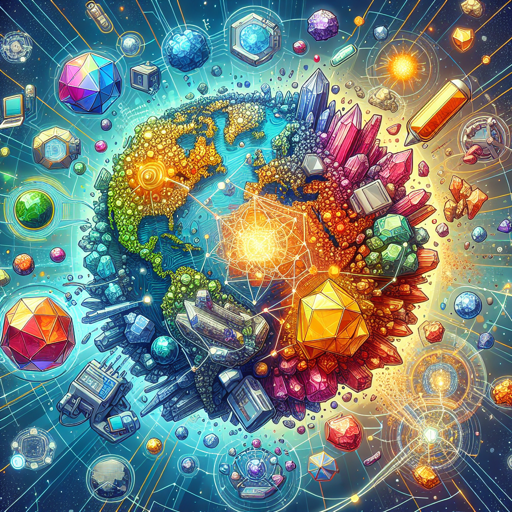
Rare Minerals Explained: Secrets Beneath the Surface
Minerals are the Earth’s hidden treasures, telling stories of our planet’s formation, evolution, and diversity. Among the thousands of minerals known to science, a select few stand out for their rarity, beauty, and extraordinary value. But what exactly makes a mineral rare? Why do collectors, scientists, and industry professionals seek them out? In this article, we’ll journey into the captivating world of rare minerals—uncovering the science behind their scarcity, their economic and cultural importance, and the allure that has fascinated humanity for centuries.
Table of Contents
- What Defines a Rare Mineral?
- Formation: The Birth of Rarity
- Famous Rare Minerals and Their Stories
- Economic and Scientific Value
- Collecting Rarities: The Human Fascination
- Preservation and Ethical Mining
- Key Comparisons: A Table of Rare Minerals
- Conclusion
What Defines a Rare Mineral?
When we label a mineral as “rare,” we refer to its scarcity in nature as well as its unique chemical or physical properties. Rarity is not just about how much of a mineral is present in the Earth’s crust; it also concerns accessibility, the conditions required for formation, and the difficulty in identifying or extracting it.
Some factors influencing rarity include:
- Unique geological conditions: Some minerals form only under specific pressure, temperature, or chemical environments.
- Geographical limitation: Certain minerals are found only in one or two locations worldwide.
- Complex chemistry: Some require unusual combinations of elements that are themselves rare.
“The rarity of a mineral is not just a matter of numbers—it is a tale of Earth’s dynamic processes, told through crystal and color.”
— Dr. Emily Carter, Geology Professor
Formation: The Birth of Rarity
Rare minerals are born from improbable circumstances. While common minerals like quartz or feldspar can be found almost everywhere, rare minerals require a perfect alignment of geological ingredients.
Unique Geological Processes
- Pegmatites: These are coarse-grained igneous rocks where some of the world’s rarest minerals form, such as tourmaline varieties and beryl (including emerald).
- Hydrothermal Veins: Circulating hot water deep underground can deposit rare minerals in cracks and fissures.
- Metamorphic Environments: High-pressure and high-temperature conditions can create rare mineral species not found elsewhere.
Elemental Rarity
Some minerals require elements that are themselves rare in Earth’s crust—think tantalum (used in electronics), scandium, or platinum-group elements.
Famous Rare Minerals and Their Stories
Rare minerals often become legends in their own right due to their striking appearance, unique properties, or fascinating histories.
Painite
Once listed as the world’s rarest mineral by the Guinness Book of World Records, painite was first discovered in Myanmar in the 1950s. For decades, only a handful of crystals were known to exist.
Red Beryl (Bixbite)
Found almost exclusively in Utah’s Wah Wah Mountains, red beryl is 1,000 times rarer than diamond and prized for its vibrant raspberry color.
Alexandrite
This remarkable mineral changes color depending on light—green in sunlight, red under incandescent light—and is found in select locations like Russia’s Ural Mountains and Brazil.
Taaffeite
Discovered accidentally by gemologist Richard Taaffe in 1945 when he purchased a mislabeled spinel, taaffeite is a striking lavender gemstone found mostly in Sri Lanka and Myanmar.
Economic and Scientific Value
The value of rare minerals extends far beyond their price tags. Their scarcity makes them crucial for scientific research and essential for modern technologies.
Industrial Applications
- High-tech Electronics: Metals like tantalum and indium (from rare minerals) are vital for smartphones, computers, and solar panels.
- Aerospace and Defense: Rare earth minerals power everything from jet engines to military hardware.
- Medical Devices: Some rare elements are vital components in imaging equipment and life-saving technologies.
Scientific Significance
Rare minerals can reveal secrets about Earth’s history—helping geologists decode ancient geological environments or track planetary processes on other worlds.
Collecting Rarities: The Human Fascination
Collectors have long been drawn to rare minerals for their beauty, mystery, and prestige. Museums display dazzling specimens; private collectors compete for ownership; indigenous cultures attribute spiritual significance to certain stones.
The Collector’s Mindset
Owning a specimen of a mineral found only once or twice in history is like having a piece of the Earth’s biography—a tangible connection to natural history.
Museums and Education
Institutions like the Smithsonian National Museum of Natural History or The Natural History Museum in London feature rare minerals as star attractions, inspiring curiosity in geology enthusiasts of all ages.
Preservation and Ethical Mining
The pursuit of rare minerals can come at an environmental or human cost. Unregulated mining may harm ecosystems, exploit labor, or even fund conflicts.
Best Practices
- Ethical sourcing: Ensures fair wages and safe working conditions.
- Sustainable mining: Reduces environmental damage through modern technology.
- Legislation: International agreements (like the Kimberley Process for diamonds) aim to prevent illegal exploitation.
For more on ethical sourcing in mineral collecting, see The Gemological Institute of America’s guidelines.
Key Comparisons: A Table of Rare Minerals
Below is a comparison table of some of the world’s rarest minerals:
| Mineral | Primary Location(s) | Color(s) | Notable Uses | Estimated Rarity |
|---|---|---|---|---|
| Painite | Myanmar | Brown-red | Gemstone | <1000 known crystals |
| Red Beryl | Utah (USA) | Raspberry red | Gemstone | 1 crystal per 150,000 diamonds |
| Taaffeite | Sri Lanka, Myanmar | Lavender | Jewelry | Fewer than 50 faceted gems |
| Alexandrite | Russia, Brazil | Green/red (change) | Gemstone | Highly limited deposits |
| Grandidierite | Madagascar | Blue-green | Collector’s stone | Extremely rare |
| Musgravite | Australia, Greenland | Greyish-green | Gemstone | Amongst the rarest gems |
Conclusion
Rare minerals are more than geological curiosities—they are windows into Earth’s hidden processes, treasures for collectors, cornerstones for technology, and reminders of our responsibility to steward natural resources wisely. By understanding what makes certain minerals so rare and valuable, we not only deepen our appreciation of geology but also recognize the interconnectedness between science, industry, culture, and conservation.
Whether you’re holding a specimen in your hand or simply admiring one behind glass, remember that each rare mineral is a story billions of years in the making—a testament to our planet’s ongoing evolution.
Further Reading:
For an even deeper dive into the science and significance of rare minerals, explore Mindat.org’s Rare Mineral List, one of the most comprehensive mineralogical resources online.