 Mineral Matrix: An AI Journey into Earth’s Treasures
Gemstones in Myth and Legend Across Cultures
Explore the fascinating myths, legends, and folklore woven around famous gemstones throughout history.
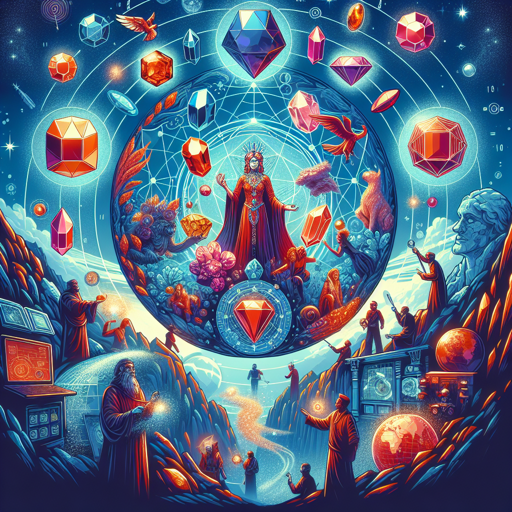
Gems in Mythology and Folklore: Stories That Shaped Civilizations
From the shimmering depths of the earth emerge gems that have kindled the imagination of humankind for millennia. These jewels are not mere ornaments; they sparkle with stories—tales spun of gods and mortals, power and peril, fate and fortune. Across continents and centuries, gemstones have been revered, feared, and woven into the rich tapestry of mythology and folklore. Whether believed to bestow immortality or doom entire dynasties, these minerals have shaped cultures as surely as tectonic forces shape the earth itself.
In this article, we journey into the fascinating intersection of geology and storytelling. We uncover legendary gemstones, their mythic origins, and the enduring tales that surround them—a treasure trove for geology enthusiasts, educators, students, and all who marvel at the wonders beneath our feet.
The Power of Precious Stones in Ancient Belief
Long before science classified gems by crystal structure and chemical composition, civilizations ascribed profound meanings to these sparkling stones. Each gem was not only a marvel of nature but a vessel of supernatural power—capable of healing, protecting, or even cursing its owner.
The Language of Gems
Ancient texts abound with references to mystical stones. In the Epic of Gilgamesh, lapis lazuli represents divine authority. The Bible describes the High Priest’s breastplate, set with twelve stones for the tribes of Israel—each believed to possess spiritual significance. In India, the Navaratna (Nine Gems) are said to balance cosmic forces and bring harmony.
Legendary Gemstones: Fact, Fiction, and Enchantment
Let’s explore some of history’s most fabled gems—their origins shrouded in myth and their stories echoing across time.
1. The Hope Diamond: Curse or Coincidence?
Perhaps no gem is as infamous as the Hope Diamond, a 45.52-carat blue diamond with a storied past. Believed to have been plucked from a Hindu temple’s idol, legend claims it was cursed to bring misfortune to its owners. Its journey—from Indian royalty to French kings, English collectors, and American heiresses—has been marked by tales of tragedy and mystery.
“It is not the stone that is cursed, but our desire for it.”
—Anonymous French proverb
Yet modern historians suggest many tales are exaggerations or inventions by jewelers to increase allure. Nonetheless, the Hope Diamond remains a symbol of fate’s fickle hand.
2. The Koh-i-Noor: Jewel of Empires
The Koh-i-Noor, meaning “Mountain of Light” in Persian, is a 105.6-carat diamond with a legacy entwined with conquest and power. Folklore says it brings good luck to women but misfortune to men—perhaps reflecting its tumultuous passage through Mughal emperors, Persian shahs, Sikh maharajas, and British royalty.
Its legend is as dazzling as its facets:
- Some Indian texts claim it was once the Syamantaka gem from Hindu mythology.
- Persian poets wrote that whoever possessed the Koh-i-Noor ruled the world.
- Queen Victoria was advised never to wear it directly.
3. The Black Prince’s Ruby: A Stone of Blood
Nestled in the British Imperial State Crown is the so-called Black Prince’s Ruby—in fact, a large red spinel. Its story is steeped in battle and betrayal:
- Gifted to Edward, the Black Prince of Wales, in 1367 after a bloody victory.
- Allegedly worn on King Henry V’s helmet at Agincourt.
- Supposedly passed down through generations as a talisman against harm.
4. Jade: The Stone of Heaven
In China and Mesoamerica, jade was revered above gold or diamonds. The Chinese believed jade embodied virtue, immortality, and a link to the celestial realms. Emperors were buried with jade suits; Confucius praised its purity; myth spoke of jade dragons guarding paradise gates.
Mesoamerican peoples carved jade into masks and deities, believing it granted eternal life.
5. The Pearl: Tears of the Gods
Unlike mined gemstones, pearls are born from living creatures—a fact that only added to their mystery. Ancient Persians imagined pearls formed from the tears of gods; Greeks believed they were Aphrodite’s tears of joy. Cleopatra famously dissolved a pearl in vinegar to win a bet with Mark Antony.
Table: Famous Gemstones and Their Myths
| Gemstone | Culture/Origin | Mythical Story/Legend | Current Location |
|---|---|---|---|
| Hope Diamond | India/France/USA | Cursed after being stolen from a temple idol | Smithsonian Institution |
| Koh-i-Noor | India/Persia/UK | Power over empires; brings misfortune to male owners | Tower of London |
| Black Prince’s Ruby | Spain/England | Talisman in battle; connected to royal bloodshed | British Crown Jewels |
| Jade | China/Mesoamerica | Symbolizes immortality; grants eternal life | Various museums/collections |
| Pearl | Persia/Greece/Egypt | Created from gods’ tears; symbol of purity | Global (natural & cultivated) |
| Star of India | Sri Lanka/USA | Said to ward off evil; celestial associations due to its star effect | American Museum of Natural History |
Gemstones as Portals to Otherworldly Realms
In many cultures, gems were thought to bridge worlds—the earthly with the divine or supernatural:
- Sapphires: Medieval clergy wore sapphires believing they attracted heavenly favor.
- Emeralds: In South America, emeralds were sacred to fertility goddesses; in Europe, they symbolized foresight.
- Amethyst: Ancient Greeks believed amethyst prevented drunkenness—its very name means “not intoxicated.”
Gemstones also played roles in rituals:
- Ancient Egyptians placed amulets of turquoise or carnelian on mummies for protection in the afterlife.
- Norse legends say Odin used runes carved on stones (possibly quartz or jasper) for magical purposes.
Gemstones in Folklore: Motifs That Endure
Certain themes echo across myths worldwide:
Gems as Gifts from Gods
Many cultures saw gems as divine gifts—rainbow fragments or crystallized starlight. Some Native American legends describe turquoise falling from the sky during storms. In Hindu mythology, diamonds are believed to be tears of gods solidified by lightning.
Curses and Catastrophes
Not all gemstone tales are benevolent. Cursed jewels appear throughout folklore—a warning against greed or hubris. The Hope Diamond’s supposed curse is echoed by stories like:
- The Delhi Purple Sapphire (actually an amethyst), said to bring disaster to all who possess it.
- The Sancy Diamond, rumored to cause ruin or death unless returned to its rightful owner.
Healing and Protection
From medieval Europe to ancient India, gemstones were worn as amulets:
- Lapis lazuli: Believed to cure melancholy and grant wisdom.
- Carnelian: Used by Egyptians for courage in battle.
- Moonstone: In Asia and Europe, said to bring love and prophetic dreams.
The Science Behind the Legends
While modern geology dispels some old beliefs, science has only deepened our wonder at gems’ origins—formed over millions of years under unimaginable heat and pressure. Their colors arise from trace elements; their clarity from eons of geological processes.
Understanding their mineralogical properties doesn’t diminish their allure; rather, it adds new layers to our appreciation—reminding us that nature itself is both artist and storyteller.
Enduring Influence: Gems in Modern Culture
The legacy of gem mythology persists:
- Literature and film continue to feature enchanted jewels (think Tolkien’s Silmarils or Rowling’s Philosopher’s Stone).
- Birthstones connect ancient beliefs with contemporary tradition.
- Jewelry designers draw inspiration from mythic motifs.
In education, exploring gemstone folklore can ignite curiosity about mineralogy, history, and cultural heritage alike.
“Stones have been known to move and trees to speak; augurs and understood relations have by magot-pies and choughs and rooks brought forth the secret’st man of blood.”
—William Shakespeare (Macbeth)
Further Reading
For those eager to delve deeper into gemstones’ cultural impact:
Conclusion: Stories Set in Stone
Gems are more than geological marvels—they are vessels for humanity’s oldest hopes and fears, tokens of love and loss, symbols of power and peril. Whether worn by kings or unearthed by miners, each stone carries centuries of myth on its glittering surface.
By exploring these legends, we reconnect with our ancestors’ awe at earth’s wonders—and enrich our own understanding of both science and story. In every facet lies a tale waiting to be told.
Explore more about minerals, mining history, and gemstones at Galena Blog.