 Mineral Matrix: An AI Journey into Earth’s Treasures
Geology Careers Unveiled Paths in Earth Sciences
Discover diverse career opportunities in geology, mining, and mineralogy for enthusiasts, students, and professionals.
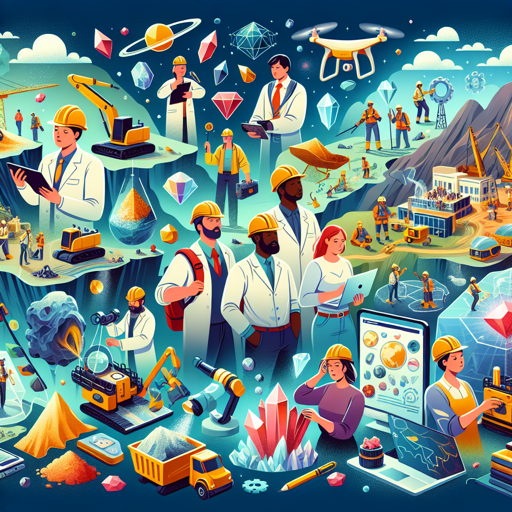
Geology Careers Unveiled: Paths in Earth Sciences
Introduction
Have you ever been mesmerized by the shimmer of a gemstone, the rugged beauty of a mountain range, or the story told by a fossilized leaf? Geology—the study of Earth’s materials, processes, and history—offers a fascinating lens through which to understand our planet. But did you know that this science also opens the door to an exciting array of career opportunities? From mineral exploration in remote wilderness to restoring landscapes after mining, geology professionals are at the forefront of scientific discovery, resource management, and environmental stewardship.
Whether you’re a student pondering your future, an educator guiding the next generation, or a geology enthusiast eager to turn passion into profession, this comprehensive guide unveils the diverse and rewarding careers available in geology and earth sciences.
The Scope of Geology: More Than Just Rocks
Geology is often stereotyped as merely studying rocks—but it’s far more dynamic. This field encompasses everything from understanding Earth’s formation to predicting natural hazards and uncovering valuable resources. Geologists work in labs, classrooms, open-pit mines, oil rigs, museums, remote field camps, and even outer space (think planetary geology).
Why Geology Matters
- Resource Discovery: Identifying and managing minerals, metals, oil, and gas that fuel economies.
- Environmental Protection: Assessing environmental impacts and remediating contaminated sites.
- Hazard Mitigation: Predicting earthquakes, volcanic eruptions, and landslides to save lives.
- Education & Outreach: Inspiring curiosity and scientific literacy about Earth.
Diverse Career Opportunities in Geology
Let’s explore some of the most exciting geology careers, their key responsibilities, work environments, and required education.
| Career Path | Typical Work Environment | Key Responsibilities | Recommended Education |
|---|---|---|---|
| Mineral Exploration Geologist | Field (remote sites), labs | Locate and evaluate deposits of minerals/metals | BSc/MSc Geology or Earth Science |
| Mining Geologist | Mines (surface/underground), offices | Analyze ore bodies, guide extraction processes | BSc/MSc Geology or Mining Engineering |
| Environmental Geologist | Field sites, consulting firms | Assess environmental impact, remediation projects | BSc/MSc Environmental Geology |
| Petroleum Geologist | Oil fields, offices | Locate oil/gas reserves, analyze subsurface data | BSc/MSc Geology or Petroleum Geoscience |
| Gemologist | Labs, jewelry industry | Identify, grade gemstones; work with dealers/designers | Diploma/Certification in Gemology |
| Hydrogeologist | Field sites, labs | Study groundwater flow, manage water resources | BSc/MSc Hydrogeology |
| Paleontologist | Universities, museums | Study fossils to interpret Earth’s history | MSc/PhD Paleontology |
| Geophysicist | Labs, field work | Analyze physical properties (seismic, magnetic data) | BSc/MSc Geophysics |
| Engineering Geologist | Construction sites, consultancies | Assess ground conditions for infrastructure projects | BSc/MSc Engineering Geology |
| Academic/Research Scientist | Universities, research centers | Teach and conduct groundbreaking research | PhD Earth Science or related |
Spotlight: Key Sectors Employing Geologists
1. Minerals & Mining Industry
The mining sector is a major employer for geologists. Roles range from exploration (finding new deposits) to mine planning and environmental management. Advanced technologies like 3D geological modeling and drones are revolutionizing this field.
In-demand skills: GIS mapping, mineralogy, resource estimation.
2. Oil & Gas
Petroleum geologists help fuel the world by locating and evaluating oil and gas reserves. They interpret seismic data to map underground reservoirs and work closely with engineers to optimize extraction.
In-demand skills: Seismic interpretation, reservoir modeling.
3. Environmental Consulting
Environmental geologists play a crucial role in assessing land for contamination (e.g., from mining or industrial sites), designing remediation plans, and managing water resources. With increasing focus on sustainability and climate change adaptation, demand for these professionals is growing.
In-demand skills: Environmental assessment, hydrogeology.
4. Academia & Research
Passionate about discovery? Academic geologists teach university courses and mentor students while conducting research on topics from plate tectonics to planetary geology. Their findings often inform public policy and industry best practices.
In-demand skills: Research methodology, science communication.
5. Gemology & Gemstone Industry
Gemologists combine scientific expertise with an appreciation for beauty. They identify and grade gems for the jewelry industry or museums—some even specialize in investigating gemstone origins for ethical sourcing.
In-demand skills: Mineral identification, spectroscopy.
Voices from the Field
“Geology is the ultimate interdisciplinary science. It combines chemistry, physics, biology—and a sense of adventure—to solve some of humanity’s greatest challenges.”
— Dr. Hazel Johnson, Exploration Geologist
Education Pathways: How to Become a Geologist
Undergraduate Degrees
A bachelor’s degree in geology or earth sciences is usually the starting point. Courses cover mineralogy, petrology, structural geology, sedimentology—and often include hands-on fieldwork.
Graduate Studies
While entry-level positions are available with a BSc degree, most specialized roles (such as research or consulting) require a master’s or PhD. Graduate programs allow for deeper specialization (e.g., volcanology, hydrogeology).
Certifications & Licenses
Many regions require professional geologists to be licensed or certified (e.g., P.Geo. in Canada, Registered Professional Geologist in the US). Gemologists often pursue credentials from organizations like the Gemological Institute of America (GIA).
Essential Skills for Success
- Fieldwork proficiency: Comfort working outdoors in diverse environments.
- Analytical thinking: Interpreting complex data sets.
- Technical expertise: GIS software, modeling tools.
- Communication: Writing reports; sharing findings with stakeholders.
- Curiosity & lifelong learning: Keeping up with new discoveries and technologies.
Emerging Trends & Future Outlook
Technology Revolutionizing Geology
Digital tools are transforming geological careers:
- Remote sensing & GIS: Analyze vast terrains without leaving the lab.
- 3D modeling: Visualize underground ore bodies or aquifers.
- Machine learning: Automate mineral exploration and data analysis.
Sustainability & Green Technologies
The demand for battery metals (lithium, cobalt) for renewable energy has created new opportunities for mineral geologists. Environmental restoration and climate resilience are increasingly central to all geoscience disciplines.
Diversity and Global Opportunities
Geologists are needed worldwide—from Arctic mineral exploration to tropical groundwater management. The field is also striving to improve diversity and inclusion through outreach and mentorship programs.
Table: Popular Geology Career Paths at a Glance
| Career | Median Salary (USD)* | Growth Outlook | Typical Employers |
|---|---|---|---|
| Exploration Geologist | $68,000 | Steady | Mining companies |
| Environmental Scientist | $76,530 | Faster than average | Consulting firms, government agencies |
| Petroleum Geologist | $96,000 | Declining (oil transition) | Oil/gas companies |
| Gemologist | $60,000 | Stable | Jewelry firms, auction houses |
| Academic Professor | $80,000+ | Competitive | Universities |
*Median salaries sourced from U.S. Bureau of Labor Statistics and industry reports as of 2023.
Resources for Aspiring Geologists
- Geological Society of America
- Mineralogical Society of America
- International Association for Engineering Geology
- Gemological Institute of America (GIA)
Conclusion
The world beneath our feet is full of stories waiting to be discovered—and so are the career paths in geology and earth sciences. Whether you’re drawn to the thrill of exploration, the challenge of solving environmental problems, or the artistry of gemstones, geology offers meaningful work with real-world impact. As our planet faces unprecedented challenges—from resource management to climate change—the demand for skilled geoscientists has never been greater.
So if you’re ready to transform curiosity into career success and make a difference on a global scale, geology might just be your perfect path.
For more information on geology careers and industry trends, visit the U.S. Bureau of Labor Statistics - Geoscientists.