 Mineral Matrix: An AI Journey into Earth’s Treasures
The Art of Fossil Hunting A Guide for Enthusiasts
Discover tips, techniques, and the science behind finding and understanding fossils.
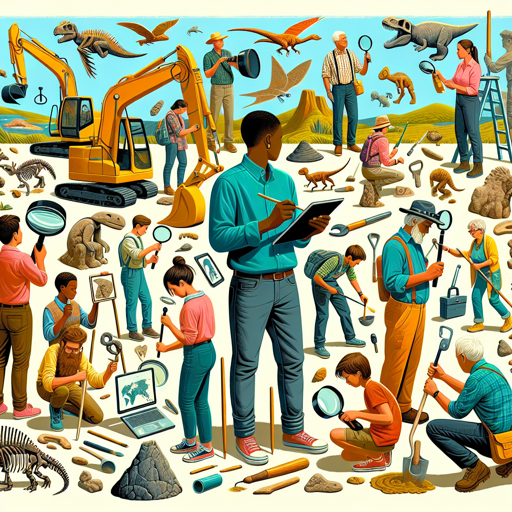
The Art of Fossil Hunting: A Guide for Enthusiasts
Fossils are time capsules, preserving secrets of life that thrived millions of years before humans walked the Earth. The art of fossil hunting merges the thrill of adventure with scientific discovery, offering opportunities for enthusiasts—whether seasoned geologists or curious beginners—to uncover pieces of our planet’s distant past.
Have you ever wondered how to find fossils in your local area? Or how paleontologists decipher Earth’s history from ancient bones and shells? In this comprehensive guide, we’ll explore the essential tips, techniques, and tools for fossil hunting, as well as the captivating stories fossils tell about our planet’s evolution.
“The past is never dead. It’s not even past.”
— William Faulkner
Table of Contents
- What Are Fossils?
- Why Hunt for Fossils?
- Where to Find Fossils: Best Locations
- Tools and Equipment for Fossil Hunting
- How to Identify Fossils
- Fossil Hunting Ethics and Safety
- Famous Fossil Sites Around the World
- Understanding Fossil Formation and History
- Resources for Aspiring Fossil Hunters
- Conclusion
What Are Fossils?
Fossils are the preserved remains, impressions, or traces of organisms that lived in the past, usually more than 10,000 years ago. They can be bones, teeth, shells, leaf imprints, footprints, or even entire organisms trapped in amber or ice.
Types of Fossils
| Type | Description | Examples |
|---|---|---|
| Body Fossils | Actual parts of organisms | Bones, teeth, shells |
| Trace Fossils | Evidence of activity | Footprints, burrows, coprolites |
| Mold Fossils | Impressions left in sediment | Leaf or shell imprints |
| Cast Fossils | Mineral-filled molds | Stone replicas |
| Amber Fossils | Organisms trapped in tree resin (amber) | Insects, plant material |
Why Hunt for Fossils?
Fossil hunting is much more than a pastime; it’s a window into deep time. Here’s why so many people, from hobbyists to professional scientists, are drawn to it:
- Discovery: Each fossil find is unique and could reveal new insights about prehistoric life.
- Education: Hands-on experience with fossils brings earth science to life for students and educators.
- Adventure: Exploring natural landscapes—quarries, riverbeds, deserts—adds excitement to learning.
- Conservation: Responsible fossil hunting helps protect and document our natural heritage.
Where to Find Fossils: Best Locations
The likelihood of finding fossils depends on local geology—sedimentary rocks are key. Here are some classic fossil hunting locations:
| Location Type | Why It’s Good for Fossils | Common Finds |
|---|---|---|
| Riverbanks & Streams | Erosion reveals buried layers | Shells, bones |
| Quarries & Road Cuts | Exposed sedimentary rock layers | Marine fossils |
| Coastal Cliffs | Continual erosion exposes fossils | Ammonites, plant fossils |
| Deserts | Ancient lake or sea beds | Dinosaur bones |
| Open Pits/Mines | Deep layers become accessible | Trilobites, fish |
Tip: Always check land ownership and local regulations before collecting fossils.
Tools and Equipment for Fossil Hunting
A successful fossil hunt starts with the right gear. Here’s a list of essentials:
| Tool | Purpose |
|---|---|
| Geology Hammer | Breaking rocks |
| Chisel | Splitting rock layers |
| Hand Lens (Loupe) | Magnifying small details |
| Brushes | Removing dirt from delicate finds |
| Field Notebook | Recording location and observations |
| Sturdy Backpack | Carrying tools and specimens |
| Protective Gear | Safety glasses and gloves |
| GPS Device/Map | Navigating to and documenting sites |
Optional Extras: Knee pads, camera, specimen bags, waterproof markers.
How to Identify Fossils
Recognizing a fossil among ordinary rocks is part skill, part art. Here are some tips:
- Texture: Fossils often have different textures than surrounding rock—look for smoothness or patterned surfaces.
- Color: Fossils may differ in color from the matrix due to mineralization.
- Shape: Look for symmetry or repeating patterns that indicate biological origin.
- Weight: Mineralized fossils may feel heavier than standard rocks.
Common Misidentifications
Not everything that looks like a fossil is one! Concretions (mineral lumps), pseudofossils (natural patterns), and mineral veins can be misleading.
Fossil Hunting Ethics and Safety
Respecting nature and following best practices is crucial:
Ethical Guidelines
- Obtain Permission: Always get landowner or authority approval.
- Leave No Trace: Minimize disturbance; refill holes and pack out waste.
- Document Finds: Record precise locations—this adds scientific value.
- Report Significant Finds: Major discoveries should be shared with museums or authorities.
Safety Tips
- Wear sturdy boots and gloves.
- Watch for unstable cliffs or loose rocks.
- Be aware of wildlife and local weather.
- Never collect alone in remote areas.
Famous Fossil Sites Around the World
Some locations have changed our understanding of ancient life. Here are a few legendary sites:
| Site Name | Country | Main Discoveries |
|---|---|---|
| Burgess Shale | Canada | Cambrian soft-bodied organisms |
| La Brea Tar Pits | USA | Ice Age mammals |
| Solnhofen Limestone | Germany | Archaeopteryx (early bird) |
| Liaoning Province | China | Feathered dinosaurs |
| Karoo Supergroup | South Africa | Permian reptiles |
| Dorset Coast | UK | Jurassic marine reptiles |
Each site demonstrates how local geology shapes what kinds of fossils are preserved.
Understanding Fossil Formation and History
How Do Fossils Form?
Fossilization is rare; most organisms decompose before they can be preserved. The main processes include:
- Permineralization: Minerals fill spaces in bone or wood tissues.
- Carbonization: Organics compress into thin carbon films.
- Impression/Mold/Cast: Organism leaves an impression; minerals later fill the gap.
- Amber Preservation: Organisms get trapped in tree resin.
What Can Fossils Tell Us?
Fossils help reconstruct:
- Ancient climates (paleoclimate indicators)
- Evolutionary changes over millions of years
- Extinct ecosystems and mass extinctions
- Plate tectonics and shifting continents
Resources for Aspiring Fossil Hunters
Ready to start your journey? Here are some valuable resources:
- FossilEra – Beginner’s Guide to Fossil Hunting
- Local geology clubs and paleontology societies
- Museums with earth science collections
- Field guides on regional fossils
- Online communities (Reddit’s r/fossilid or The Fossil Forum)
- University outreach programs
Quick Comparison Table: Rocks vs. Fossils
| Feature | Typical Rock | Typical Fossil |
|---|---|---|
| Color | Uniform | Varied/Patterned |
| Texture | Grainy/Smooth | Detailed/Sculpted |
| Hardness | Variable | Often harder (mineralized) |
| Shape | Irregular | Symmetrical/Organic |
| Origin | Geological processes | Biological remains |
Conclusion
Fossil hunting is a rewarding pursuit that bridges adventure with scientific curiosity. Whether you’re unearthing ancient shells in a creek bed or marveling at a trilobite found in a quarry, every find enriches our understanding of Earth’s deep history. By following ethical guidelines and developing your skills in identification and preservation, you’ll join generations of explorers who have gazed into the past through the lens of stone.
So grab your hammer, pack your field notebook, and step into a world where every rock might tell a story millions of years in the making.
Happy hunting!
For more in-depth guides on fossils and geology, visit FossilEra’s Field Guide.