 Mineral Matrix: An AI Journey into Earth’s Treasures
How to Start a School Mineral Club
A practical step by step guide to organizing a geology club for students
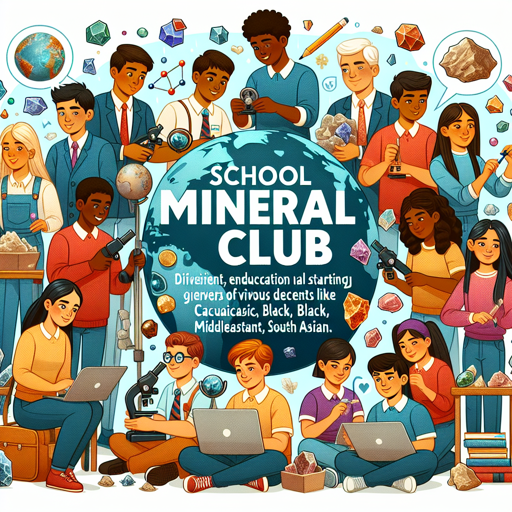
How to Start a School Mineral Club
Minerals and gemstones have fascinated humanity for millennia, from the first flint tools to dazzling jewels and essential industrial resources. For students, the world of geology offers hands-on experiences, scientific discovery, and a window into Earth’s history. But how can you foster this passion for rocks, minerals, and gems in your school? The answer: start a school mineral club!
Whether you’re an educator, student, or parent, establishing a mineral club can spark curiosity, build community, and provide countless educational opportunities. This comprehensive guide will walk you through every step of organizing a successful school mineral club—from the initial idea to your first field trip.
Why Start a Mineral Club?
Before diving into logistics, let’s explore why mineral clubs are so valuable:
- Hands-On Learning: Geology is best experienced directly. Clubs offer tactile exploration of real specimens.
- Interdisciplinary Connections: Minerals bridge chemistry, physics, biology, history, and art.
- Critical Thinking: Identifying minerals and understanding their origins fosters observation and problem-solving skills.
- Community Building: Clubs connect students with shared interests and promote collaboration.
- Career Exploration: Early exposure to earth sciences can inspire future geologists, engineers, or gemologists.
“The real voyage of discovery consists not in seeking new landscapes, but in having new eyes.”
— Marcel Proust
Step 1: Gather Interest and Support
Identify Your Audience
Determine who is most likely to join. Is it elementary students enchanted by crystals? High schoolers preparing for science competitions? Knowing your audience will shape your club’s activities.
Recruit Allies
A successful club starts with a core group of enthusiastic people:
- Faculty Sponsor: Secure a teacher or staff member willing to guide and supervise meetings.
- Student Leaders: Gather 2–5 interested students to help organize and spread the word.
- Parent Volunteers: If possible, recruit parents to assist with logistics or field trips.
Gauge Interest
- Distribute a simple survey or hold an informational meeting.
- Use posters, school announcements, or social media to reach potential members.
Sample Survey Questions
| Question | Options |
|---|---|
| Which topics interest you most? | Minerals, Gems, Mining, Fossils |
| What days/times work best for meetings? | After school, Lunch, Weekends |
| Would you be interested in field trips? | Yes/No |
| Do you own any rock or mineral specimens? | Yes/No |
Step 2: Establish Club Structure
Define the Mission and Goals
Draft a mission statement. Examples:
- To explore the science and beauty of minerals through hands-on activities, field trips, and guest speakers.
- To foster curiosity about geology and promote environmental stewardship.
Draft Club Bylaws
These don’t have to be formal but should outline:
- Membership eligibility (all grades? specific ages?)
- Meeting frequency
- Officer roles (President, Vice President, Secretary)
- Decision-making processes
Register with School Administration
Most schools require clubs to be registered. Submit:
- The faculty sponsor’s name
- List of founding members
- Mission statement
- Proposed meeting schedule
Step 3: Plan Engaging Activities
A vibrant mineral club thrives on diverse, interactive programming. Here are some ideas:
Hands-On Activities
| Activity | Description | Supplies Needed |
|---|---|---|
| Mineral Identification | Examine samples using guides and tools | Hand lenses, field guides, samples |
| Crystal Growing | Grow crystals from salt or sugar solutions | Salt/sugar, jars, water |
| Gem Faceting Demo | Watch or try basic stone cutting | Faceting machine (optional) |
| Rock Tumbling | Polish rough stones over several weeks | Rock tumbler, rough rocks |
| Hardness Testing | Use Mohs Hardness Kit on samples | Mohs kit or household items |
Guest Speakers
Invite local geologists, gemologists, or mining professionals. Universities or museums may lend expert speakers.
Field Trips
Organize visits to:
- Local mines or quarries
- Natural history museums
- Gem & mineral shows
- State/national parks with unique geology
Club Projects
- Organize a school-wide rock swap
- Create a display case for mineral specimens
- Build a mineral collection for the science classroom
Step 4: Build Your First Mineral Collection
A club mineral collection serves both as a learning tool and point of pride. Here’s how to start:
Sources for Specimens
- Donations: Ask members to bring any rocks/minerals they own.
- Purchase Starter Kits: Many science suppliers offer affordable educational kits.
- Field Collecting: Visit local sites where collecting is permitted (always check regulations!).
- Trades: Connect with other clubs or local rock shops for specimen exchanges.
Organizing Your Collection
Create labels for each specimen including:
| Label Field | Example |
|---|---|
| Name | Quartz |
| Locality | Hot Springs, Arkansas |
| Date Acquired | March 2024 |
| Donor/Collector | Jane Doe |
Display specimens in trays or cases—securely and away from direct sunlight.
Step 5: Promote Your Club
Visibility attracts members and builds excitement.
Outreach Strategies
- Posters & Flyers: Feature colorful photos of minerals.
- Morning Announcements: Share fun factoids about rocks/minerals.
- School Website/Social Media: Post meeting recaps and photos (with permission).
- School Newsletters: Highlight club activities.
Annual Events
Host an annual “Mineral Day” with displays, games, and guest speakers open to the entire school community.
Step 6: Maintain Engagement & Sustainability
A great club is an active one! Here’s how to keep momentum:
Rotate Activities
Mix up meetings with labs, lectures, games, and crafts.
Empower Members
Encourage students to lead meetings or present their favorite rocks.
Evaluate Regularly
At year’s end, gather feedback:
| What’s Working Well? | What Can We Improve? |
|---|---|
| Fun hands-on activities | More field trips |
| Knowledgeable guest speakers | Earlier meeting times |
| Diverse specimens | More student-led presentations |
Use feedback to shape next year’s programming.
Table: Sample Annual Activity Plan
Here’s an example schedule for a school year:
| Month | Activity/Event | Purpose |
|---|---|---|
| September | Kickoff Meeting & Icebreakers | Welcome new members |
| October | Mineral Identification Workshop | Hands-on learning |
| November | Guest Speaker: Local Geologist | Career exploration |
| December | Crystal Growing Science Lab | Fun experiment |
| January | Field Trip: Natural History Museum | Real-world connection |
| February | Rock Tumbling Project Begins | Long-term project |
| March | Gemstone Art & Jewelry Making | Creative application |
| April | Rock Swap & Specimen Trading | Community building |
| May | End-of-Year Showcase | Celebrate achievements |
Additional Resources & Inspiration
For more information about starting clubs and engaging students in the earth sciences, check out the American Geosciences Institute’s toolkit for educators.
Other useful links:
- Mindat.org – The Mineral Database
- Geological Society of America – Education Resources
- Rocks & Minerals for Kids – Smithsonian
Conclusion
Starting a school mineral club is more than just collecting pretty rocks—it’s about nurturing curiosity, fostering scientific literacy, and building lifelong connections with Earth’s wonders. With thoughtful planning and a dash of creativity, your mineral club can become a cornerstone of your school’s science culture.
So gather your hand lens, rally your fellow rockhounds, and let the adventure begin. The world beneath our feet awaits exploration!
“In every walk with nature one receives far more than he seeks.”
— John Muir