 Mineral Matrix: An AI Journey into Earth’s Treasures
Emerging Trends Transforming the World of Gemology
Exploring the latest advancements and discoveries in gemology that are shaping the future of this fascinating field.
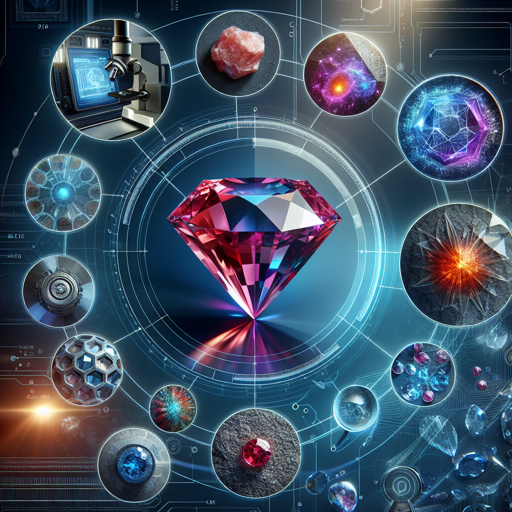
Emerging Trends Transforming the World of Gemology
Gemology, the scientific study of gemstones, is a field that has been constantly evolving since its inception. This article will take you on a journey of the latest trends and advancements that are shaping the future of this fascinating field.
Technological Advancements in Gemstone Analysis
In recent years, gemology has witnessed a wave of technological advancements that have revolutionized gemstone analysis. High-tech instruments like Raman spectroscopy and photoluminescence spectroscopy are being increasingly used for identifying, grading, and valuing gemstones.
Raman spectroscopy, for instance, enables gemologists to analyze the vibrational modes of a gemstone at a molecular level. This allows them to discern the gemstone’s chemical composition and crystal structure, providing valuable information about its origin and treatment history.
Photoluminescence spectroscopy, on the other hand, is a highly sensitive technique that can detect trace elements in gemstones. These trace elements often hold clues about a gemstone’s geographic origin, and can even help identify treatments that may have been applied to enhance its appearance.
“Science and technology revolutionize our lives, but memory, tradition, and myth frame our response.” - Arthur M. Schlesinger
| Technology | Use In Gemology |
|---|---|
| Raman Spectroscopy | Analyzing the vibrational modes of a gemstone |
| Photoluminescence Spectroscopy | Detecting trace elements in gemstones |
New Discoveries in Gemstones
Another exciting trend in gemology is the discovery of new gemstones. In the last decade alone, several new gemstones have been discovered, adding to the already diverse world of gemstones. Some recent discoveries include:
-
Carmeltazite: Discovered in the Carmel Mountains of Israel, Carmeltazite is a rare and precious gemstone. Its unique composition of titanium, aluminum, and zirconium makes it one of the hardest minerals on earth.
-
Putnisite: Found in Western Australia, Putnisite is a striking purple crystal. What makes it unique is its unusual combination of strontium, calcium, chromium, sulphur, carbon, oxygen, and hydrogen.
-
Blue Garnet: While garnets are commonly known for their rich red color, a new variety of garnet that changes color from greenish-blue in daylight to purplish-red under incandescent light was discovered in Madagascar. This color-changing gemstone, known as Blue Garnet, is a rare and valuable find.
External Resource
For further reading on the latest trends in gemology, check out this article by Gemological Institute of America (GIA).
Conclusion
The field of gemology is more exciting and dynamic than ever, thanks to the rapid advancements in technology and the discovery of new gemstones. These trends not only enhance our understanding of gemstones but also open up new possibilities for their use in jewelry and industrial applications. As we continue to explore the depths of the earth, who knows what other sparkling treasures we might uncover?