 Mineral Matrix: An AI Journey into Earth’s Treasures
Minerals Powering Modern Technology Unveiled
Discover how essential minerals drive our devices and shape the digital age.
Introduction
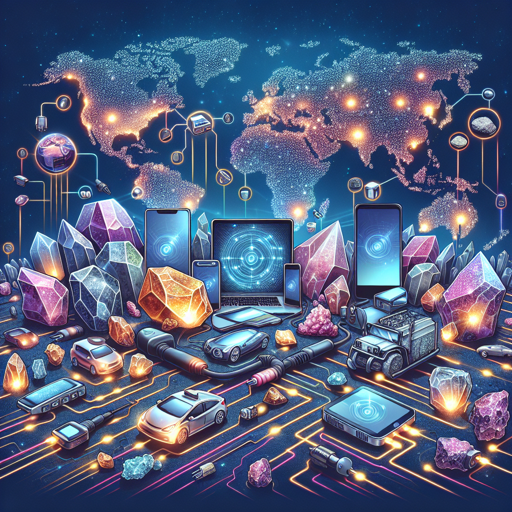
Imagine a world without smartphones, laptops, or even the simple LED lightbulb. It’s nearly impossible, right? Modern technology has become so deeply woven into our daily lives that we often forget the hidden heroes powering our digital age: minerals. From the copper in your phone’s wiring to the rare earth elements in your earbuds, minerals are the backbone of nearly every electronic device you use.
In this article, we’ll journey deep beneath the earth’s surface to explore how minerals are at the heart of innovation, comfort, and connectivity. Whether you’re a geology enthusiast, educator, student, or simply curious about what makes your favorite gadgets tick, this guide will illuminate the vital—and fascinating—role minerals play in shaping our modern world.
The Building Blocks of Technology: Minerals at Work
What Are Minerals and Why Do They Matter?
Minerals are naturally occurring inorganic solids with a specific chemical composition and crystalline structure. They are the raw materials that form rocks and ores; more importantly for us, they’re essential for manufacturing electronic devices.
Without minerals like silicon, copper, gold, tantalum, and the infamous rare earth elements, the sleek technology we rely on every day simply wouldn’t exist. Each mineral brings unique properties—conductivity, durability, magnetism—that are critical in electronics manufacturing.
From Mine to Microchip: How Minerals Enter Our Devices
The journey of a mineral from deep underground to your palm-sized smartphone is complex:
- Exploration: Geologists locate mineral deposits using geological surveys and advanced imaging.
- Extraction: Mining operations retrieve ores containing valuable minerals.
- Processing: Ores are refined to isolate target minerals.
- Manufacturing: Refined minerals are transformed into components (wires, chips, screens).
- Assembly: Components are built into finished products like laptops and smartphones.
This chain highlights our dependence on geology, mining, and metallurgy for technological progress.
Essential Minerals in Everyday Electronics
Let’s dive into some key minerals that make modern gadgets possible:
| Mineral | Main Uses in Electronics | Key Properties | Source Countries |
|---|---|---|---|
| Silicon | Semiconductors (chips) | Abundant, excellent conductor | China, USA |
| Copper | Wiring, connectors | High electrical conductivity | Chile, Peru |
| Gold | Contacts, connectors | Does not corrode, highly conductive | China, Australia |
| Tantalum | Capacitors (phones) | Stores electrical charge efficiently | DRC, Rwanda |
| Lithium | Rechargeable batteries | Lightest metal, high energy density | Australia, Chile |
| Tin | Solder for circuits | Low melting point | China, Indonesia |
| Rare Earths | Magnets, displays | Strong magnets, colorful phosphors | China, USA |
| Cobalt | Lithium-ion batteries | Stable at high temperatures | DRC, Russia |
| Indium | Touchscreens (ITO) | Transparent conductor | China, South Korea |
These minerals are commonly referred to as “critical” or “strategic” due to their essential roles and potential supply risks.
Silicon: The Heart of the Digital Revolution
No mineral is more synonymous with modern technology than silicon. As the foundational material for semiconductors and microchips, silicon enables everything from basic calculators to supercomputers. Extracted mainly from sand or quartz (SiO₂), silicon wafers are etched with billions of transistors—the “brains” behind every device.
Copper: The Lifeline of Connectivity
Copper is prized for its excellent ability to conduct electricity and resist corrosion. It forms the veins—literally—of electronic devices, connecting components through wires and circuit boards. Most of the world’s copper comes from massive open-pit mines in Chile and Peru.
Gold: More Than Just a Pretty Face
Gold’s resistance to tarnish and superb conductivity make it ideal for high-performance connectors and contacts inside devices. While only a tiny amount is used per gadget, its value makes recycling electronics (urban mining) economically attractive.
Tantalum and Tin: The Unsung Heroes
Tantalum is vital for capacitors—tiny components that store and release energy quickly in smartphones. Tin is used in solder to hold electronic parts together. Both are often sourced from regions impacted by conflict (notably Central Africa), raising ethical questions about mining practices.
Lithium & Cobalt: Powering Mobility
The rise of smartphones and electric vehicles owes much to lithium-ion batteries—powered by lithium (from brines or hard rock) and cobalt (mainly from the Democratic Republic of the Congo). These minerals allow batteries to be smaller, lighter, and longer-lasting.
Rare Earth Elements: The Secret Ingredient
Rare earths like neodymium, dysprosium, and europium are used in powerful magnets for speakers and vibration motors as well as colorful displays. Despite their name, rare earths aren’t rare in nature but are difficult to extract economically.
Quote
“If you can’t grow it, you have to mine it.”
— American Mining Association
The Global Supply Chain: From Ore to Innovation
Where Are Our Tech Minerals Sourced?
The sourcing of critical minerals is a global endeavor influenced by geology, politics, economics, and ethics. For example:
- China dominates the supply of rare earth elements and refines most of the world’s indium.
- The Democratic Republic of the Congo (DRC) is a major source of cobalt and tantalum but faces scrutiny over mining conditions.
- Chile leads copper production; Australia is top for lithium.
This global web creates both opportunities and vulnerabilities—any disruption (political unrest, trade disputes) can impact prices or availability.
Table: Major Producers of Tech-Critical Minerals
| Mineral | Top Producer(s) |
|---|---|
| Lithium | Australia, Chile |
| Cobalt | DRC |
| Rare Earths | China |
| Tin | China, Indonesia |
| Tantalum | Rwanda, DRC |
| Gold | China, Australia |
| Copper | Chile |
| Indium | China |
| Silicon | China, USA |
Ethical Mining and Sustainability Challenges
Our appetite for electronics drives demand for these minerals—but at what cost? Mining can lead to deforestation, pollution, water shortages, and human rights abuses. The concept of “conflict minerals” spotlights tantalum, tin, tungsten, and gold sourced from regions where proceeds may fund conflict or exploit workers.
Efforts toward ethical sourcing include:
- Certification schemes (e.g., Conflict-Free Sourcing Initiative)
- Corporate responsibility policies
- Recycling programs (“urban mining”)
Consumers and manufacturers alike are increasingly aware of the environmental and social impacts behind their devices.
Minerals in Cutting-Edge Technology
Smartphones
A typical smartphone contains over 30 different minerals! Here’s what you’ll find beneath the screen:
- Screen: Silica (glass), indium (touch sensors), rare earths (color)
- Processor: Silicon
- Battery: Lithium, cobalt
- Wiring: Copper
- Vibration Motor: Neodymium (magnet)
- Solder: Tin
- Contacts: Gold
Green Technologies
Minerals aren’t just for gadgets; they’re vital for green tech too:
- Wind turbines: Neodymium-based magnets
- Solar panels: Silicon wafers
- Electric vehicles: Lithium-ion batteries
Sustainable energy solutions require robust mineral supply chains.
Medical Devices
Modern medicine relies on minerals for imaging equipment (tungsten in X-rays), implants (titanium), pacemakers (lithium batteries), and diagnostic sensors.
Aerospace & Defense
Aircrafts use titanium (strong yet light), while satellites depend on gold-coated connectors for reliability in space’s harsh conditions.
Visual Element: Table of Device-Mineral Connections
| Device | Key Minerals Used | Function |
|---|---|---|
| Smartphone | Silicon, copper, lithium, gold | Processing power, connectivity |
| Laptop | Silicon, cobalt, tin, rare earths | Processing, battery life |
| LED TV | Indium, rare earths | Vibrant display colors |
| Electric Vehicle | Lithium, cobalt | Lightweight rechargeable batteries |
| Wind Turbine | Neodymium | Strong permanent magnets |
| Pacemaker | Lithium | Long-lasting power source |
| MRI Scanner | Rare earths | Strong magnetic fields |
The Future: Innovation vs. Scarcity
As technology evolves—think 5G networks, quantum computing, electric vehicles—the demand for critical minerals will surge. Yet many of these resources are finite or concentrated in geopolitically sensitive regions.
Challenges Ahead
- Resource depletion: High demand may exhaust easily accessible deposits.
- Recycling limits: Not all minerals are economically recoverable from electronic waste.
- Supply chain risks: Global events can disrupt sourcing.
- Substitution research: Scientists seek alternatives for scarce or problematic minerals.
Innovations on the Horizon
- Improved recycling methods (“urban mining”)
- AI-driven exploration for new mineral deposits
- Eco-friendly mining technologies
- Synthetic alternatives for some critical minerals
Reference
For further reading on minerals critical to modern technology and their global supply chains:
USGS Critical Minerals Review – United States Geological Survey
Conclusion
From powering your smartphone’s processor to enabling green technologies like wind turbines and solar panels, minerals are quite literally at the core of our modern lives. Their unique properties—conductivity, strength, magnetism—make them indispensable in driving innovation across industries.
Yet our reliance on these resources comes with complex challenges: environmental impact, ethical dilemmas in sourcing, geopolitical risk, and looming questions about sustainability. As geology enthusiasts and responsible citizens alike, understanding the mineral origins of our tech not only deepens appreciation but also informs smarter decisions—whether you’re recycling an old phone or advocating for responsible mining.
The next time you swipe your screen or flip a switch, remember the journey that began deep within the Earth’s crust. Minerals don’t just power devices—they power progress itself.
Interested in more articles about geology and technology? Bookmark our blog for regular updates on the ever-evolving relationship between Earth’s treasures and human innovation!