 Mineral Matrix: An AI Journey into Earth’s Treasures
Mining Careers for Young Explorers
Explore exciting geology and mining careers for curious minds
Introduction
Do you find yourself drawn to the glittering mystery of gemstones, the secrets buried deep within the earth, or the science behind the colorful stones in your collection? If you’re a young explorer fascinated by minerals, mining, and the world of geology, you’re not alone! The mining industry and geosciences offer a treasure trove of career opportunities for those with curiosity, a sense of adventure, and a desire to shape the future of our planet.
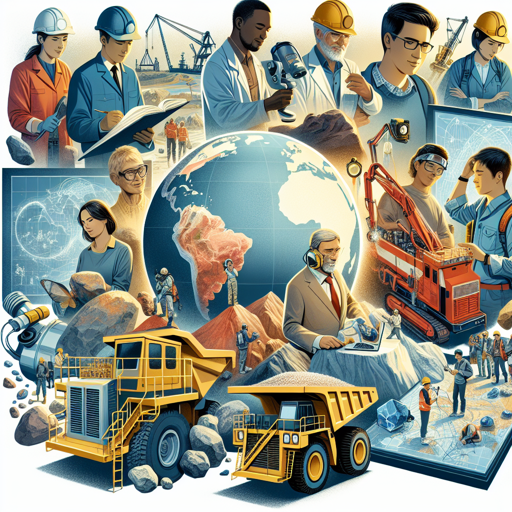
Whether you dream of discovering rare minerals, exploring underground caves, working with cutting-edge technology, or protecting the environment, the fields of geology and mining offer something for everyone. In this article, we’ll journey through some of the most exciting career paths available for young explorers like you, demystify what it’s like to work in these industries, and provide guidance on how to start your own adventure in earth sciences.
The World Beneath Our Feet: Why Mining and Geology Matter
From the copper in your smartphone to the gold in jewelry and the lithium powering electric cars, minerals are essential to modern life. The mining and geology sectors are responsible for discovering, extracting, and understanding these materials. But it’s about more than just digging—modern careers in this field are at the forefront of technology, sustainability, and global development.
Key Reasons Mining & Geology Careers Matter:
- Sustainability: Geologists and engineers develop new ways to mine responsibly and reclaim land.
- Innovation: Advances in remote sensing, AI, and robotics are transforming mineral exploration.
- Economic Impact: Minerals drive industries from electronics to construction.
- Environmental Stewardship: Experts assess impacts and design solutions for a greener future.
Career Paths in Geology & Mining
The mining and geology industries offer a wide variety of career options—some adventurous and outdoorsy, others analytical or high-tech. Let’s dig into some exciting roles:
1. Exploration Geologist
What They Do
Exploration geologists are modern-day treasure hunters. Using maps, satellite data, geophysical tools, and fieldwork, they search for new mineral deposits around the world.
Skills & Traits
- Curiosity and problem-solving
- Willingness to travel and work in remote locations
- Knowledge of rocks, minerals, and earth processes
Typical Duties
- Collecting rock and soil samples
- Analyzing geological data
- Mapping mineral resources
2. Mining Engineer
What They Do
Mining engineers design and oversee how minerals are extracted safely and efficiently from the earth. They use advanced software to plan mines, manage teams, and optimize processes.
Skills & Traits
- Strong math and science background
- Creativity in solving engineering challenges
- Leadership abilities
Typical Duties
- Designing open-pit or underground mines
- Selecting equipment and technologies
- Ensuring safety standards
3. Environmental Scientist
What They Do
Environmental scientists protect natural ecosystems affected by mining. They assess environmental impact, help restore land after mining, and ensure regulations are followed.
Skills & Traits
- Passion for environmental protection
- Analytical skills
- Communication abilities
Typical Duties
- Conducting impact assessments
- Monitoring air and water quality
- Developing reclamation plans
4. Gemologist
What They Do
Gemologists study, grade, and identify gemstones. They work in labs, jewelry companies, museums, or even as field experts searching for precious stones.
Skills & Traits
- Keen eye for detail
- Scientific knowledge of minerals
- Interest in art and beauty
Typical Duties
- Examining gems under microscopes
- Grading quality and value
- Educating others about gemstones
5. Mining Technician or Technologist
What They Do
Technicians support engineers and geologists by operating equipment, collecting data, or managing samples—often using the latest digital tools.
Skills & Traits
- Technical aptitude
- Comfort with computers and machinery
- Attention to detail
Typical Duties
- Sampling ores and minerals
- Operating surveying tools or drones
- Assisting with laboratory analyses
6. Data Scientist / GIS Specialist
What They Do
Data scientists and GIS (Geographic Information Systems) specialists analyze vast amounts of earth data to locate resources or predict geological events.
Skills & Traits
- Computer programming (Python, R)
- Spatial thinking
- Enjoyment of puzzles and patterns
Typical Duties
- Creating digital maps of mineral deposits
- Modeling ore bodies in 3D software
- Using AI to interpret satellite imagery
7. Mining Safety Officer
What They Do
Safety officers ensure that mining operations comply with health and safety regulations. They protect workers from hazards found underground or at surface mines.
Skills & Traits
- Strong sense of responsibility
- Attention to detail
- Good communicator
Typical Duties
- Conducting safety inspections
- Training workers on best practices
- Investigating incidents or near-misses
8. Academic Researcher or Educator
What They Do
Professors and researchers at universities or museums teach geology courses and conduct research into earth processes, mineral formation, or new mining technologies.
Skills & Traits
- Passion for teaching or discovery
- Research skills
- Desire to inspire others
Typical Duties
- Lecturing and mentoring students
- Publishing scientific papers
- Curating geological collections
Table: Comparing Key Mining & Geology Careers
| Career Path | Education Needed | Where You Work | Average Salary (USD)* | Adventure Level | Main Focus |
|---|---|---|---|---|---|
| Exploration Geologist | Bachelor’s/Master’s | Outdoors/Field Offices | $60k-$110k | High | Finding new resources |
| Mining Engineer | Bachelor’s/Master’s | Mines/Offices | $70k-$120k | Medium | Mine design/operations |
| Environmental Scientist | Bachelor’s/Master’s | Field/Labs/Offices | $50k-$90k | Medium | Environmental protection |
| Gemologist | Certificate/Bachelor’s | Labs/Jewelry Stores | $40k-$85k | Low | Gem identification |
| Technician/Technologist | Diploma/Bachelor’s | Mines/Labs | $45k-$80k | Medium | Technical support |
| Data Scientist/GIS | Bachelor’s/Master’s | Offices/Labs | $65k-$120k | Low | Data analysis |
| Safety Officer | Diploma/Bachelor’s | Mines | $50k-$90k | Medium | Worker safety |
| Academic/Educator | Master’s/PhD | Universities/Museums | $55k-$110k | Low | Teaching/research |
*Salary ranges are approximate and may vary by region/country.
How to Start Your Journey: Education & Experience Tips
1. High School Steps
- Take courses in Earth Science, Chemistry, Physics, Math, Computer Science.
- Join science clubs or mineralogy groups.
- Visit museums or attend geology workshops.
- Collect rocks/minerals to build your own collection.
2. College & Beyond
- Look for degrees in Geology, Mining Engineering, Earth Science, Environmental Science.
- Seek internships with mining companies or geological surveys.
- Attend conferences like those hosted by the Geological Society of America (GSA) or Society for Mining, Metallurgy & Exploration (SME).
- Study abroad programs can lead to fieldwork in exciting global locations!
3. Skills That Matter Most
“The most valuable resource you can mine is your own curiosity.”
— Anonymous Geologist Quote
Develop these key skills:
- Problem-solving & critical thinking
- Communication & teamwork
- Data analysis & digital literacy (GIS software, programming)
- Adaptability (fieldwork conditions can change fast!)
- Foreign languages (for international work)
Modern Trends: Technology & Sustainability in Mining Careers
The future of mining is greener—and smarter! Today’s professionals use:
Drones: For mapping terrain and monitoring environmental impacts
Remote Sensing: Using satellites to find mineral deposits
Autonomous Vehicles: Self-driving trucks in large mines
AI & Machine Learning: Analyzing geological data faster than ever
Renewable Energy: Powering mines sustainably
As a new generation enters the field, there’s a growing focus on ethical sourcing (especially for gems), community engagement, and innovative ways to reduce environmental impact.
Inspiring Real-Life Stories
From Student to Explorer:
Meet Maria Gonzalez—a recent geology graduate who joined an international exploration team looking for lithium deposits needed for electric car batteries. “Every day is different,” Maria says. “Some days I’m hiking through forests collecting samples; other days I’m modeling data on my laptop. I love knowing that my work could help build a cleaner future.”
Gemstone Detective:
Alex Tan started as a hobbyist collecting crystals before pursuing formal gemology training. Now he travels between labs in Asia grading sapphires for luxury jewelers. “It’s part science, part art,” Alex explains. “Each gem tells its own story.”
Resources for Young Explorers
Ready to dig deeper? Check out these links:
- U.S. Bureau of Labor Statistics: Mining & Geological Engineers
- Society for Mining, Metallurgy & Exploration (SME)
- Geological Society of America (GSA)
- Gemological Institute of America (GIA)
Explore local museums or university geology departments—many offer open days or youth programs!
Conclusion: Your Adventure Awaits!
The world beneath our feet is filled with mysteries waiting to be uncovered. As industries evolve with new technology and a greater focus on sustainability, there has never been a more exciting time to launch a career in mining or geology. Whether you become an explorer discovering new mineral riches, an engineer designing safer mines, an environmental scientist protecting our planet, or a gemologist revealing the hidden beauty of gemstones—the possibilities are as vast as the earth itself.
So grab your rock hammer—or your laptop—and start your journey into one of the world’s most fascinating fields. The next great discovery could be yours!
For more in-depth guides on minerals, mining news, gemstone identification tips, and educational resources for all ages—keep exploring our blog!