 Mineral Matrix: An AI Journey into Earth’s Treasures
The Life Cycle of a Mine From Discovery to Closure
Explore each stage of a mine's life, from discovery to reclamation, and its impact on society and the environment.
Introduction
Mines are more than just holes in the ground—they are dynamic engines of economic growth, scientific discovery, and sometimes, environmental debate. Their story is as old as civilization itself, with humans extracting resources from the Earth for thousands of years. But have you ever wondered what really goes into bringing a mine to life, from the first glimmer of mineral discovery to the final stages of closure and reclamation?
In this comprehensive guide, we take you on an immersive journey through the life cycle of a mine. Whether you’re a geology enthusiast fascinated by Earth’s hidden treasures, an educator seeking real-world examples for your students, or simply curious about how minerals make their way from underground veins to everyday products, this article will illuminate every step of the mining process.
The Stages of a Mine’s Life Cycle
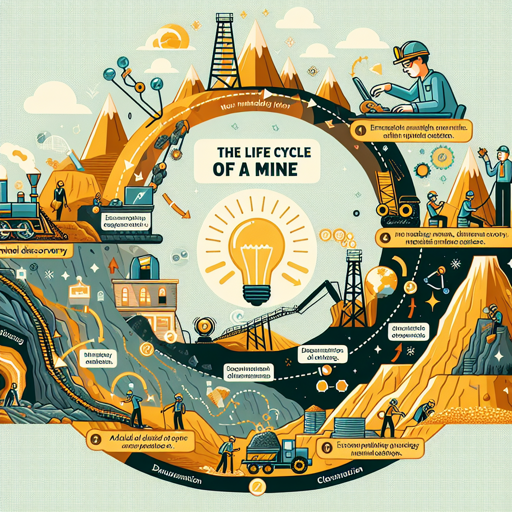
The life cycle of a mine is a complex, multi-phase process that can span decades. Each stage involves a unique blend of science, engineering, regulation, and community engagement. Let’s break down these phases:
- Mineral Exploration and Discovery
- Resource Evaluation and Feasibility Studies
- Planning and Permitting
- Development and Construction
- Operation and Production
- Closure and Reclamation
1. Mineral Exploration and Discovery
The journey begins with the search for economically viable mineral deposits. Geologists use a combination of fieldwork, remote sensing, geophysical surveys, and geochemical analysis to narrow down areas likely to contain valuable minerals.
Key Exploration Techniques
| Technique | Description | Example Use Case |
|---|---|---|
| Geological Mapping | Studying surface rocks and landforms | Locating surface mineralization |
| Geophysical Survey | Measuring magnetic, gravitational, or electrical properties | Detecting ore bodies underground |
| Geochemical Survey | Analyzing soil, water, or vegetation for trace elements | Tracing metal anomalies |
| Drilling | Extracting core samples from beneath the surface | Confirming depth and grade |
The goal is to find an orebody—a concentration of minerals that can be mined profitably. This phase is high-risk and high-reward; many exploration ventures never reach the mining stage.
“Exploration is not just about finding minerals; it’s about understanding the Earth’s story written in stone.”
— Dr. Sarah Johnson, Economic Geologist
2. Resource Evaluation and Feasibility Studies
Once a promising deposit is found, detailed studies are conducted to determine its size (tonnage), grade (concentration), geometry, and accessibility. These studies involve extensive drilling campaigns and sampling.
Steps in Evaluation
- Resource Estimation: 3D modeling of mineral distribution.
- Metallurgical Testing: Assessing how minerals can be extracted.
- Environmental Baseline Studies: Understanding local ecosystems.
- Economic Analysis: Estimating costs, expected revenues, and payback periods.
A positive feasibility study is essential for attracting investment and moving forward.
3. Planning and Permitting
Mining projects must meet stringent legal, environmental, and social requirements before breaking ground.
Key Permitting Considerations
- Environmental Impact Assessment (EIA): Predicts how mining will affect air, water, soil, flora, and fauna.
- Community Consultation: Engaging with local communities to address concerns and share benefits.
- Land Access Agreements: Securing rights from landowners or governments.
This phase can take years, especially for large or sensitive projects.
4. Development and Construction
With permits in hand and funding secured, physical site development begins. This phase includes:
- Building access roads, power lines, and water supply systems.
- Excavating open pits or constructing underground tunnels.
- Installing processing facilities to extract metals or minerals from ore.
- Implementing safety systems to protect workers.
This stage transforms theory into reality and sets the stage for production.
5. Operation and Production
Now the mine is in full swing—ore is extracted, processed, and shipped to market.
Mining Methods
| Method | Description | Ideal For |
|---|---|---|
| Open-Pit Mining | Removing surface layers to access shallow ore bodies | Large, near-surface ores |
| Underground | Tunneling deep underground to reach ore | Deep or narrow deposits |
| Placer Mining | Extracting minerals from alluvial deposits | Gold, gemstones |
Operations are guided by efficiency, worker safety, environmental management, and community relations. Throughout this phase, continuous monitoring ensures compliance with environmental regulations.
6. Closure and Reclamation
All mines must eventually close—either when the resource is exhausted or no longer profitable. Responsible closure minimizes environmental impacts and prepares the land for future use.
Closure Activities
- Dismantling facilities.
- Contouring landforms to prevent erosion.
- Water treatment to prevent contamination.
- Replanting native vegetation.
Reclamation transforms former mine sites into wildlife habitats, recreational areas, or even agricultural land.
“A mine’s true legacy is measured not only by what it extracts but by what it leaves behind.”
— International Council on Mining & Metals
Stages at a Glance: Life Cycle Comparison Table
| Phase | Duration | Main Activities | Stakeholders Involved | Key Challenges |
|---|---|---|---|---|
| Exploration & Discovery | Months–Years | Surveys, drilling | Geologists, Investors | High risk of failure |
| Evaluation & Feasibility | 1–5 Years | Sampling, economic analysis | Engineers, Economists | Data uncertainty |
| Planning & Permitting | 1–10+ Years | EIA, community engagement | Gov’t agencies, Local communities | Regulatory hurdles |
| Development & Construction | 1–4 Years | Building infrastructure | Contractors, Engineers | Technical complexity |
| Operation & Production | 5–100+ Years | Mining & processing ore | Miners, Operators | Safety & environmental management |
| Closure & Reclamation | 2–10+ Years | Site cleanup & land restoration | Environmentalists, Gov’t | Long-term monitoring |
The Social and Environmental Dimensions
Mining is more than a technical endeavor; it’s deeply intertwined with communities and ecosystems. Modern mines operate under strict guidelines to minimize habitat destruction, water pollution, and greenhouse gas emissions. Many companies go beyond compliance by investing in biodiversity offsets or supporting local education and health initiatives.
However, historical mining practices left scars—abandoned mines can leach heavy metals or create safety hazards for decades if not properly reclaimed. Today’s industry aims to avoid repeating these mistakes through rigorous closure plans and ongoing monitoring.
Modern Innovations in Mine Life Cycle Management
- Remote Sensing: Satellite data helps monitor land use changes.
- Automated Equipment: Robotics reduce risk for workers.
- Water Recycling: Advanced systems reuse water in ore processing.
- Progressive Reclamation: Restoring land while mining continues elsewhere on site.
Case Study: The Diavik Diamond Mine (Canada)
One real-world example is the Diavik Diamond Mine in Canada’s Northwest Territories—a model for responsible mining:
- Exploration: Began in the early 1990s using aerial surveys.
- Operation: Successfully extracts diamonds using both open-pit and underground methods.
- Community Engagement: Works closely with Indigenous groups to share benefits.
- Reclamation Plans: Includes restoring caribou migration routes post-closure.
Read more about Diavik’s sustainable practices at Natural Resources Canada.
The Role of Geology Enthusiasts and Educators
Understanding the life cycle of a mine offers invaluable insights—not just for industry professionals but also for students and hobbyists. Educators can use real-life mine examples to teach concepts like resource estimation or environmental stewardship. Enthusiasts can visit former mines converted into museums or nature parks to see reclamation firsthand.
Conclusion
From the thrill of discovery to the responsibility of closure, the life cycle of a mine encapsulates Earth science in action. Each stage—exploration, evaluation, permitting, development, operation, closure—demands collaboration across disciplines and sectors. While mining remains essential for modern society’s needs—from smartphones to renewable energy infrastructure—future success depends on balancing resource extraction with environmental care and community respect.
As we continue to explore Earth’s mineral wealth, let us remember: every mine tells a story not just about geology or engineering—but about our relationship with the planet itself.
External Reference:
For further reading on sustainable mining practices and mine life cycles visit International Council on Mining & Metals - Mine Lifecycle.